Why Is the American Robin Actually a Thrush? ID, Diet, and Nesting
Use this profile to confirm American Robin by shape and behavior, separate it from Wood Thrush, Eastern Bluebird, and Varied Thrush, and understand why the same bird acts different in spring lawns and winter.
- Family
- Thrushes
- Diet
- Omnivore
- Status
- LC
- Range cue
- Michigan eBird frequency
Quick Summary
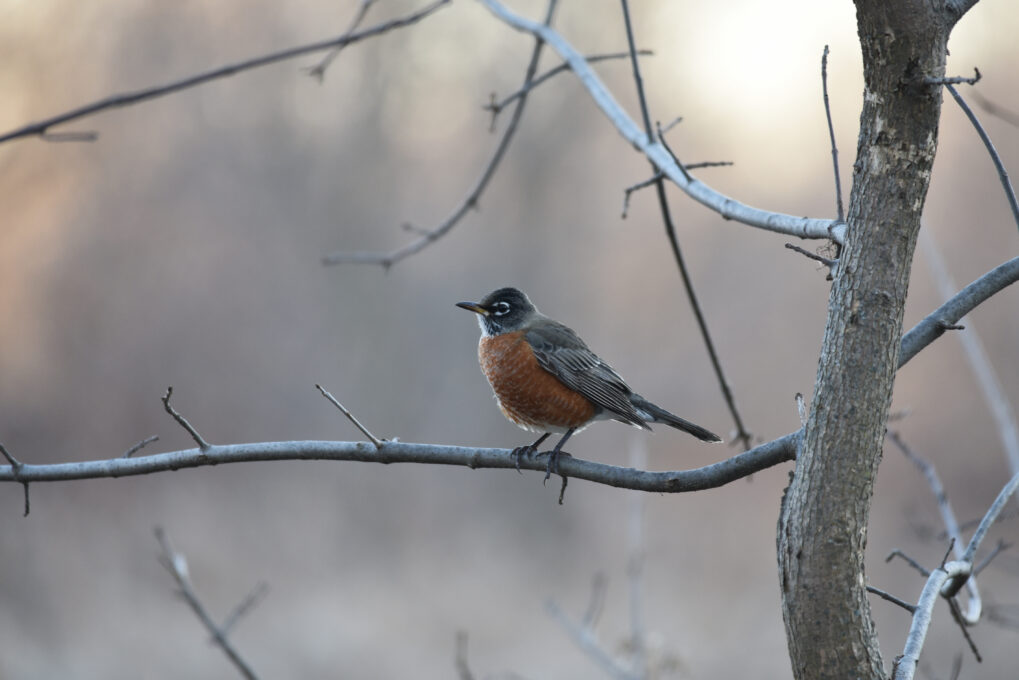
American Robin is a large, upright thrush with a gray-brown back, orange breast, pale lower belly, broken white eye ring, and a stop-run-pause habit on short grass. In the bird profiles library, it is best identified by thrush structure and ground behavior before color alone.
01Field marks
Solve the robin by posture first
Start with posture before you trust the orange breast. American Robin stands tall for a thrush, runs on long-looking legs, then freezes with the body held more upright than a bluebird or sparrow-sized yard bird.
That movement is often the fastest field mark because the bird keeps exposing itself on lawns, athletic fields, park edges, and open strips under trees. A robin does not usually creep through leaf litter like a forest thrush or perch compactly like a bluebird.
The color pattern matters after the shape is locked. Adults show a gray-brown back, dark head, orange breast, pale lower belly, and a broken white eye ring. The throat can look lightly streaked, so a quick glance may feel less clean than the simple orange-breast shortcut suggests.
Females can look duller, juveniles can look spotted below, and wet light can flatten the orange into brownish rust. That is why the closest traps need different questions. For forest confusion, American Robin vs Wood Thrush turns on size, posture, and breast pattern, since Wood Thrush is smaller-looking, warmer brown above, and heavily spotted below. At open edges, American Robin vs Eastern Bluebird is usually solved by body plan because bluebirds are smaller, rounder, and perch more like small cavity-nesters than ground-running thrushes. In the West, American Robin vs Varied Thrush matters where a bold breast band and darker, more patterned face change the whole impression.
Taxonomy helps the profile feel less like a backyard label. Robins belong with the thrushes family, and the body confirms it: straight-backed pause, alert head carriage, short bursts across open ground, and a habit of listening and looking down before pulling prey from soil.
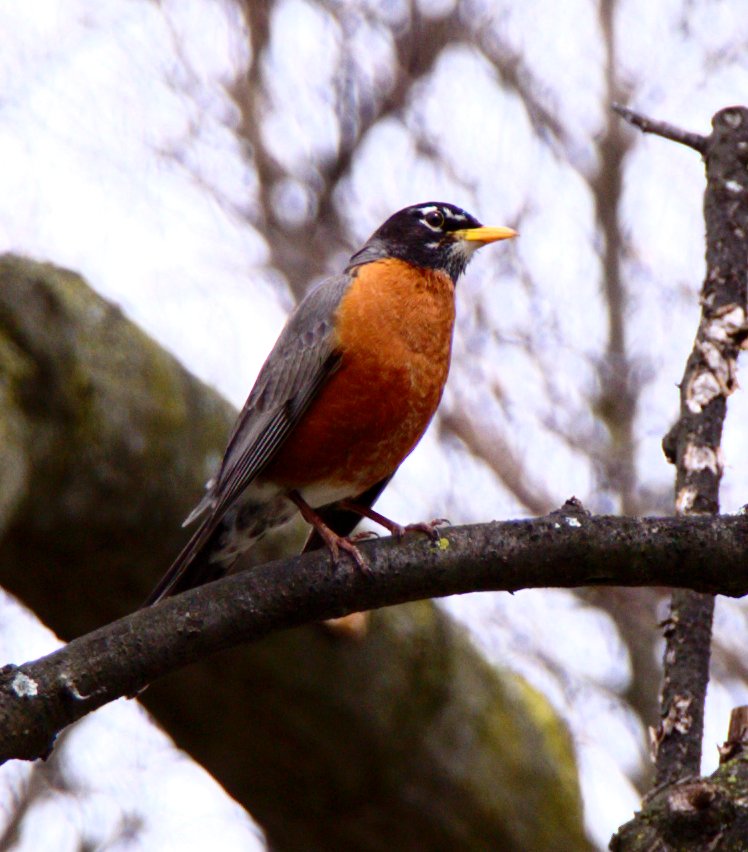
- Structure first: long legs, upright posture, and a longer body separate robin from finches and sparrows.
- Breast pattern: orange underparts look cleaner than Wood Thrush spotting and broader than bluebird color blocks.
- Behavior clue: the stop-run-pause pattern across short grass often gives the bird away before a full view.
Start with the long-legged thrush stance, then check the orange breast and broken white eye ring.
06Comparison table
Birds most often confused with American Robin
| Bird | What differs first | Best clue |
|---|---|---|
| American Robin vs Wood Thrush | Wood Thrush looks deeper forest, more spotted below, and less like a long-legged lawn runner. | Spotted breast and forest posture |
| American Robin vs Eastern Bluebird | Eastern Bluebird is smaller, rounder, and bluer above, with a compact perch-and-drop hunting style. | Smaller blue-backed shape |
| American Robin vs Varied Thrush | Varied Thrush shows a bolder face pattern and richer orange-black contrast, usually away from open lawns. | Bold face and dark breast band |
02Food and foraging
The lawn bird becomes a fruit bird
The robin changes food lanes more visibly than many yard birds. In damp spring soil, it hunts earthworms and soft invertebrates by running, pausing, cocking the head, and stabbing or tugging at the ground. That behavior is why a robin can look almost tied to a lawn after rain while seed-eating birds ignore the same patch.
Fruit becomes more important when insects and worms are less available. Robins move into crabapple, serviceberry, dogwood, juniper, and other fruiting trees or shrubs, sometimes feeding above eye level in a way that feels unlike the open-lawn bird of April. A winter flock in fruiting cover can be the same species behaving under a different food problem.
This explains why many feeder setups disappoint. A robin may sample mealworms, soft fruit, water, or a low open feeding spot, but it is not built around tube feeders full of dry seed. For a yard-focused setup, attracting American Robin should center on soil access, water, leaf-litter edges, and fruit rather than a single feeder product. The food shift is also an ID clue: a bird running on turf and a bird swallowing berries in a bare tree can still be the same robin.
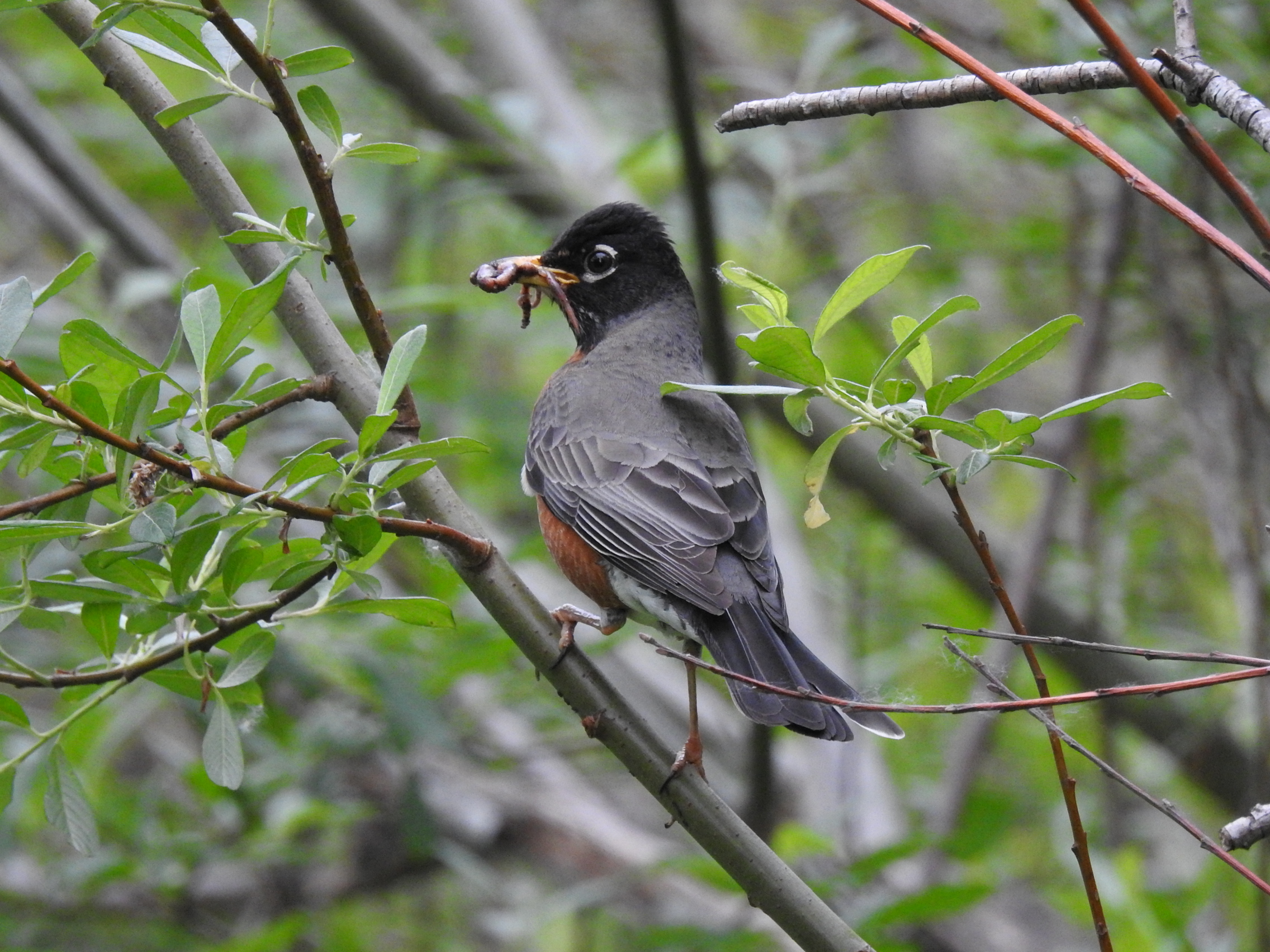
- Ground prey: worms, beetles, and larvae drive the classic lawn-foraging behavior.
- Cold-season switch: berries and crabapples matter more when frozen or dry ground limits soft prey.
- Yard setup: water, fruiting plants, leaf litter, and pesticide restraint beat most seed-feeder fixes.
Robins usually respond better to water, fruiting shrubs, and workable soil than to a tube feeder full of seed.
03Nesting data
Mud nests explain the spring clues
Nesting makes robins conspicuous early because the nest materials are easy to recognize. The female builds a cup with grasses, twigs, and mud, then lines it more finely. A bird carrying mud, dried grass, or a worm across a yard is often giving away the nest story before the nest itself is visible.
Robins use trees and shrubs, but they also accept ledges, gutters, light fixtures, and other human structures when the site gives enough support. That flexibility is part of why the species feels so close to houses without being a cavity-nester. It also means people often notice the nest during normal yard work, porch use, or spring cleanup.
Repeat nesting attempts can keep adults busy through a long stretch of the warm season. The field consequence is simple: one robin with food in its bill does not prove the nest is nearby in the exact tree where it landed. Adults may pause, watch, and make a last move only when the path looks clear.
If you find a nest, distance matters more than attention. Watch from a normal walking route, keep pets away from the area, and avoid trimming the supporting shrub until the nest is no longer active. The behavior you see around the nest is part of the bird profile, not a reason to handle the structure.
- Nest material: mud gives the cup its firm shape.
- Nest placement: trees, shrubs, ledges, and porch structures can all work when cover is nearby.
- Field sign: adults carrying worms usually point to nestlings or fledglings close by.
04Behavior and habitat
Territory in spring, fruit flocks later
The same robin can feel territorial in spring and social later because the food problem changes. In spring, males sing from trees and rooftops, pairs work lawns and open edges, and each bird seems to own a familiar patch. The repeated lawn circuit is not random wandering. It is a foraging route through short grass, bare soil, and edge cover.
Later in the year, fruit pulls robins into looser groups. They may gather in trees, orchards, hedgerows, cemetery plantings, and wooded edges where berries last into cold weather. In some places that makes robins look absent from lawns but common in fruiting cover. In others, winter robins appear only when weather and food line up.
Migration is flexible enough to confuse casual expectations. A robin seen in winter is not automatically a rare holdout, and an empty yard is not proof the species left the region. The better question is whether fruit, open ground, and water are available nearby. This seasonal switch also explains why robin habitat is broader than a clipped lawn: open ground for prey, trees for song and nesting, shrubs for fruit, and wooded edges for movement.
A robin makes sense when you read it as a lawn-hunting, fruit-shifting thrush, not as a seed-feeder bird with orange underparts.
- Spring view: territorial birds patrol lawns, park edges, and open woodland margins.
- Winter view: loose flocks gather where fruit, shelter, and unfrozen ground still line up.
- Common miss: watching only seed feeders can make robins seem absent when they are working nearby ground.
05Conservation
Common does not mean habitat-proof
American Robin is widespread and listed as Least Concern, so the conservation point is local quality rather than species scarcity. The bird can be common across neighborhoods, parks, farms, orchards, and woodland edges, but each site still differs in food, nesting cover, and risk.
The main everyday problems are practical. Pesticide-heavy lawns can reduce soft prey and expose birds to chemicals. Free-roaming cats and window strikes matter because robins spend so much time near houses, lawns, glass, shrubs, and low branches. Fruit availability also changes what a yard offers outside the worm-rich part of the year.
The species has an unusually strong civic identity for such a familiar bird. American Robin is tied to state-bird designations in Connecticut, Michigan, and Wisconsin, and those choices make sense because the bird is easy to recognize across ordinary places. The Connecticut state-bird story, Michigan state-bird story, and Wisconsin state-bird story all lean on the same public familiarity.
A good local robin yard is therefore not complicated. Keep some short open ground, protect shrubs and small trees during nesting season, plant fruiting natives where they fit, and make windows safer near the places birds fly between cover and food.
- Status: American Robin remains listed as Least Concern.
- Local pressure: simplified lawns can reduce insects, fruit, and safe nesting cover.
- State-symbol cue: Connecticut, Michigan, and Wisconsin all chose a bird residents could recognize in ordinary places.
Least Concern. American Robin is the official state bird in 3 states
What should you check or read next?
A final check on American Robin separates look-alike comparisons, related bird profiles, and practical next steps.
Questions and answers
Why is the American Robin actually a thrush?
American Robin belongs to the thrush family. Its upright posture, long legs, orange breast, and ground-foraging rhythm fit thrush structure better than finch or sparrow structure.
Do American Robins eat from bird feeders?
They usually ignore seed feeders. Robins respond better to water, fruiting shrubs, soft fruit, mealworms, and lawns or leaf litter where they can find soft prey.
How do I tell an American Robin from a Wood Thrush?
American Robin is larger, cleaner orange below, and more tied to lawns and edges. Wood Thrush looks more heavily spotted and more forest-bound.
Do American Robins migrate?
Many robins migrate, but some stay where fruit and shelter remain available. Winter flocks can appear suddenly around berry trees even after lawns go quiet.
Where next?
Use the strongest adjacent guides to keep moving with the same bird, the family, or the wider state-bird shelf.