Why Does the American Goldfinch Nest So Late? ID, Molt, Diet, and Range
Use this profile to understand why American Goldfinch waits for midsummer nesting, how its seed diet shapes feeder behavior, and which field marks still work after the yellow fades.
- Family
- Finches
- Diet
- Granivore
- Status
- LC
- Range cue
- Michigan eBird frequency
Quick Summary
American Goldfinch nests late because its breeding cycle follows midsummer seed crops. Thistle down, milkweed fluff, sunflower, and other seedheads support nest building and a seed-heavy diet for young, so this finch often becomes busiest after many backyard songbirds have already finished an early nesting round.
01Nesting data
Why American Goldfinch waits for midsummer nests
Among seed-eating birds in the species library, American Goldfinch nests late because its breeding calendar follows seeds. In many parts of its range, the nesting push builds toward July, when thistle down, milkweed fluff, and ripe composite seedheads are finally available together.
That timing is the central clue for this bird. Goldfinches do not simply delay by accident. They wait until the landscape can supply soft plant fiber for the nest and enough small seeds to keep adults and young fed.
The female builds a tight cup in shrubs or small deciduous trees, often out on a slender fork rather than inside a cavity or nest box. The nest can look delicate, but the placement fits a bird that works brushy edges and seed-rich openings more than deep woods.
The family diet keeps the pattern unusual. Many songbirds switch hard toward insects when feeding young, while American Goldfinch stays much more plant-based.
Watch for the yard effect in late summer. A place that felt quiet in June can suddenly hold calling adults and young goldfinches after coneflowers, sunflowers, and thistles have gone to seed.
- Timing clue: nesting often builds in July, after many familiar songbirds have already started or finished earlier broods.
- Material clue: thistle down, milkweed fluff, and fine plant fibers become easiest to gather in midsummer.
- Food clue: a seed-heavy diet lets adults keep using mature seedheads while feeding young.
02Food and foraging
Seeds explain the feeder behavior
Seeds explain nearly everything American Goldfinch does at a feeder. The short conical bill fits nyjer, sunflower chips, thistle, coneflower, aster, and other small seeds better than it fits catching insects in the air.
That is why attracting American Goldfinch depends on both feeder choice and plant choice. Nyjer tubes concentrate small finches, while sunflower chips work well when larger birds are not overwhelming the station.
Goldfinches also feed like birds built for bending stems. They cling, dangle, twist, and pick through seedheads instead of standing upright on the ground for long stretches.
A yard does not need to look wild everywhere to help them. Leave a few seed-bearing plants standing through late summer and fall, and the feeder starts to match the natural food line instead of replacing it.
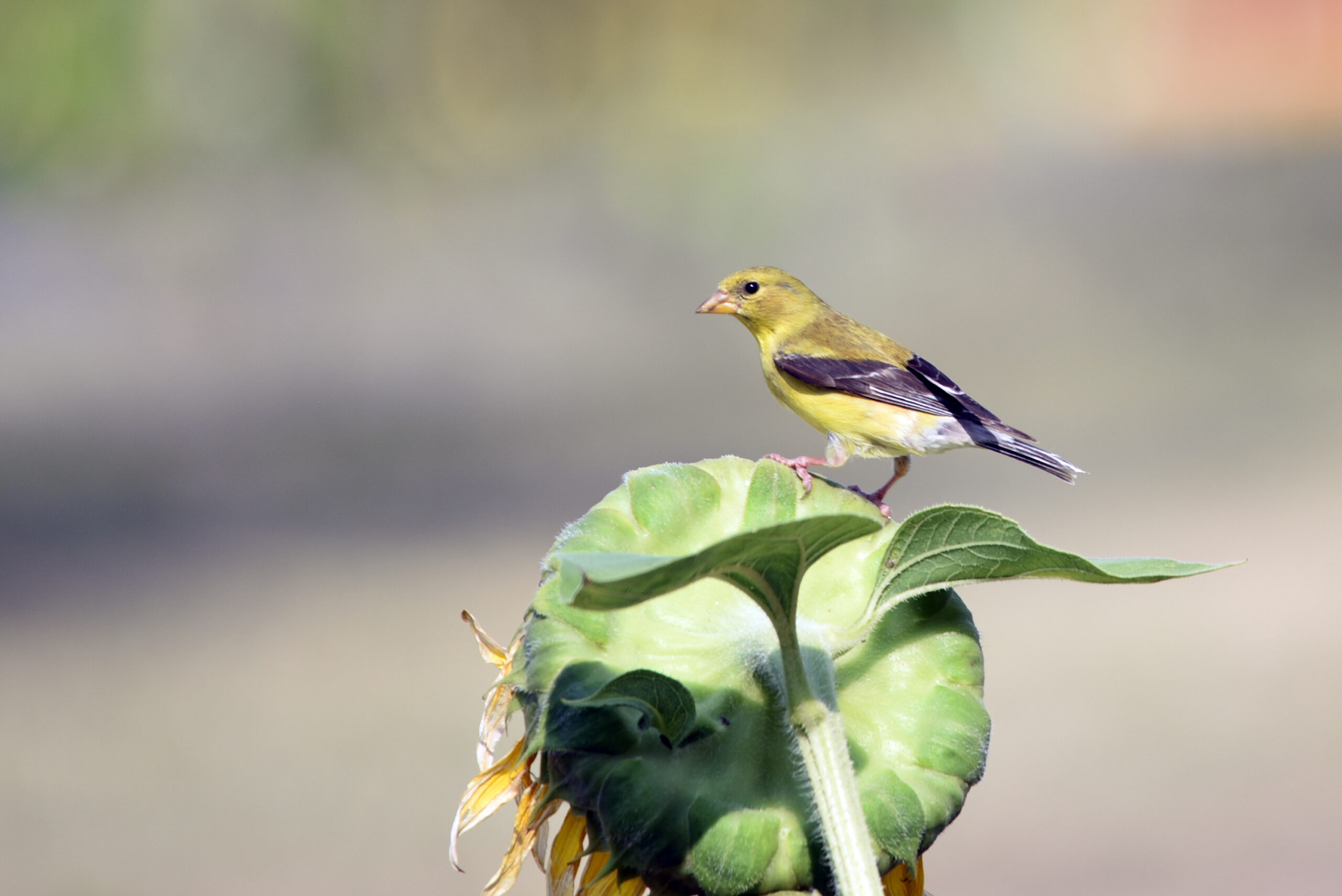
Nyjer tubes and sunflower chips work best when nearby flowers are allowed to go to seed.
03Field marks
Yellow helps, but the finch shape decides the ID
Color can mislead on this feeder bird if the bright summer male becomes the only mental image. The safer ID starts with a compact finch body, a short conical bill, dark wings with pale bars, and a light, bouncing flight.
Summer males make the first pass simple. Bright yellow body color, black wings, and a black forehead point strongly toward American Goldfinch, but the bird should still look small, tidy, and seed-built.
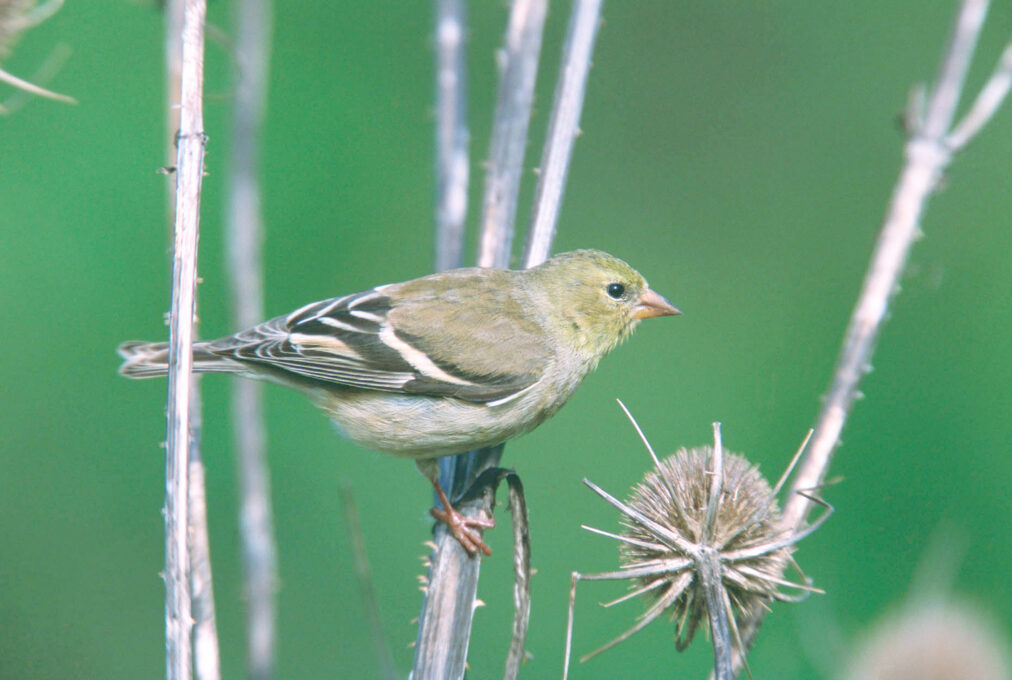
Females and winter birds are the real test. They can look olive-buff, gray-yellow, or surprisingly plain, yet the same dark wings and neat finch structure remain.
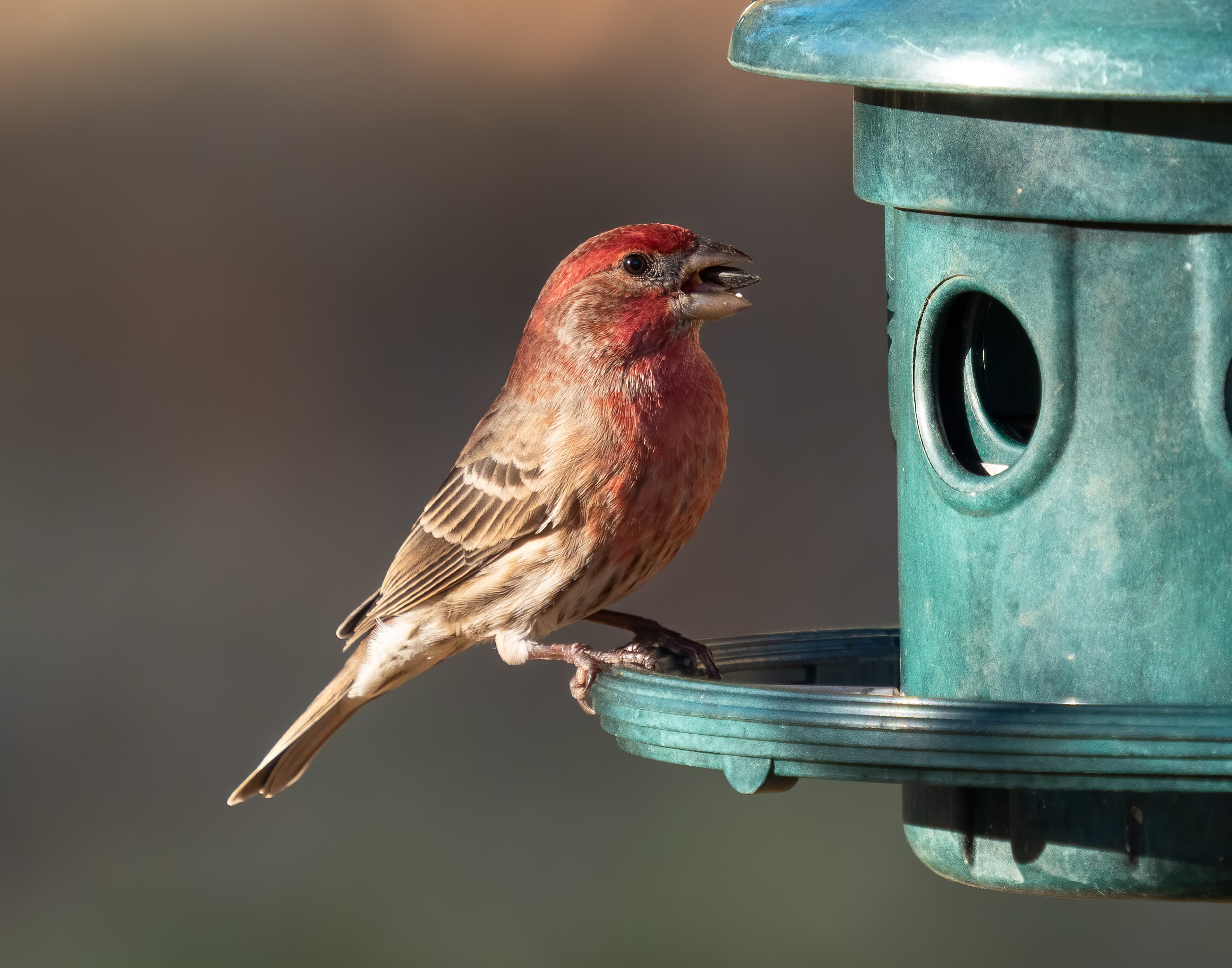
The closest feeder confusion belongs to American Goldfinch vs House Finch. House Finch usually reads browner, chunkier, and more streaked below, especially when a goldfinch has lost bright breeding color.
A yellow bird in shrubs can also pull the eye toward Goldfinch vs Yellow Warbler. The warbler has a thinner insect-eating bill and a cleaner warbler posture, not the black-winged seed-finch build.
Winter flocks can bring in Goldfinch vs Pine Siskin confusion when streaking, dull color, and feeder movement flatten the view. The finches family helps the bill shape and feeding posture make sense when plumage is not doing enough.
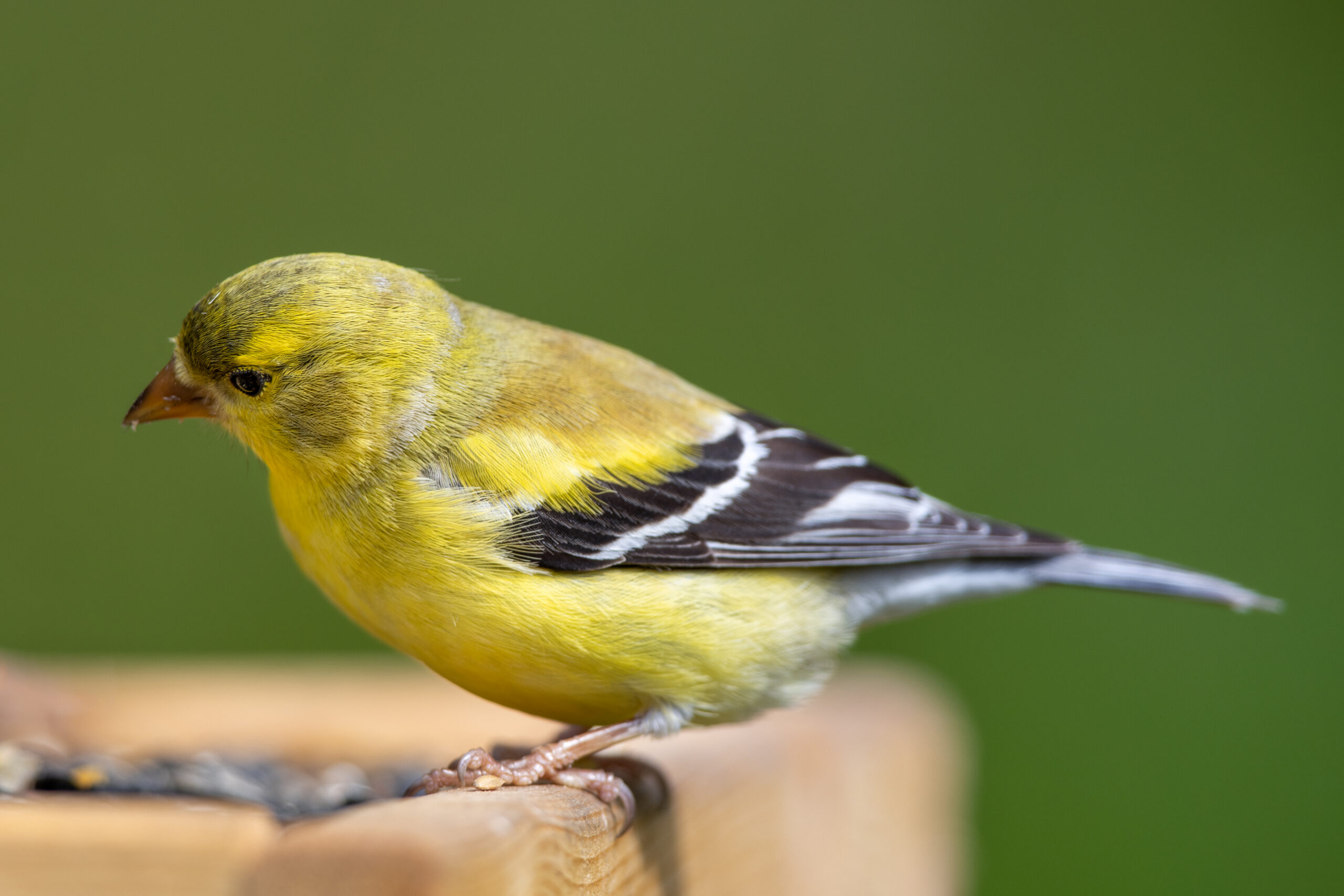
- Summer male: bright yellow body, black wings, black forehead, and a short conical bill.
- Female or winter bird: olive-buff or gray-yellow body, dark wings, pale wing bars, and the same tidy finch shape.
- Flight clue: a buoyant rise-and-dip path can identify the bird before color is clear.
When the yellow fades, trust the short conical bill, dark wings, and compact finch shape before judging color.
06Comparison table
Birds most often confused with American Goldfinch
| Bird | What differs first | Best clue |
|---|---|---|
| American Goldfinch vs House Finch | House Finch usually looks browner, chunkier, and more streaked below than an American Goldfinch. | Streaked underparts and chunkier shape point away from goldfinch. |
| Goldfinch vs Yellow Warbler | Yellow Warbler has a thinner bill and lacks the black-winged seed-finch structure. | Thin bill and warbler posture point away from goldfinch. |
| Goldfinch vs Pine Siskin | Pine Siskin often looks streakier, sharper, and more restless in winter feeder flocks. | Heavy streaking and sharp siskin shape point away from goldfinch. |
04Behavior and habitat
Molt, flight, and weedy edges keep the pattern together
A bouncing flight often gives this finch away before the colors settle. Flocks move in a buoyant rise-and-dip flight, then drop into weeds, sunflower heads, shrubs, or feeder poles with quick, elastic motion.
The bird also molts twice each year, which is why one yard can seem to host two different birds across the seasons. A blazing yellow summer male and a dull winter goldfinch can share the same structure, bill, wings, and flight style.
Habitat follows the seed supply. Field edges, old lots, prairie margins, suburban gardens, orchards, and roadsides all work when they hold standing seedheads and enough cover.
That makes mowing rhythm visible in the birding result. A stripped lawn may still get feeder visits, but unmowed edges and late-season flowers give goldfinches a reason to stay and move naturally.
For American Goldfinch, trust the seed story first. Late nesting, nyjer feeders, winter dullness, and field-edge flocks all point back to the same finch built around small seeds.
05Conservation
A common bird still depends on seed-rich edges
Least Concern is the broad status, and this finch remains common across much of North America. That status should not hide the practical requirement: the bird needs seed-bearing plants to finish their season.
The main local pressure is a cleaned-up landscape. Frequent mowing, herbicide-heavy management, and ornamental beds with no late seedheads remove the food line goldfinches use most.
The state-symbol story grows out of that everyday visibility. Looking across state-bird designations shows why bright, familiar birds often became civic symbols.
The Iowa state-bird story fits the open-country side of the species. The New Jersey state-bird story shows the same bird working as a garden and edge symbol.
Washington adds a western civic layer, and the Washington state-bird story keeps the focus on a bird ordinary residents could recognize. The conservation lesson is simple: leave seed plants standing, and this common finch has more places to feed.
- Status: Least Concern, common across much of the range.
- Local pressure: mowing and herbicide use can remove the seed plants the bird depends on.
- Yard action: leave coneflowers, asters, sunflowers, and native thistles standing into seed.
Least Concern. American Goldfinch is the official state bird in 3 states
What should you check or read next?
A final check on American Goldfinch separates look-alike comparisons, related bird profiles, and practical next steps.
Questions and answers
Why does the American Goldfinch nest so late?
American Goldfinch waits for midsummer seed crops. Thistle down, milkweed fluff, and mature seedheads help supply nest material and a seed-heavy diet for young birds.
What does an American Goldfinch eat?
It eats mostly seeds, especially nyjer, sunflower, thistle, coneflower, aster, and other small seeds. It uses insects much less than many familiar nesting songbirds.
Does the American Goldfinch migrate?
Some birds shift south or wander in winter, but many stay where seed supply remains reliable. Winter flocks can move around without making a dramatic long-distance migration.
How do you tell an American Goldfinch from a yellow warbler?
Start with bill and wing structure. American Goldfinch has a short conical finch bill and dark wings with pale bars, while Yellow Warbler has a thin pointed bill and a softer all-yellow warbler shape.
Keep the goldfinch thread going
The strongest next reads stay with seed feeding, finch structure, or the states that chose American Goldfinch as a symbol.