Purple Finch: Solving the House Finch Confusion
Use this profile to identify Purple Finch, place it within the finches family, and move from field marks into feeding, nesting, behavior, and status.
- Family
- Finches
- Diet
- Granivore
- Status
- LC
- State bird
- 1 states
Quick Summary
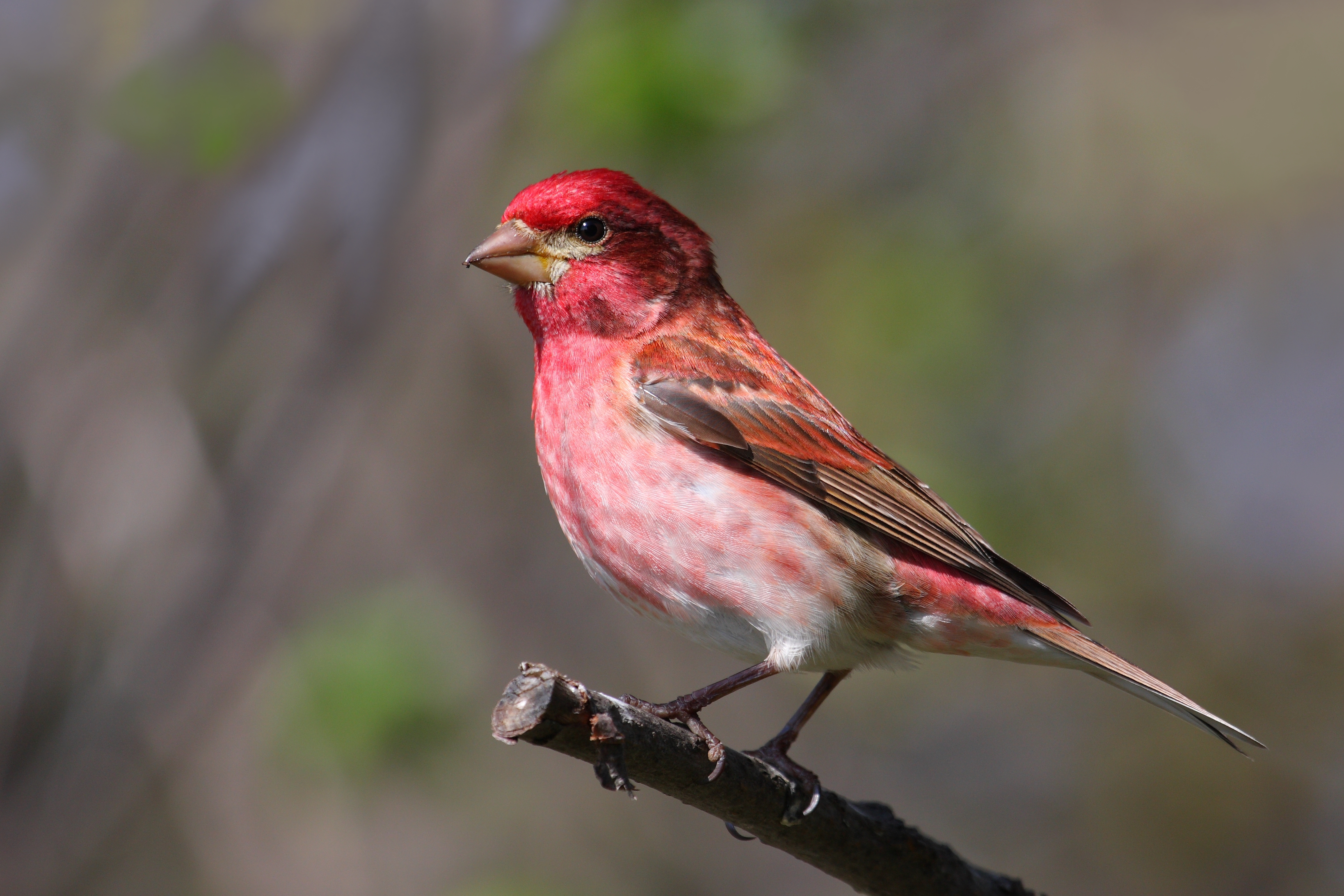
Purple Finch is a red-finch identification problem before it is a color problem. Males can look washed in raspberry, females can look boldly patterned, and both sexes need bill shape, body heft, feeder posture, and wooded context before the ID feels safe.
01Field marks
Why Purple Finch is more than a red feeder bird
Start with the whole finch. A male Purple Finch often looks as if raspberry color has washed across the head, breast, and upperparts, instead of sitting mostly on the face and chest.
Female Purple Finch deserves equal attention. She is not plain. Look for a bold pale eyebrow, strong dark face lines, heavy streaking, and a sturdier bill that gives the head more force than many feeder birds show.
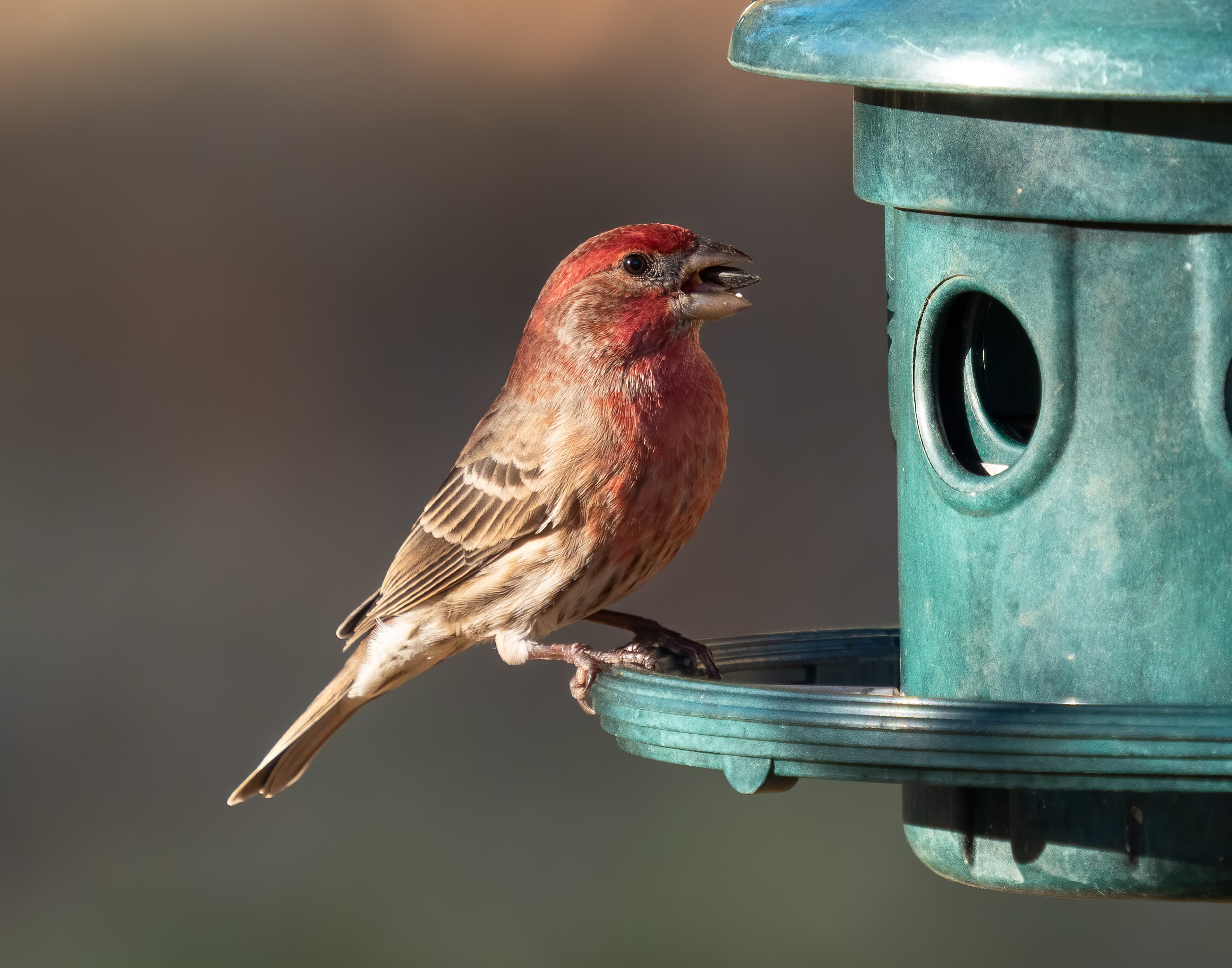
The closest confusion is House Finch, even when the current link package names broader feeder contrasts. House Finch usually looks browner and more streaked below, with red more restricted on males and a plainer female face.
American Goldfinch can share feeder space, but its smaller bill, black wings, seasonal yellow or olive pattern, and bouncing flight move it into a different finch lane. The comparison is useful because it reminds the reader to use structure, not only feeder location.
Light can make the male look brighter, duller, or browner, so the ID should not depend on a perfect raspberry view. A female can be even more useful when the face pattern is crisp and the bill looks broad at the base.
At close range, compare how the bird sits. Purple Finch often feels fuller through the chest and head, while a House Finch can look longer-tailed and more narrowly built. That body impression helps when red color varies by age, diet, light, or wear.
A safe Purple Finch read joins color spread, face pattern, bill size, body shape, and wooded or northern context. If only one red patch is doing all the work, the ID is still too thin.
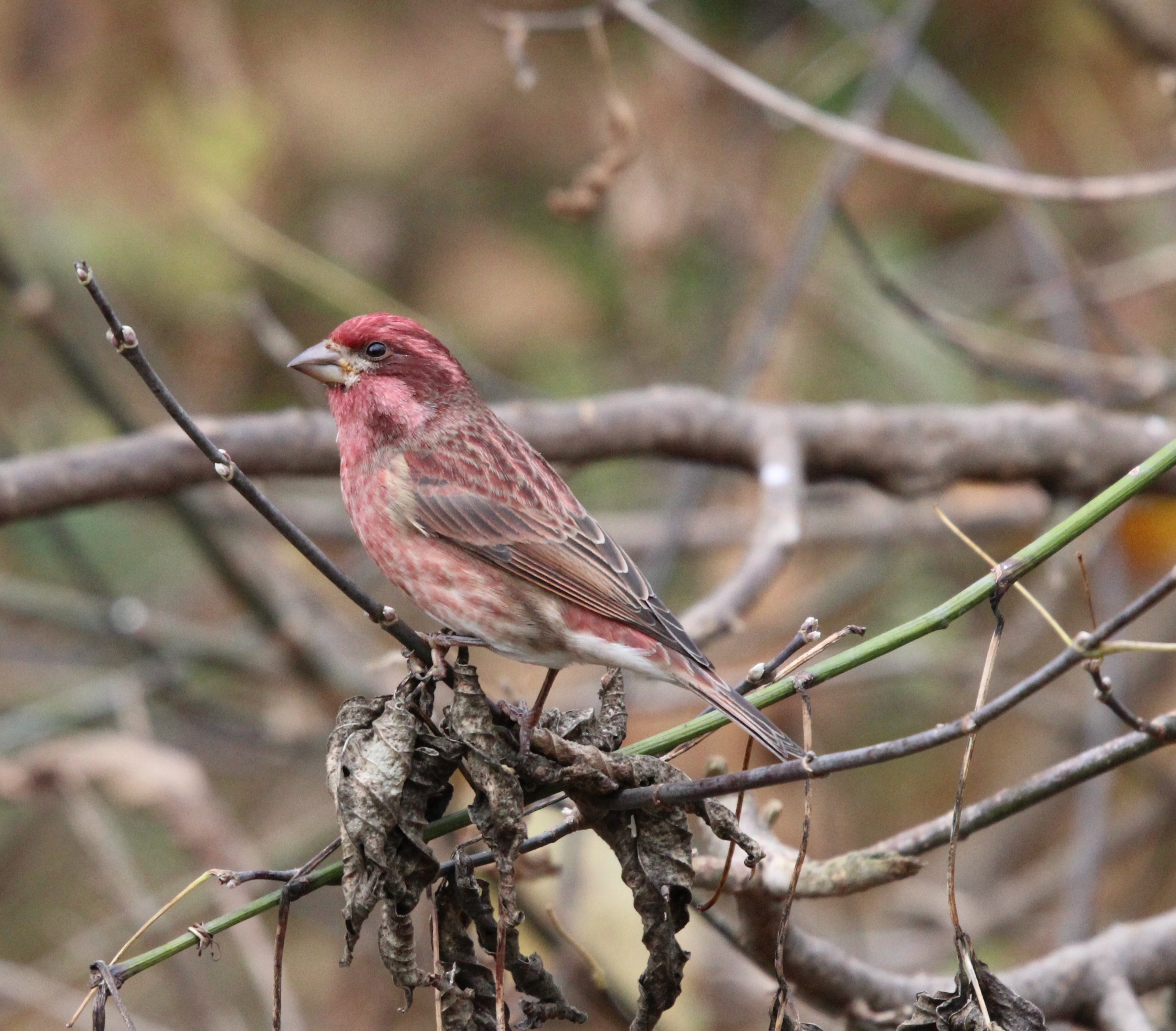
- Male clue: raspberry wash spreads through the head and breast instead of staying as a narrow red patch.
- Female clue: bold eyebrow, dark cheek pattern, and strong streaking keep females identifiable.
- Shape clue: heavier bill and chunkier body help when feeder color looks ambiguous.
06Comparison table
Birds most often confused with Purple Finch
| Bird | What differs first | Best clue |
|---|---|---|
| House Finch confusion | Raspberry wash, bill heft, flank streaking, and face pattern carry most red feeder-finch decisions. | Raspberry wash, bill heft, flank streaking, and face pattern carry most red feeder-finch decisions |
| Cassin's Finch confusion | Crown contrast, bill shape, and range context matter most in western or mountain finch overlap. | Crown contrast, bill shape, and range context matter most in western or mountain finch overlap |
| Pine Siskin confusion | Streaking, feeder flock behavior, and winter seed movement can make a small finch hard to place. | Streaking, feeder flock behavior, and winter seed movement can make a small finch hard to place |
02Food and foraging
How seed, buds, berries, and feeder posture shape the ID
Purple Finches eat seeds, buds, berries, and insects, and they often become visible at feeders when sunflower or similar seed is available near trees. The heavy conical bill explains why larger seed choices fit the bird.
At a feeder, watch posture as much as food. Purple Finch can look sturdier and deeper-bodied than nearby smaller finches, with a more deliberate way of settling in to crack seed.
Black-capped Chickadee gives a useful contrast because it grabs food and leaves in quick caching movements. Baltimore Oriole belongs to a fruit, nectar, and canopy-insect lane, not the same seed-cracking finch lane.
Natural food keeps the article from becoming a feeder note. Buds, berries, tree seeds, and weed seeds connect Purple Finch to wooded edges, mixed forests, and seasonal movement beyond the feeder tray.
The bill makes the feeding lane visible. A Purple Finch can handle firm seed and buds with a thick finch bite, while softer fruit or insects round out the diet when the season supports them.
The practical feeding answer is not to force a special setup. Put seed near cover, keep stations clean, and judge the bird by bill, body, and pattern when several finches use the same place.
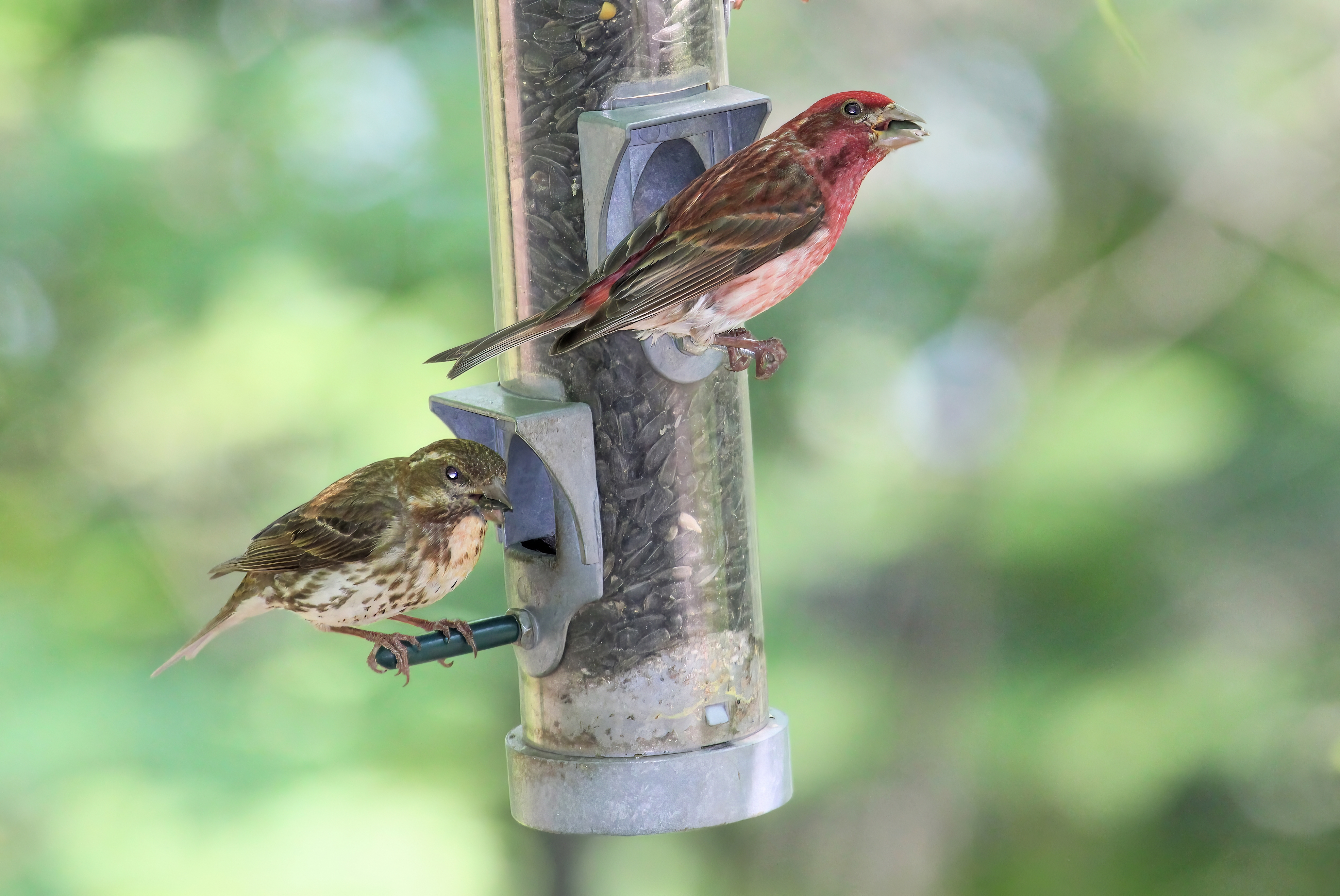
- Feeder seed: sunflower and similar seeds match the heavy finch bill well.
- Natural foods: buds, berries, tree seeds, and weed seeds keep the bird tied to wooded edges.
- Comparison cue: posture and bill heft can be more useful than red intensity alone.
03Behavior and habitat
How season and wooded cover change Purple Finch encounters
Purple Finch behavior is often quieter than the ID debate around it. The bird perches, cracks seed, sings from wooded cover, and moves through trees with less town-edge familiarity than House Finch in many places.
Season can change how likely the bird feels. In some areas Purple Finch appears irregularly or more strongly in colder months, so a feeder visit may feel notable rather than routine.
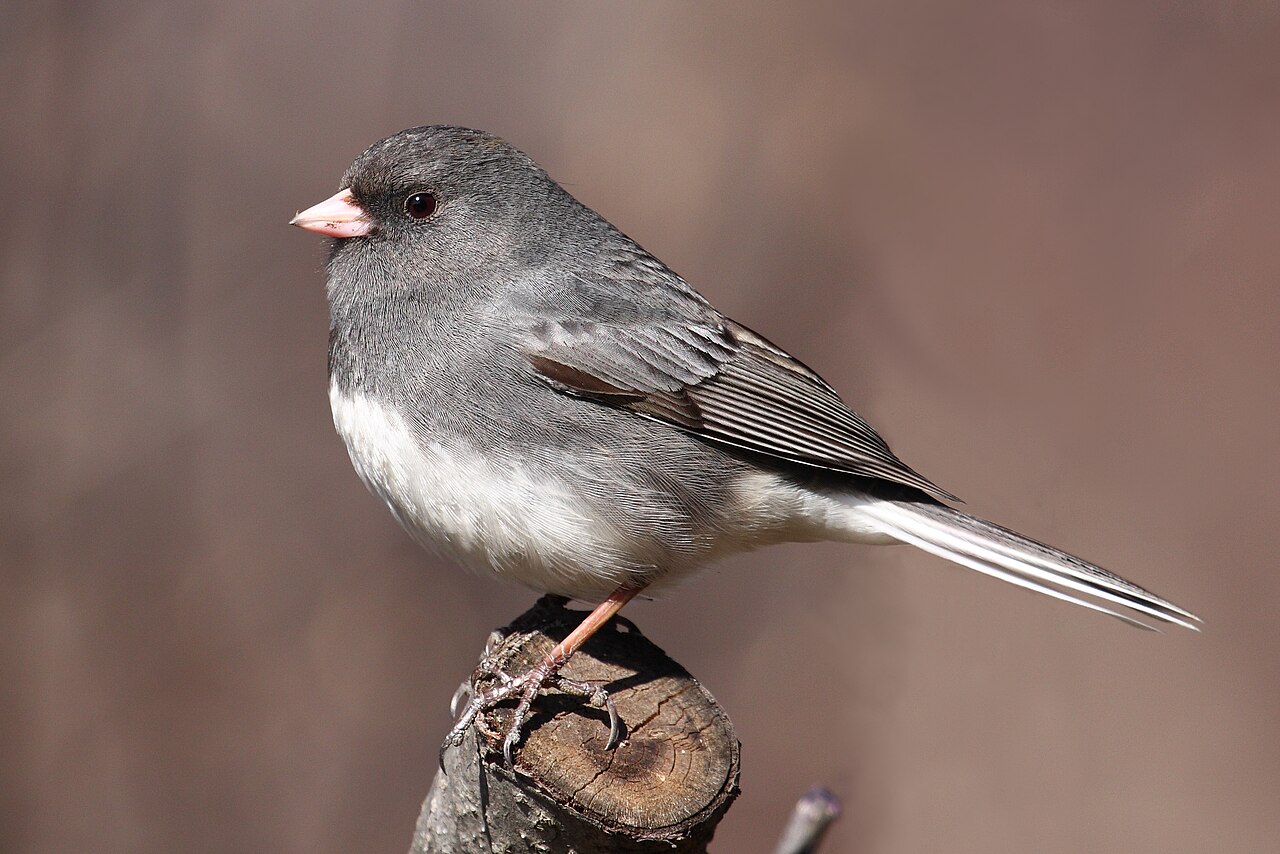
Carolina Wren and Dark-eyed Junco help define what Purple Finch is not. The wren is a loud, warm, low-cover bird with a cocked tail, while the junco is a ground-feeding sparrow with a different winter posture.
American Robin may share yards and fruiting trees, but its thrush body, ground foraging, and upright lawn behavior do not match a compact seed-cracking finch. Behavior keeps the field read from collapsing into 'bird at feeder.'
Song can also move the observer away from the feeder. A singing male in wooded cover gives a different kind of evidence than a quick seed-station visit, because sound, perch height, and habitat all point back to a finch using trees.
Movement is usually less flashy than the ID debate suggests. Purple Finch often works as a sturdy, compact bird in cover or at seed, so the best views come from patient comparison with nearby finches rather than one dramatic behavior.
Read Purple Finch through the field marks first, then test the state-symbol story against the habitat and behavior that make the bird visible.
- Feeder behavior: Purple Finch often looks sturdy and settled compared with narrower finches.
- Range cue: northern or wooded context strengthens the ID where House Finch also occurs.
- Set of clues: wash, face pattern, bill, body, and habitat work together better than one mark.
04Nesting data
Why nesting pulls Purple Finch back into trees
Purple Finch nesting pulls the bird back into trees and shrubs. The nest is usually placed in vegetation, often in coniferous or mixed wooded settings, which fits the species better than a feeder-only image does.
Breeding season can make feeder traffic less useful for identification. Birds spread into nesting habitat, males sing from higher cover, and the same finch that felt obvious in winter may become less concentrated around one yard.
Northern Mockingbird gives a breeding-habitat contrast because it can nest around shrubs and human edges, but it is a long-tailed mimid with exposed song behavior, not a heavy-billed finch tied to seed, buds, and wooded cover.
The nest section should stay modest because most readers will not find the nest safely or need exact nest data to identify the bird. The useful point is that breeding pulls the finch into vegetation structure, where song and movement replace feeder traffic as the best clues.
The section's useful job is simple: nesting confirms that Purple Finch is not just a red feeder visitor. It is a woodland-edge finch whose breeding life depends on vegetation structure.
- Nest setting: trees and shrubs, often near conifer or mixed woods, matter more than the feeder pole.
- Season shift: birds spread into nesting habitat once the visible feeder season relaxes.
- Field cue: singing males may be easier to confirm than silent feeder birds in breeding season.
05Conservation
Why New Hampshire's Purple Finch meaning depends on field marks
Purple Finch conservation and significance should stay measured. The species remains familiar in many regions, but local visibility depends on wooded edges, seed and fruit resources, seasonal movement, and competition or confusion with other finches.
Eastern Bluebird and Mountain Bluebird show how open-country cavity birds can become public favorites for different reasons. Hermit Thrush points toward shaded forest behavior. Purple Finch sits in its own lane: a wooded and feeder-visible finch that rewards careful ID.
New Hampshire's Purple Finch choice works because the bird feels northern, wooded, and accessible without being as instantly obvious as a cardinal. That makes the state-bird meaning useful only when it stays tied to the bird's real field character.
The conservation language should not pretend every feeder record proves a stable local picture. Trees, shrubs, fruiting edges, and clean seed stations all shape where readers actually meet the bird.
The practical close is habitat-based. Keep trees, shrubs, seed-bearing plants, fruiting edges, and clean feeder stations in the picture, then let the field marks decide whether the red finch is truly Purple Finch.
- Status: Purple Finch remains familiar but should not be collapsed into every red feeder finch.
- Main pressure: habitat structure and competition shape how often the species appears locally.
- Why it matters: the bird rewards careful feeder identification instead of simple color matching.
Least Concern. Purple Finch is the official state bird in 1 states
What should you check or read next?
A final check on Purple Finch separates look-alike comparisons, related bird profiles, and practical next steps.
Questions and answers
How do you tell Purple Finch from House Finch?
Use the full pattern. Purple Finch males often look more broadly raspberry-washed, females show stronger face markings, and both sexes can look heavier-billed and chunkier.
Are female Purple Finches purple?
No. Female Purple Finches are brown and heavily streaked, with a bold pale eyebrow and strong face pattern rather than red plumage.
Do Purple Finches come to feeders?
Yes. They use sunflower and similar seeds, especially near trees or wooded edges, but feeder location alone is not enough for identification.
Related field context
The strongest adjacent references stay with the same bird, the family, habitat, or state-symbol context already used in the article.