Bald Eagle ID Starts With Size, Bill, and Water
Use this profile to identify Bald Eagle, place it within the hawks, eagles, and kites family, and move from field marks into feeding, nesting, behavior, and status.
- Family
- Hawks, Eagles, and Kites
- Range cue
- Michigan eBird frequency
Quick Summary
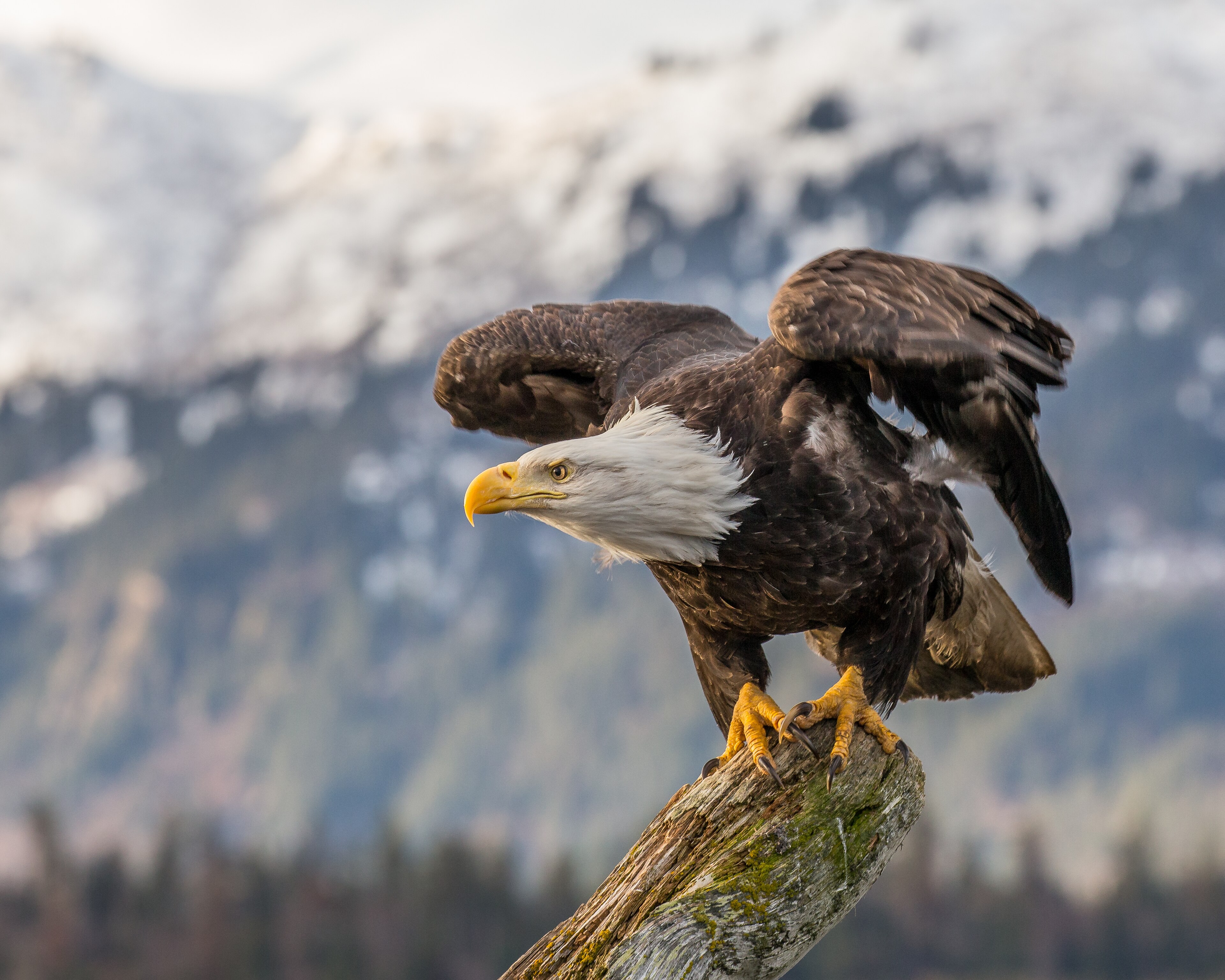
Bald Eagle is easiest to understand as a huge fish-hunting raptor tied to open water, carrion, and tall watch points. The white head helps on adults, but it is not the first clue to trust when the view is brief.
01Field marks
Why size and bill solve Bald Eagle ID before the white head
The fastest field read is size plus structure. Adult Bald Eagles show the famous white head and tail, but the body is also deep and dark, the wings are long and broad, and the bill looks heavy even at distance. If the bird looks like a large dark raptor first and a white-headed bird second, the ID is already on the right track.
Immature Bald Eagles create most of the real confusion. They are mottled brown, unevenly pale, and often lack the clean head-and-tail contrast people expect. Some young birds show pale patches under the wings or belly, so a quick color read can pull the observer toward the wrong large raptor.
That is when bill bulk, wing width, slow wingbeats, and water or carrion context matter more than one patch of white. Watch how the bird carries itself. Bald Eagle often looks heavy-headed in flight, with a broad plank-like wing shape and a direct crossing line over water or open ground.
Red-tailed Hawk is the useful roadside comparison because it can also soar on broad wings. Bald Eagle should still look larger, longer-winged, heavier-headed, and more connected to rivers, reservoirs, lakes, coasts, dams, ice edges, or carcass concentrations.
Golden Eagle can enter the question in open country, but it lacks the same white adult pattern and often gives a different hunting setting. Osprey can share fish and water, yet it is slimmer, more specialized, and does not carry the same massive bill-and-body profile.
A confident ID comes from agreement. The bird should give you raptor scale, heavy bill, broad wings, and a food or water context before the name feels settled.

- Adult clue: white head and tail, dark body, huge bill, and broad wings make the classic profile.
- Immature warning: mottled brown birds need size, bill, flight, and water context before the ID settles.
- Flight read: long flat wings and a heavy head-and-bill profile separate it from smaller hawks.
For immature eagles, trust size, broad wings, bill bulk, and water context before expecting a white head.
02Food and foraging
How food pulls Bald Eagle to water, carrion, and stolen prey
Fish anchors the Bald Eagle profile where productive water is available. Rivers, reservoirs, coasts, large lakes, dams, and winter openings in ice can all draw eagles because food is concentrated and visible.
The bird is flexible rather than delicate. Bald Eagles also take carrion, waterbirds, mammals, and stolen prey, which explains why a winter carcass, a shoreline flock, or an Osprey carrying fish can suddenly pull an eagle into view. This flexibility is not random. It follows places where large food items can be found, watched, stolen, or scavenged.
That feeding pattern is landscape-based, not feeder-based. Good eagle habitat gives the bird water, prey, tall perches, safe roosts, and enough distance from constant disturbance. A yard feeder does not belong in the practical answer here because the bird's real feeding problem is space, prey access, and safe approach.
The practical field method is simple. Scan high trees, snags, utility structures, shore posts, ice edges, and open-water seams before only watching the sky, because many eagles are found while they are waiting.
Feeding behavior can also explain the timing of a sighting. Cold snaps, fish runs, exposed carcasses, and gatherings of waterbirds can make one stretch of water productive while a similar-looking place nearby stays quiet.
- Main lane: fish anchors the profile where productive water is available.
- Flexible food: carrion, waterbirds, mammals, and stolen prey also fit Bald Eagle behavior.
- Viewing clue: scan perches, ice edges, dams, and shorelines where food concentrates.
03Nesting data
What a long-used Bald Eagle nest tells you
A Bald Eagle nest is not a small seasonal detail. Pairs build enormous stick nests, often in large trees or strong structures near water, and the same nest can be repaired, enlarged, and reused for years.
That long use turns the nest into field evidence. Repeated adult movement between water, a high perch, and one large nest site tells more than a single flyover, especially when the birds return to the same shoreline or river bend. Nest size also changes how a landscape reads. One big stick mass can explain why adults keep appearing in the same airspace.
Canada Goose may share big-water settings, but it does not build a high raptor nest or defend a territory from a dominant perch. Brown Pelican keeps the comparison in waterbird country, yet its colony life and plunge-diving behavior point to a different breeding system.
Breeding season also changes the way adults move. A bird may make shorter trips from a perch to water, carry material or food, or circle back to the same hidden structure. Those repeated routes are more useful than trying to judge the whole story from one distant silhouette.
Distance matters around active nests. A good view is not worth forcing a pair to leave eggs or young, so the reader's useful action is to watch patterns from far enough away that the birds keep behaving normally.
- Nest scale: enormous stick nests can be reused and enlarged for years.
- Site logic: strong support, water access, and low disturbance matter together.
- Field cue: repeated adult movement between perch, water, and nest means more than a flyover.
04Behavior and habitat
Where Bald Eagle behavior points before the bird flies
Bald Eagle behavior is deliberate. The bird often watches from a high perch, launches with slow powerful wingbeats, steals fish, drops to carrion, or crosses open water with less frantic motion than smaller raptors.
Voice can help, but it should not carry the whole article. Shape, perch choice, food lane, and repeated shoreline use usually tell the story before a call does. A perched eagle may look inactive for a long time, yet that stillness is part of how it works a feeding lane.
California Gull and Great Blue Heron can share the same shoreline, but they occupy different lanes. The gull patrols and scavenges with a lighter body, while the heron stalks shallows. The eagle watches, waits, and uses size to take larger opportunities.
Season changes the behavior you notice. In winter, open water and carcasses can gather several eagles in one place. In breeding season, a single pair may dominate a quieter stretch near a nest, where repeated routes matter more than a crowd.
When the bird will not sit still, follow the route it is using. A line between tall trees, open water, a carcass, and a known perch is often more useful than one clean perched view.
For Bald Eagle, size, flight posture, hunting setting, and perch choice should agree before the finer plumage marks decide the ID.
- Posture: the bird often watches from a high perch before launching.
- Winter pattern: open water, carcasses, and fish concentrations can gather eagles locally.
- Field method: scan tall trees and shoreline structures before only watching the sky.
05Conservation
Why the Bald Eagle comeback still needs practical care
Bald Eagle recovery is real, and the article should say that plainly without turning the bird into a slogan. Legal protection, reduced pesticide pressure, nest safeguards, and cleaner waterways helped the species rebound strongly in the United States.
The present-day trust frame is practical. Lead exposure, fishing line, contaminated food webs, nest disturbance, and shoreline pressure can still affect eagles even when the species is visible in many regions. Those pressures do not erase the recovery, but they explain why the page should not end at a victory lap.
Common Loon and Mallard show why water quality is not only an eagle issue. Fish, nesting space, shoreline disturbance, and human pressure connect many waterbirds through the same places.
The symbol works best when it stays tied to ecology. Bald Eagle is impressive because it is visible, powerful, and recovered, but the field reality is still water, prey, nest space, and distance from avoidable hazards.
The useful close is measured. Celebrate the comeback, keep distance from nests, reduce lead and fishing-line hazards, and protect the water systems that make Bald Eagles visible.
- Recovery frame: legal protection, pesticide reduction, and nest safeguards explain the comeback.
- Current hazards: lead, fishing line, nest disturbance, and contaminated food webs still matter.
- Trust close: celebrate recovery while protecting the water systems that support it.
What should you check or read next?
A final check on Bald Eagle separates look-alike comparisons, related bird profiles, and practical next steps.
Questions and answers
How do you identify an immature Bald Eagle?
Use size, broad wings, heavy bill, water or carrion context, and mottled brown plumage. Immature birds do not have the clean white head and tail of adults.
What does Bald Eagle eat?
Bald Eagle eats fish, carrion, waterbirds, mammals, and stolen prey. Fish is often central where productive water is available.
Did Bald Eagles recover in the United States?
Yes. Protections, pesticide reductions, nest safeguards, and cleaner waterways helped Bald Eagles rebound strongly after major declines.
Related field context
The strongest adjacent references stay with the same bird, the family, habitat, or state-symbol context already used in the article.