California Gull: The Inland Gull Tied to Great Salt Lake
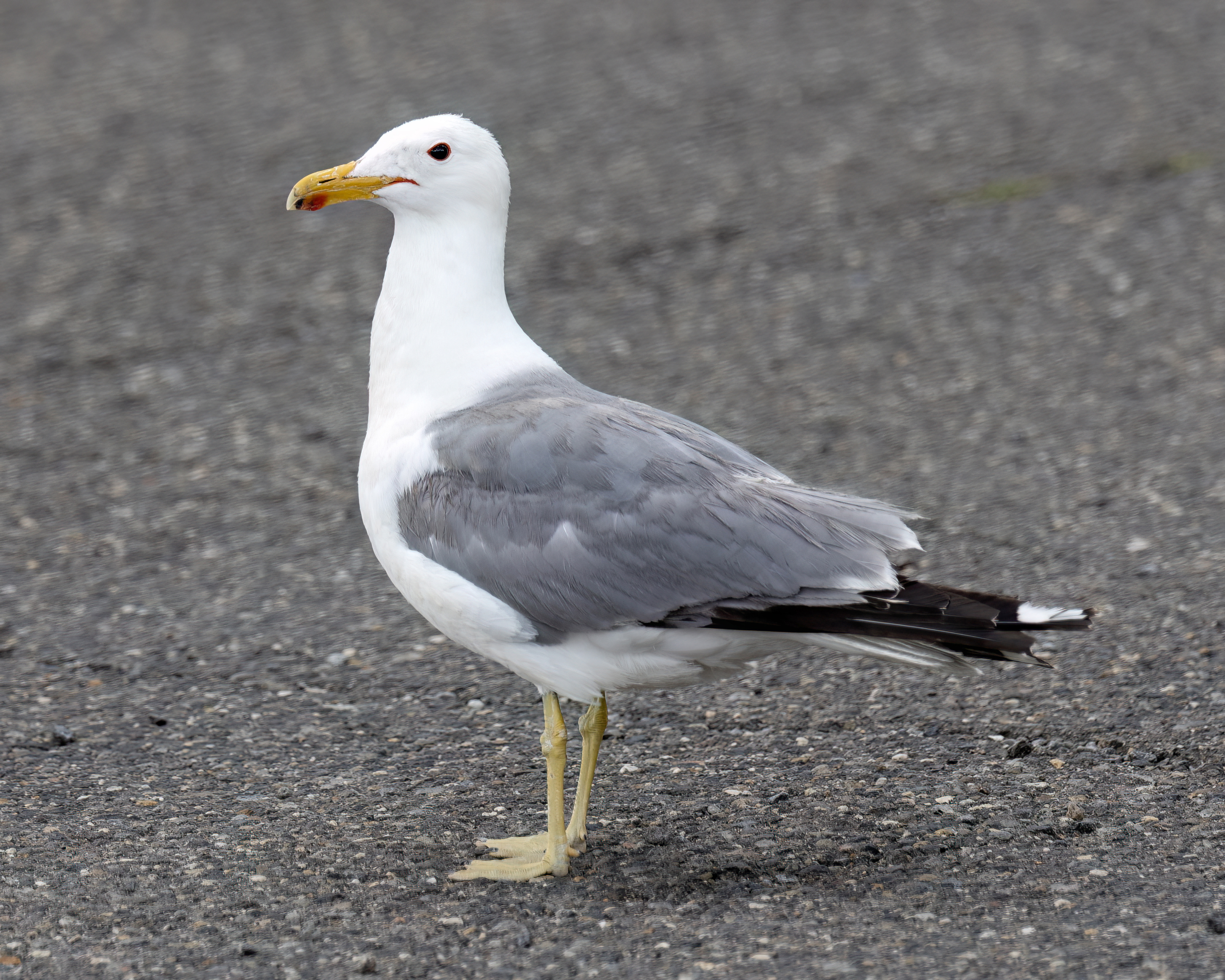
California Gull turns on medium gull structure, pale gray back, dark wingtips, yellow bill with markings, and inland western context, then on the setting around it: Great Basin lakes, reservoirs, marsh edges, farm fields.
- Family
- Gulls
- Diet
- Omnivore
- Status
- LC
- Range cue
- Michigan eBird frequency
Quick Summary
California Gull is a medium-sized gull where context matters as much as plumage. The direct answer is that adults show a gray-and-white gull pattern, dark wingtips, and a sturdy bill, but inland lakes and Utah history are part of the ID frame.
01Field marks
Solving the Three-Gull Puzzle
Adults usually show a white head, medium gray back, black wingtips with pale spots, and a bill with colored marks. Immatures vary more, so size, structure, flock context, mantle shade, bill strength, and location carry more weight than one field mark.
Bill strength, wing pattern, colony behavior, and inland setting should come first; the gulls family helps only after those clues are already part of the read.
California Gull sits between very large ocean gulls and smaller, more delicate gulls or terns. Use body size, bill strength, wing pattern, posture, voice, flock mix, and inland habitat together, especially around western lakes, reservoirs, islands, and agricultural edges.
That cadence keeps gull ID realistic: compare structure first, then let plumage and place narrow the answer.
A clean view still needs context. Inland water, colony movement, farm-edge feeding, and medium-bodied posture should support the plumage read before the name feels settled, especially when age and molt make the feathers look untidy or mixed. Treat place as real evidence, not decoration.

- Structure first: medium gull size, sturdy bill, gray back, and dark wingtips matter together.
- Age warning: immature gulls vary, so context and size carry extra weight.
- Habitat clue: western inland lakes are part of the profile, not an exception.
02Behavior and habitat
A Gull That Lives Between the Prairie and the Pacific
Away from colonies, California Gull behaves like a practical generalist. It walks, scavenges, patrols shorelines, follows food pulses, and shifts between water and land as conditions change.
This flexibility is why location matters. A gull on an inland reservoir, farm field, or western lake should not be dismissed as an ocean-only bird. Field observation works best when habitat, flock behavior, season, commuting direction, and movement guide the plumage check.
Western lakes, farm edges, and colony timing make state birding routes useful before assuming every gull belongs to a coast.
The scanable behavior answer is simple: watch where it feeds, where it rests, and how the flock moves.
For California Gull, field observation habits matter because inland lakes, farm edges, and shoreline movement can change the first useful clue.
Regional season and habitat context make birding by state useful when California Gull feels expected in one landscape and scarce in another.
Practical field habits should start with movement, cover, and sound before a single color mark.
For California Gull, keep medium gull structure, pale gray back, dark wingtips, yellow bill with markings, and inland western context, insects, fish, refuse, aquatic prey, small animals, eggs, and seasonal food pulses, a ground nest in open colonies near inland water or island sites, and protected colony sites, stable water levels, low nest disturbance, and healthy inland wetland systems with one page owner instead of repeating them as separate checklist items.
- Generalist clue: walking, scavenging, patrolling, and following food pulses all fit.
- Inland warning: this gull is not ocean-only.
- Field method: habitat and behavior should guide the plumage check.
03Food and foraging
The Bold Opportunist From Landfill to Shoreline
California Gulls feed flexibly on insects, fish, refuse, eggs, carrion, and seasonal food sources. That opportunism explains why the bird can move between lakes, shorelines, agricultural fields, landfills, and human edges.
The feeding history is also the state-symbol history. Utah's familiar account centers on gulls eating crop insects, so insect-feeding and opportunism become cultural memory. The useful field point is flexible food use, not a claim that one food source defines the species across seasons, colonies, and human edges.
Food pulses across lakes, fields, and human edges create California Gull-friendly habitat more than any single feeder idea.
A good diet section should therefore explain movement between food pulses, not turn the bird into a feeder or a single-story symbol.
General backyard bird attraction methods only fit if they broaden into food availability, waste, water, and safe viewing.
Great basin lakes, reservoirs, marsh edges, farm fields, shorelines, and colony islands creates California Gull-friendly habitat when food and cover work together.
Broader backyard habitat advice only helps when it supports insects, fish, refuse, aquatic prey, small animals, eggs, and seasonal food pulses and the bird's normal movement pattern.
- Flexible diet: insects, fish, refuse, and seasonal food all fit the species.
- State-symbol tie: insect feeding explains why Utah remembers the bird.
- Practical cue: food pulses move gulls between water, fields, and human edges.
04Conservation
Least Concern, and the Utah Cricket Rescue
The conservation frame stays measured. California Gull remains familiar in much of the West, but colony sites, water levels, disturbance, and food availability can shape local success.
Historically familiar state birds can come from practical feeding behavior as much as from bright plumage.
Utah symbolism gives the closure a clear job. The bird matters because practical feeding behavior, inland presence, colony dependence, and historical memory intersect, not because the name alone tells the whole story or because every conservation question is statewide drama about decline.
That measured ending gives readers a useful action lens: respect colonies, water edges, and food systems before leaning on symbolism.
Utah history, colony behavior, and inland gull familiarity all support Utah's California Gull choice.
- Status frame: colony sites, water levels, and disturbance shape local success.
- History clue: Utah symbolism comes from practical feeding behavior.
- Why it matters: the profile connects field ID with western cultural memory.
Least Concern. California Gull is the official state bird in 1 states
05Nesting data
Island Colonies on Inland Lakes
They breed in colonies, often near inland lakes, islands, marsh edges, or open ground where many pairs can nest near each other. The colony pattern makes the species easier to count, disturb, and protect than a solitary nesting bird.
Breeding gulls defend space, call loudly, and move constantly between nest sites and feeding areas. The result is a real colony scene, not just a thin note that gulls nest in groups; water level, island access, crowding, and disturbance can all shape what happens next.
That colony lens gives the section its job: explain why place, numbers, noise, and protection all matter at once.
- Colony clue: many pairs nest near each other in open areas.
- Site clue: islands, marsh edges, and inland lake areas often matter.
- Behavior cue: calling, vigilance, and commuting define the breeding scene.
What should you check or read next?
A final check on California Gull separates look-alike comparisons, related bird profiles, and practical next steps.
Questions and answers
Are California Gulls only found in California?
No. California Gulls use many western inland lakes, reservoirs, farm areas, and shorelines. Utah is central to the species' state-symbol meaning.
Why is the California Gull Utah's state bird?
Utah's state-bird history comes from gulls feeding on crop insects in pioneer-era fields, which made the species a historical symbol.
How do you identify a California Gull?
Use medium gull size, gray back, white head on adults, dark wingtips, bill markings, and western inland or shoreline context together.
Related field context
The strongest adjacent references stay with the same bird, the family, habitat, or state-symbol context already used in the article.