Brown Pelican: The Coastal Plunge-Diver That Came Back
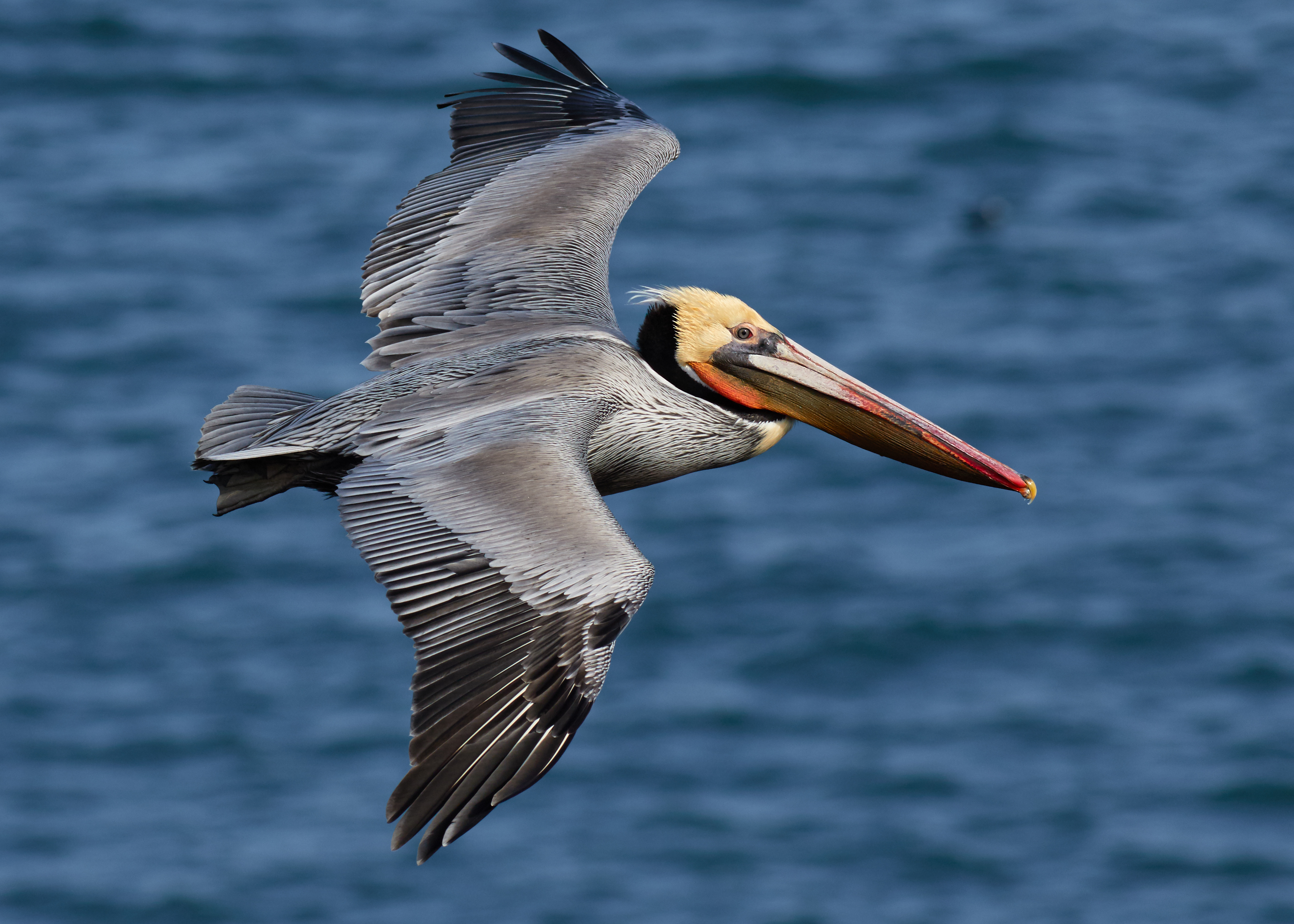
Brown Pelican turns on long bill with pouch, heavy coastal body, low flight over water, and plunge-diving behavior, then on the setting around it: bays, barrier islands, piers, beaches, estuaries, mangroves, and warm coastal.
- Family
- Pelicans
- Diet
- Piscivore
- Status
- LC
- State bird
- 1 states
Quick Summary
Brown Pelican is a coastal bird where shape and behavior answer the ID quickly. Look for a massive bill and pouch, long wings, low gliding flight, and plunge-diving over nearshore water instead of starting with color alone.
01Behavior and habitat
The Low Line and the Sudden Crash
The bird's movement is scan-friendly: low glide, slow bank, plunge, surface pause, then another patrol line. Those repeated behaviors help beginners confirm the species even when plumage and age variation create uncertainty, and they make behavior the section's main evidence rather than decorative color detail.
Brown Pelicans also loaf on pilings, docks, sandbars, and breakwaters. A resting bird may hide the drama of the dive, but perched posture still points back to the same heavy bill, pouch, and coastal feeding lane.
Coastline, season, and local fish movement make state birding routes useful for deciding where Brown Pelican views are most likely.
For Brown Pelican, field observation habits start with flight line, plunge angle, and shoreline context before plumage details matter.
Regional season and habitat context make birding by state useful when Brown Pelican feels expected in one landscape and scarce in another.
Practical field habits should start with movement, cover, and sound before a single color mark.
For Brown Pelican, keep long bill with pouch, heavy coastal body, low flight over water, and plunge-diving behavior, small fish caught by plunge diving, surface feeding, and occasional opportunistic scraps near working waterfronts, a colony nest on coastal islands, mangroves, shrubs, or low ground depending on site protection, and protected nesting islands, clean coastal food webs, reduced disturbance, and recovery from pesticide-era collapse with one page owner instead of repeating them as separate checklist items.
- Movement loop: glide, bank, plunge, drain, and patrol repeat along shorelines.
- Resting clue: pilings, docks, sandbars, and breakwaters are common loafing spots.
- Habitat fit: coastal structure explains both feeding and visibility.

02Field marks
How to Know a Brown Pelican From a White One
The bill-pouch silhouette solves many views before plumage enters the decision. Adults can show changing head and neck colors by age and season, but the long bill, heavy body, and broad wings keep the structure consistent.
Pouch, wing span, low coastal flight, and plunge-diving all reinforce why the pelicans family is useful after the ID is already taking shape.
Separate it from cormorants, gulls, and other waterbirds by flight style. Brown Pelicans often skim low over waves in lines, using slow wingbeats and glides. A cormorant looks slimmer, lacks the pouch profile, and usually carries the neck and wings with a tighter, more angular look on the same shoreline.
Age variation can change colors, but it does not erase the pouch, wing span, low flight line, or heavy coastal profile.
Behavior should confirm the shape. A bird that glides low, banks over nearshore water, and folds into a plunge dive is giving stronger evidence than a resting color impression from far down a pier.

- Shape first: huge bill, pouch, broad wings, and heavy body solve many views.
- Flight clue: low wave-skimming lines separate pelicans from many coastal birds.
- Age warning: plumage shifts, but bill-and-wing structure stays dependable.
03Food and foraging
A Pouch That Works Like a Net
Feeding is the centerpiece, not a side note. Brown Pelicans spot fish from above, plunge into water, scoop prey in the pouch, and drain water before swallowing. That behavior makes the bird easy to identify from a beach or pier.
Nearshore fish schools, estuaries, bays, and productive coastal water matter more than any backyard setup. The practical question is viewing ethics: watch from a respectful distance, keep fishing line and scraps away from birds, and never teach pelicans to approach people for food near docks or cleaning stations.
Fish schools and clean coastal water create Brown Pelican-friendly habitat, not a backyard feeder setup.
This makes the section both practical and protective: explain the dive, then explain why people should not turn it into begging behavior.
General backyard bird attraction methods are the wrong lens unless they broaden into habitat ethics and food-web support.
Bays, barrier islands, piers, beaches, estuaries, mangroves, and warm coastal waters creates Brown Pelican-friendly habitat when food and cover work together.
Broader backyard habitat advice only helps when it supports small fish caught by plunge diving, surface feeding, and occasional opportunistic scraps near working waterfronts and the bird's normal movement pattern.
- Main behavior: plunge-diving is the feeding clue that defines the species.
- Food lane: fish schools, bays, estuaries, and nearshore water matter most.
- Ethics cue: watching is safer than feeding scraps or fishing waste.
04Conservation
The Bird That Came Back From Thin Shells
The conservation story carries trust because Brown Pelican recovery is part of the species' public meaning. Pesticide pressure once hit reproduction hard, and protections helped the bird rebound strongly in the United States.
Visible coastal species become state birds when ecology, recovery history, and public identity reinforce each other.
Louisiana's state-bird link works because the species is both ecological and cultural. It belongs to coasts, fisheries, recovery history, and public identity at the same time, so the closure should hold all four while still naming habitat, disturbance, and food-web pressures clearly.
That history makes the tone confident but not casual: recovery is real, and local coastal pressure still deserves attention.
Coastal visibility, recovery history, and local identity all support Louisiana's Brown Pelican choice.
- Trust frame: recovery history is central to Brown Pelican meaning.
- Pressure point: colony disturbance and coastal habitat still matter locally.
- Why it matters: Louisiana symbolism connects ecology, coast, and recovery.
Least Concern. Brown Pelican is the official state bird in 1 states
05Nesting data
Raising Chicks on Islands the Foxes Cannot Reach
Brown Pelicans nest in colonies, often on islands, mangroves, or isolated coastal sites where many pairs can gather with reduced predator access. The breeding story is social, noisy, and place-based.
Colony dependence makes disturbance important. People, dogs, boats, storms, and habitat loss can matter at nesting sites even when the bird looks common along a busy waterfront. That gives the breeding section a real trust job: separate casual feeding views from the protected colony places where eggs, chicks, and adult attendance can be disrupted.
A reader should leave understanding that nesting success depends on quiet colony space, not only on whether adults look abundant offshore.
- Colony clue: nesting happens with many pairs at coastal sites.
- Site clue: islands, mangroves, and isolated areas reduce predator access.
- Disturbance warning: boats, dogs, people, and storms can affect colonies.
What should you check or read next?
A final check on Brown Pelican separates look-alike comparisons, related bird profiles, and practical next steps.
Questions and answers
Do Brown Pelicans dive for fish?
Yes. Brown Pelicans plunge-dive from above the surface, scoop fish with the pouch, drain water, and then swallow the prey.
How do you tell a Brown Pelican from a cormorant?
Brown Pelican is bulkier, has a huge bill and pouch, and often glides low over waves. Cormorants look slimmer and lack the pouch profile.
Why is the Brown Pelican important in Louisiana?
It is Louisiana's state bird and a visible coastal species with a major recovery history, so it carries both ecological and cultural meaning.
Related field context
The strongest adjacent references stay with the same bird, the family, habitat, or state-symbol context already used in the article.