Ring-necked Pheasant: The Introduced Gamebird Gone Wild
Use this profile to identify Ring-necked Pheasant, place it within the pheasants and allies family, and move from field marks into feeding, nesting, behavior, and status.
- Family
- Pheasants and Allies
- Diet
- Omnivore
- Status
- LC
- State bird
- 1 states
Quick Summary
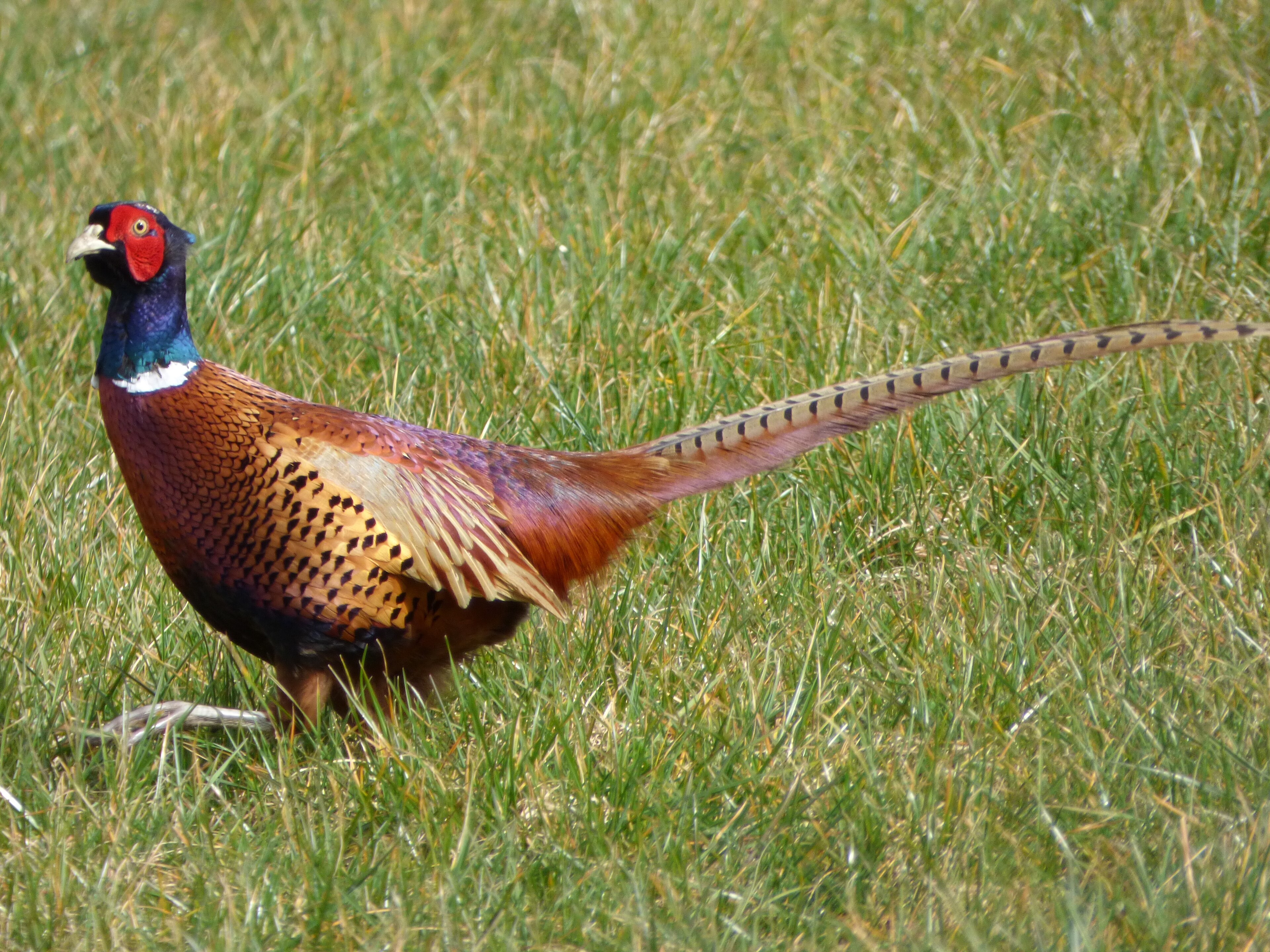
Ring-necked Pheasant is a field-edge gamebird where the long tail, ground-built body, and sudden flush matter as much as the bright male colors. A perfect rooster view is easy, but many real encounters start with a running bird, a burst from cover, or a cryptic female slipping through grass.
01Field marks
Long tail, field body, and the male-female split
Adult males are unmistakable when seen well: long pointed tail, copper body, green head, red face skin, and often a pale neck ring. The whole bird looks long, heavy, and ground-built, with a tail that trails behind the body rather than flicking like a small songbird.
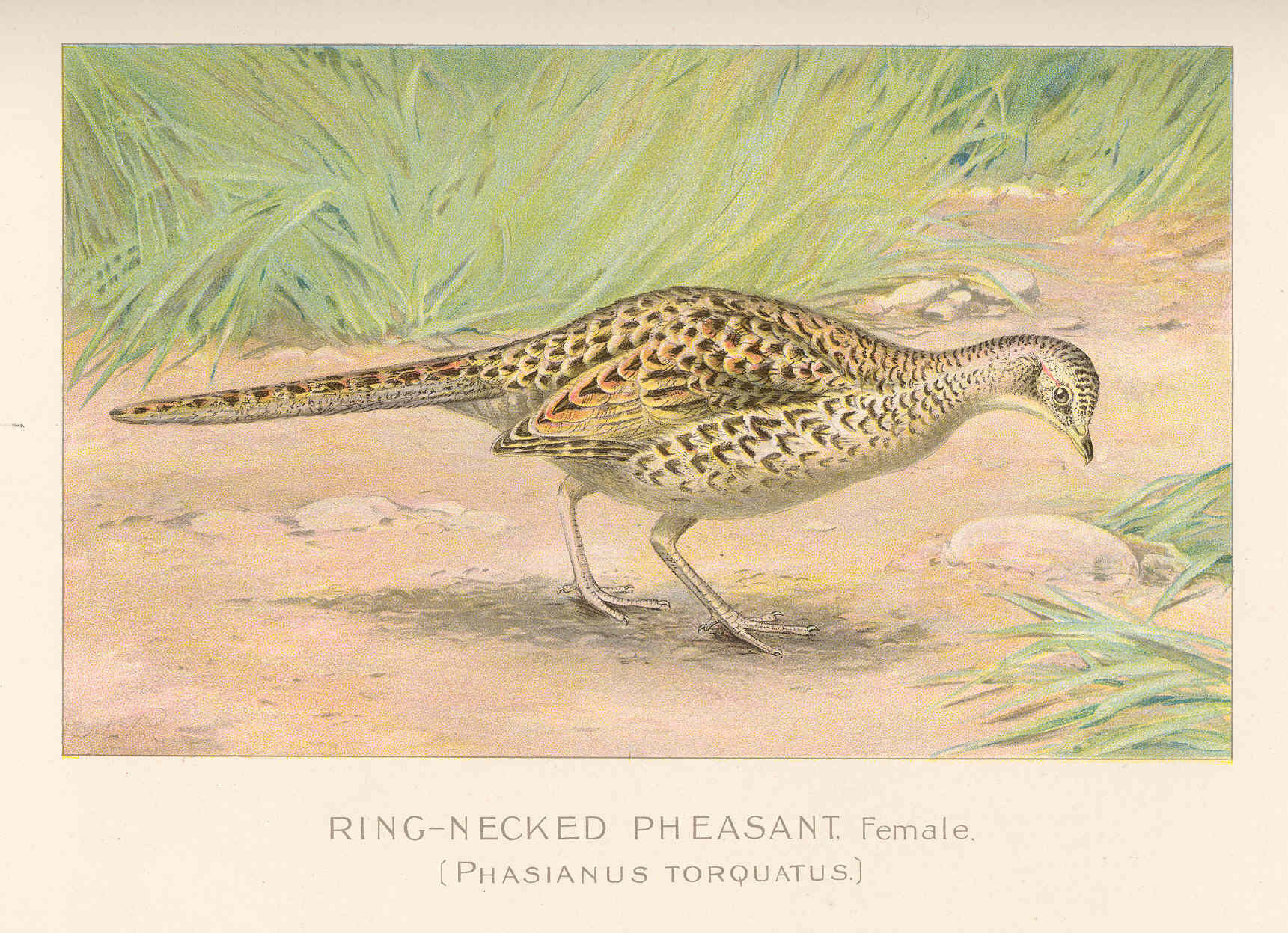
Females are the real field test. A hen is mottled brown and cryptic, with a long tail and gamebird shape that can disappear into grass fast. The lack of bright color does not make her a different kind of bird. It makes structure, cover, and movement more important.
California Quail gives a useful contrast because it is smaller, rounder, and usually reads as a covey bird with a short curved head plume. Ring-necked Pheasant looks longer, heavier, and more tied to tall field cover.
The flush can be a field mark. Ring-necked Pheasant often erupts from cover at close range with loud wingbeats, then shows the long tail as it clears the grass. A perched or walking bird is easier, but the sudden escape pattern is often how the species is first noticed.
Domestic birds can distract the ID near farms, but the setting should reset the question. If the bird runs through grass, holds low in cover, then explodes up with a long tail, pheasant should stay high in the decision.
The safest ID joins sex, shape, and behavior. A colorful male, a cryptic hen, or a fast flush can all point to the same species when the long gamebird body and field-cover setting agree.
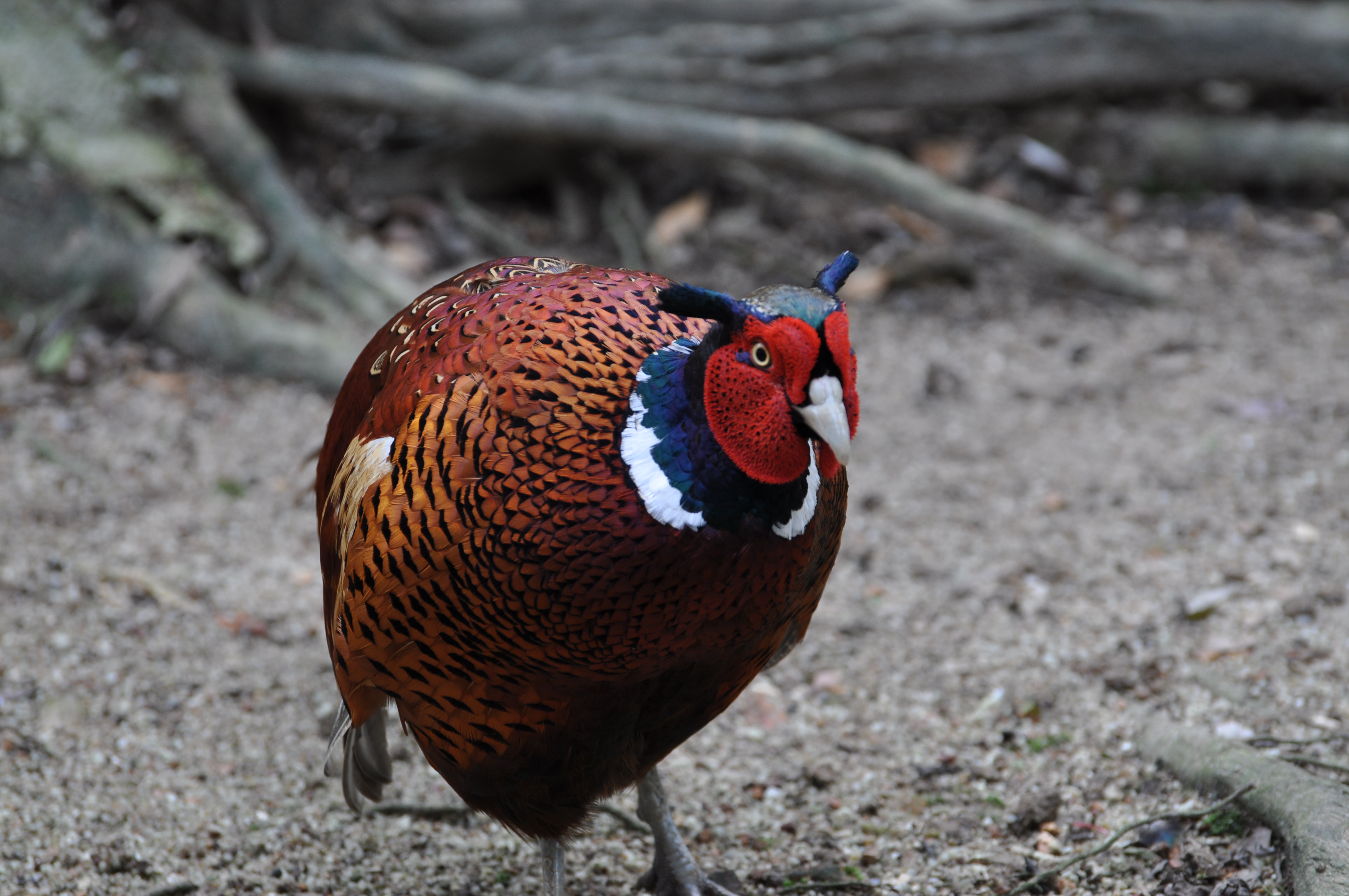
- Male clue: long tail, green head, red face skin, and copper body are the fastest marks.
- Female clue: mottled brown plumage still comes with a long tail and groundbird structure.
- Flush clue: loud wingbeats from grass can reveal the bird even when the view is brief.
06Comparison table
Birds most often confused with Ring-necked Pheasant
| Bird | What differs first | Best clue |
|---|---|---|
| Wild Turkey field mark | Tail length, body size, and flush style separate large ground birds in open country. | Tail length, body size, and flush style separate large ground birds in open country |
| Greater Prairie-Chicken field mark | Grassland habitat can fit both birds, while tail shape, display structure, and body profile point different ways. | Grassland habitat can fit both birds, while tail shape, display structure, and body profile point different ways |
| Ruffed Grouse field mark | A fast-flushing brown gamebird needs habitat, tail length, and forest-edge context checked together. | A fast-flushing brown gamebird needs habitat, tail length, and forest-edge context checked together |
02Behavior and habitat
Why a running bird in cover can matter more than color
Ring-necked Pheasant often tries to solve danger on foot before it flies. A bird may run through grass, freeze, or slip along a ditch before flushing hard and noisy at close range.
That behavior separates it from many open-country songbirds. Western Meadowlark and Lark Bunting may stand in grassland, but they do not have the same heavy gamebird body, long-tailed run, or explosive flush.
Hawaiian Goose is a useful reminder that not every ground bird in open habitat behaves the same way. Pheasant behavior is cover-driven, nervous, and built around concealment until flight becomes necessary.
Males can become conspicuous in spring, especially when they call, display, or stand near roadsides and field edges. That visibility can make the species feel easy, but it is only one seasonal face of the bird.
Females and young birds stay harder to see because survival depends on staying low in cover. A good field read should handle both versions: the bright rooster in the open and the brown bird vanishing through grass.
Season changes visibility. Spring display, summer brood cover, autumn field edges, and winter shelter all shift where the same species is easiest to find.
Read Ring-necked Pheasant through the field marks first, then test the state-symbol story against the habitat and behavior that make the bird visible.
- Behavior clue: pheasants may run through cover before flushing into view.
- Spring cue: males advertise from field edges and roadsides when cover opens up.
- Habitat fit: farm edges, grass strips, ditches, and shelterbelts make the profile make sense.
03Food and foraging
How grain, weeds, insects, and field edges explain feeding
Ring-necked Pheasants feed on seeds, grain, weed seeds, greens, insects, and other ground food found in working field edges. The diet explains why the species often appears near crop margins, weedy ditches, grass strips, and winter cover.
Chicks need insects early, so brood habitat cannot be only clean grain or bare ground. A useful pheasant landscape has food and cover together, with enough rough structure for young birds to move while feeding.
Ruffed Grouse gives a woodland contrast because it uses forest cover, buds, catkins, and leaf-litter lanes more than open farm edges. Ring-necked Pheasant is more strongly tied to grass, grain, weeds, and agricultural cover.
Rhode Island Red is a better fit for managed feed, scratch grain, and domestic chicken care. Ring-necked Pheasant may use human-shaped landscapes, but it still reads as a field bird working cover, waste grain, weed seed, and insects rather than a barnyard bird waiting for a feeder.
Winter can tighten the food problem. Birds need seed or grain within reach of shelter, because exposed feeding sites make a heavy ground bird vulnerable before it can run or flush.
This is not a backyard feeder problem. A pheasant may pick spilled grain, but the real feeding answer is field structure, winter shelter, weed seed, and insect-rich brood cover.
- Ground diet: seeds, grain, greens, and insects fit a bird that walks cover lines.
- Chick need: insects matter more early, when young birds need protein-rich food.
- Field cue: waste grain, weeds, and winter cover can explain where pheasants persist.
04Nesting data
Why ground nesting makes grass cover the breeding clue
Breeding puts the focus on the ground. Ring-necked Pheasants nest in grass, weeds, field margins, ditches, and other cover that can hide a hen and eggs from view.
The nest itself is less useful to most readers than the cover around it. Grass height, mowing timing, predator exposure, and nearby brood food all decide whether the field works as nesting habitat.
Greater Roadrunner also nests in dry open country, but it does not share the pheasant's grass-cover gamebird pattern. The pheasant breeding picture is a hen hidden low, chicks leaving the nest quickly, and the brood moving through protective cover.
Chicks leave the nest soon after hatching, so breeding habitat has to work at ground level after the eggs hatch too. A field that hides a nest but offers no insect food or safe brood movement has only solved part of the problem.
That is why mowing and clean edges matter. Cutting cover during nesting season can remove the one structure that makes the breeding attempt possible, even when food remains nearby.
- Nest site: grass, weeds, and crop-edge cover protect ground nests.
- Brood cue: chicks leave the nest quickly and move through cover with the female.
- Mowing risk: cutting cover during nesting season can expose nests and young birds.
05Conservation
How an introduced gamebird became a state-symbol landscape bird
Ring-necked Pheasant has an unusual conservation and meaning frame because it is introduced in North America but culturally established in many farm landscapes. The article should say that clearly instead of treating the bird as a native grassland symbol.
The practical habitat issue is cover. Grass strips, shelterbelts, weedy edges, winter cover, and insect-rich brood habitat make the species visible and huntable in places where it persists.
Northern Flicker can share open edges but depends on cavity and ground-foraging structure. Brown Thrasher needs dense shrub cover. Scissor-tailed Flycatcher needs open air and exposed perches. Those comparisons keep pheasant habitat specific instead of letting "open country" become a vague label.
The introduced status also changes the tone. This is not a purity story about restoring an original native bird. It is a field-landscape story about how cover, agriculture, hunting culture, and public familiarity made one introduced gamebird deeply recognizable.
South Dakota's Ring-necked Pheasant choice works because the bird is tied to working fields, hunting culture, and visible rural identity. The symbolism should stay honest about introduced status while still explaining why the species became locally meaningful.
- Status: Ring-necked Pheasant is introduced in North America but culturally established in farm country.
- Main pressure: grassland cover, winter shelter, and mowing timing drive local usefulness.
- Why it matters: the species connects state identity to working-field habitat rather than pure ornament.
Least Concern. Ring-necked Pheasant is the official state bird in 1 states
What should you check or read next?
A final check on Ring-necked Pheasant separates look-alike comparisons, related bird profiles, and practical next steps.
Questions and answers
How do you identify a female Ring-necked Pheasant?
Look for a mottled brown gamebird with a long tail, ground-running behavior, and field-cover habitat. Females lack the male's bright colors but keep the long pheasant shape.
Are Ring-necked Pheasants native to North America?
No. Ring-necked Pheasant is introduced in North America, but it is now culturally established in many farm and grassland landscapes.
Where are Ring-necked Pheasants most likely to be found?
Check crop edges, grass strips, ditches, shelterbelts, weedy margins, and other places where food and escape cover sit close together.
Related field context
The strongest adjacent references stay with the same bird, the family, habitat, or state-symbol context already used in the article.