Brown Thrasher: The Bird With the Largest Song Repertoire
Use this profile to identify Brown Thrasher, place it within the mockingbirds family, and move from field marks into feeding, nesting, behavior, and status.
- Family
- Mockingbirds
- Diet
- Omnivore
- Status
- LC
- State bird
- 1 states
Quick Summary
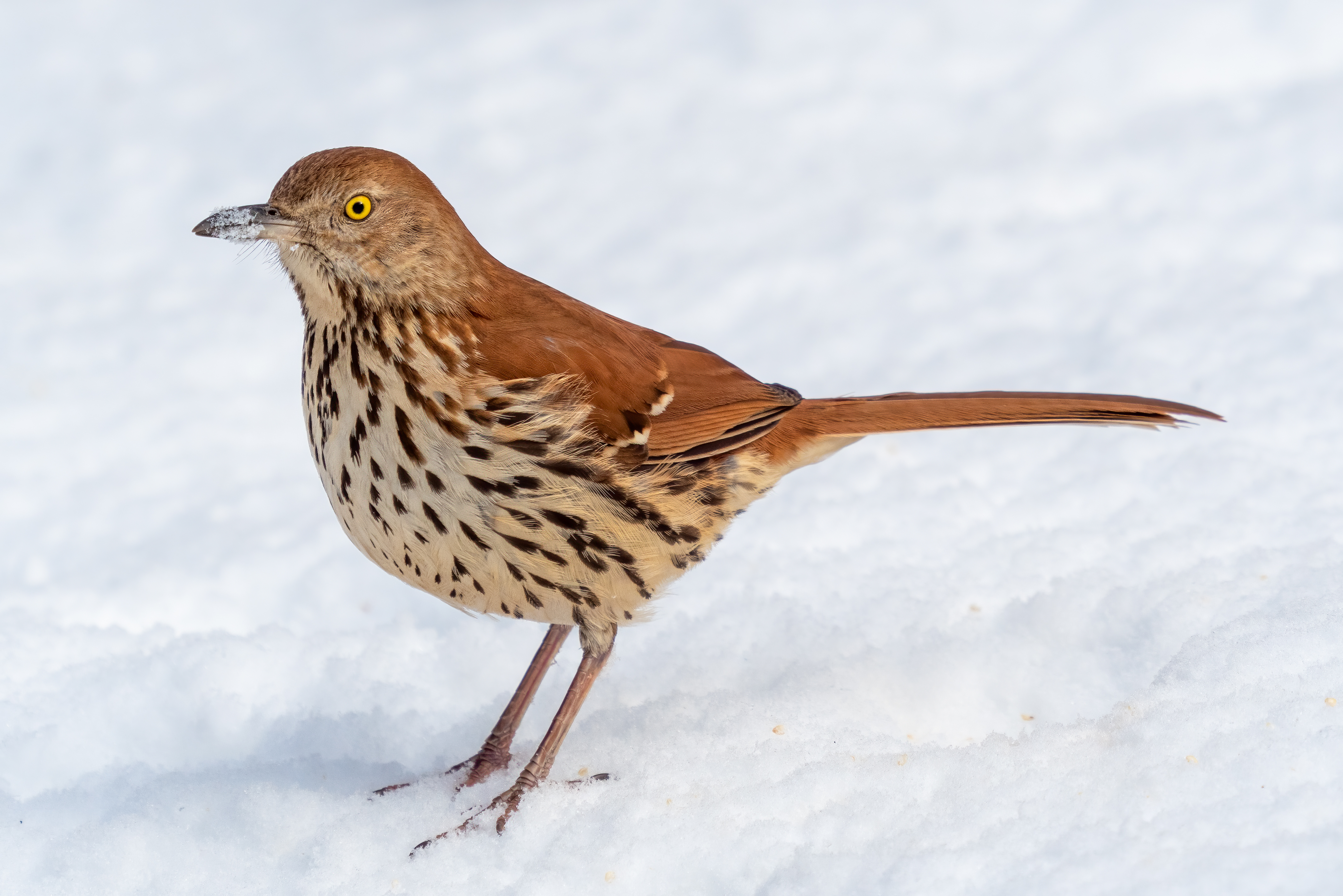
Brown Thrasher is a thicket bird that often gives itself away by song before it gives a clean view. The long tail, warm brown back, pale eye, curved bill, and heavy streaking all matter, but the repeated song phrases and leaf-litter behavior make the profile specific.
01Field marks
Long tail, pale eye, and streaking in the thicket
Start with shape and cover. Brown Thrasher is long-tailed, warm rufous-brown above, heavily streaked below, and often low in shrubs or leaf litter where it can vanish quickly.
The pale eye and slightly curved bill sharpen the view when the bird pauses. Those details matter because a moving thrasher can show only tail, streaking, and a flash of brown before it slips back into cover.
Northern Mockingbird is the strongest mimid comparison. Mockingbird is grayer, cleaner below, and more comfortable in exposed open perches. Brown Thrasher feels warmer, streakier, lower, and more tied to dense edge structure.
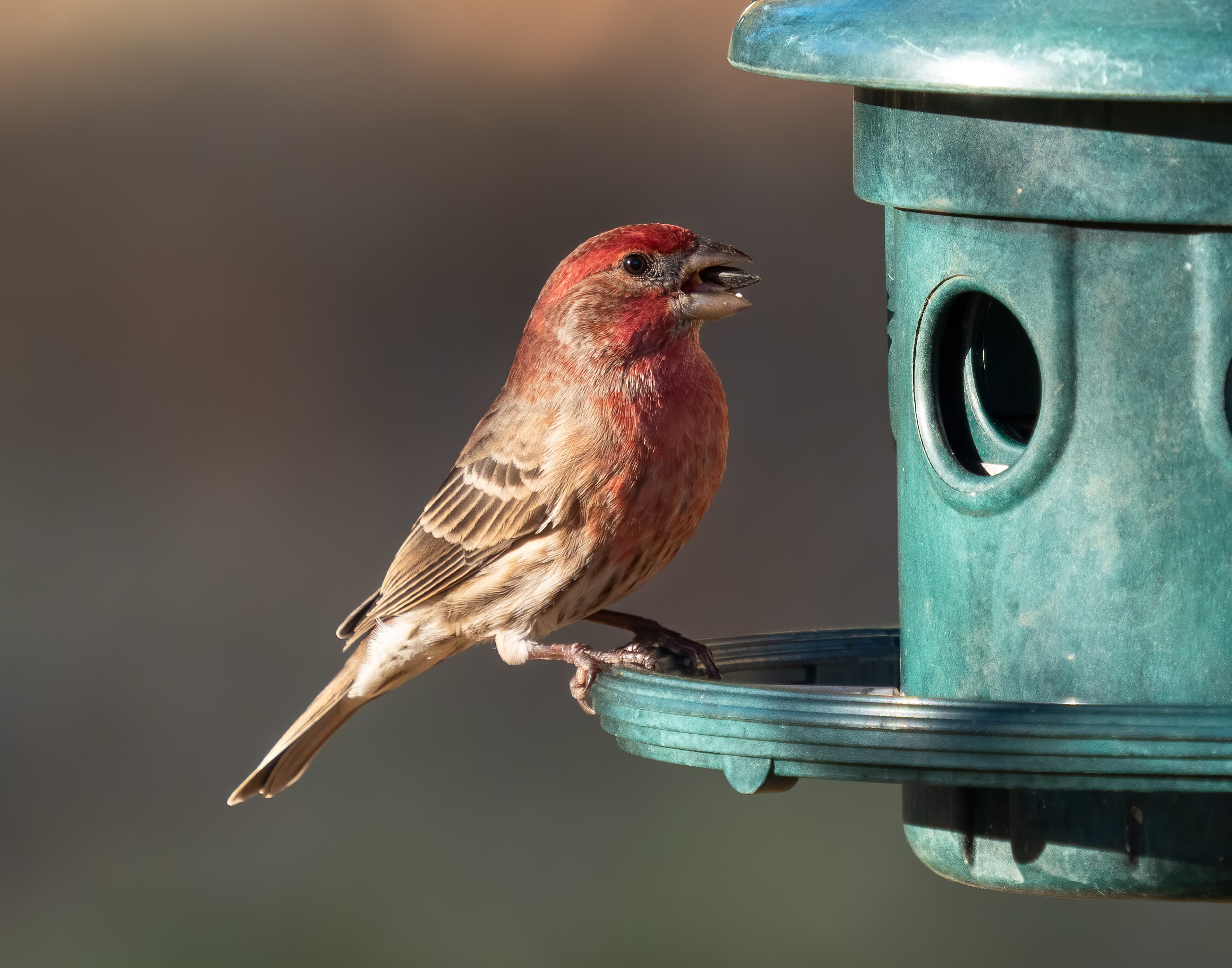
American Goldfinch and Purple Finch may appear in the same yard or edge, but their finch bills, smaller bodies, and seed-focused posture do not match a thrasher flipping leaves and running through cover.
A catbird-like impression can also happen when the view is brief, because both birds use tangles. Brown Thrasher should still look longer, warmer, more heavily streaked, and more forceful in the bill and tail.
The bird's posture is often horizontal and purposeful. It may run or hop under shrubs, pause with the tail stretched behind it, then disappear before the observer gets a full side view.
A safe ID joins the long tail, warm brown back, streaked underparts, pale eye, curved bill, and thicket setting. Color alone is not enough because many edge birds can look brown in a fast view.
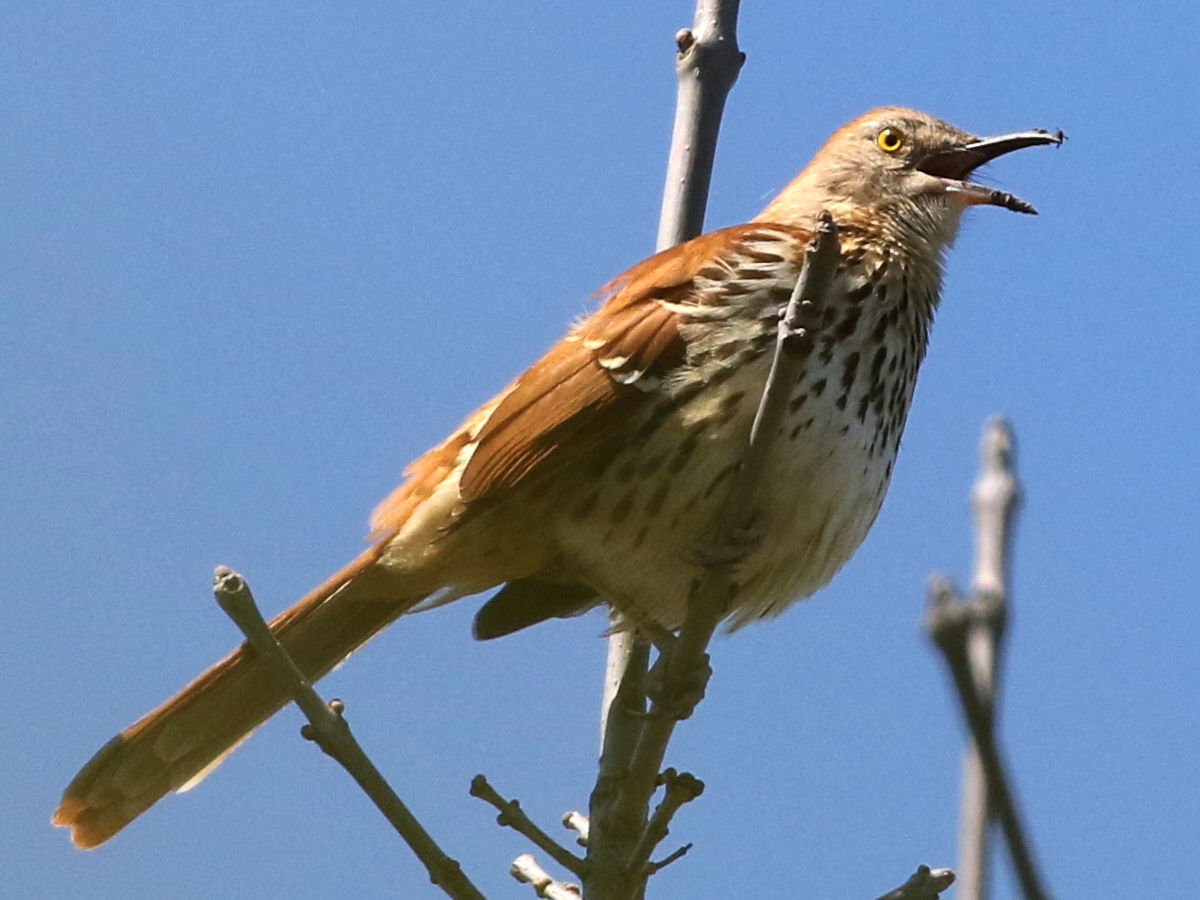
- Shape clue: long tail, warm brown back, pale eye, and heavy streaking separate thrasher from most sparrows.
- Song clue: repeated phrase pairs point toward Brown Thrasher instead of a looser mockingbird run.
- Habitat clue: thickets, hedgerows, and brushy edges fit better than open lawns or deep clean forest.
06Comparison table
Birds most often confused with Brown Thrasher
| Bird | What differs first | Best clue |
|---|---|---|
| Northern Mockingbird confusion | Long tail and big song overlap, while color, streaking, and paired phrases split the two birds. | Long tail and big song overlap, while color, streaking, and paired phrases split the two birds |
| Wood Thrush confusion | Warm brown color and spotted underparts need habitat context before a thicket bird becomes a forest thrush. | Warm brown color and spotted underparts need habitat context before a thicket bird becomes a forest thrush |
| Gray Catbird confusion | Dense cover can hide the bird, so tail shape, color, and voice carry the ID together. | Dense cover can hide the bird, so tail shape, color, and voice carry the ID together |
02Behavior and habitat
How paired song phrases lead you into cover
Brown Thrasher behavior swings between secrecy and performance. It feeds low and hidden, then climbs to sing from a shrub top, small tree, or fence line with a voice that can carry far beyond the cover.
Song is one of the best behavior marks. Brown Thrasher often repeats phrases in pairs, giving the performance a different rhythm from many mockingbird sequences.
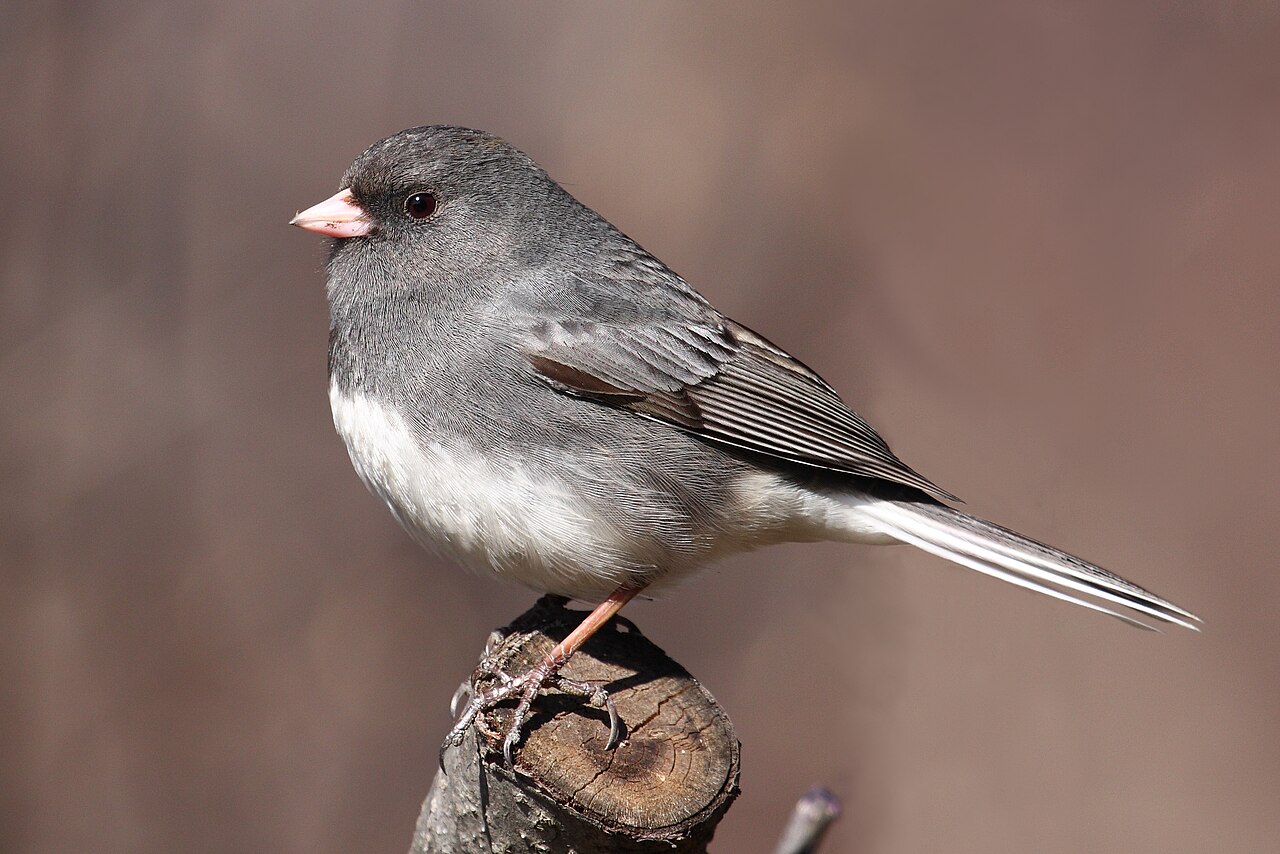
Carolina Wren also uses cover and loud song, but it is smaller, warmer-bodied, and cock-tailed, with a very different shape. Dark-eyed Junco stays low too, yet it feeds like a ground sparrow rather than a long-tailed leaf-tossing mimid.
American Robin can share fruiting yards, but it moves as an upright thrush on lawns and branches. Brown Thrasher runs, pauses, tosses leaves, and disappears into tangles.
The repeated phrases give the song a practical use. Once the ear catches that paired rhythm, the observer can search the right vertical layer instead of scanning every open branch like a mockingbird search.
Behavior also explains why the bird can feel absent from neat yards. Without brush, litter, and fruiting cover, there are fewer places for the thrasher to feed low and retreat fast.
The useful field method is to follow sound into structure. If a repeated song comes from an edge and a long warm-brown bird drops back into shrubs, the behavior is already doing much of the ID work.
Read Brown Thrasher through the field marks first, then test the state-symbol story against the habitat and behavior that make the bird visible.
- Behavior split: Brown Thrasher feeds secretly but sings from exposed points with surprising force.
- Movement clue: the bird runs, pauses, tosses leaves, and vanishes rather than hopping in the open.
- Edge lane: old fields, hedges, and brush piles are working habitat, not incidental cover.
03Food and foraging
Why leaf litter and fruiting cover explain Brown Thrasher food
Brown Thrashers feed by working the ground. They eat insects, beetles, caterpillars, spiders, berries, seeds, and other foods they uncover by tossing leaves, probing litter, and moving through dense edges.
That feeding style explains why the bird can be present but hard to see. A thrasher often sounds like rustling leaves before it becomes a visible bird.
Black-capped Chickadee is a branch-and-feeder contrast, with quick caching movements. Baltimore Oriole works canopy insects, fruit, and nectar. Brown Thrasher belongs lower, where leaf litter and shrub cover hold both food and protection.
Fruit matters later in the season, especially where native shrubs keep berries near escape cover. A clean lawn with one feeder pole is less useful than a messy edge with leaves, insects, and fruiting stems.
The bill and feet work together in that low lane. The bird can sweep through litter, jab into loose material, and shift debris enough that the feeding sign may appear before the bird steps into view.
The practical food answer is habitat, not a feeder recipe. Keep leaf litter, native shrubs, brushy edges, and fruiting cover if the goal is to make the bird's normal foraging possible.
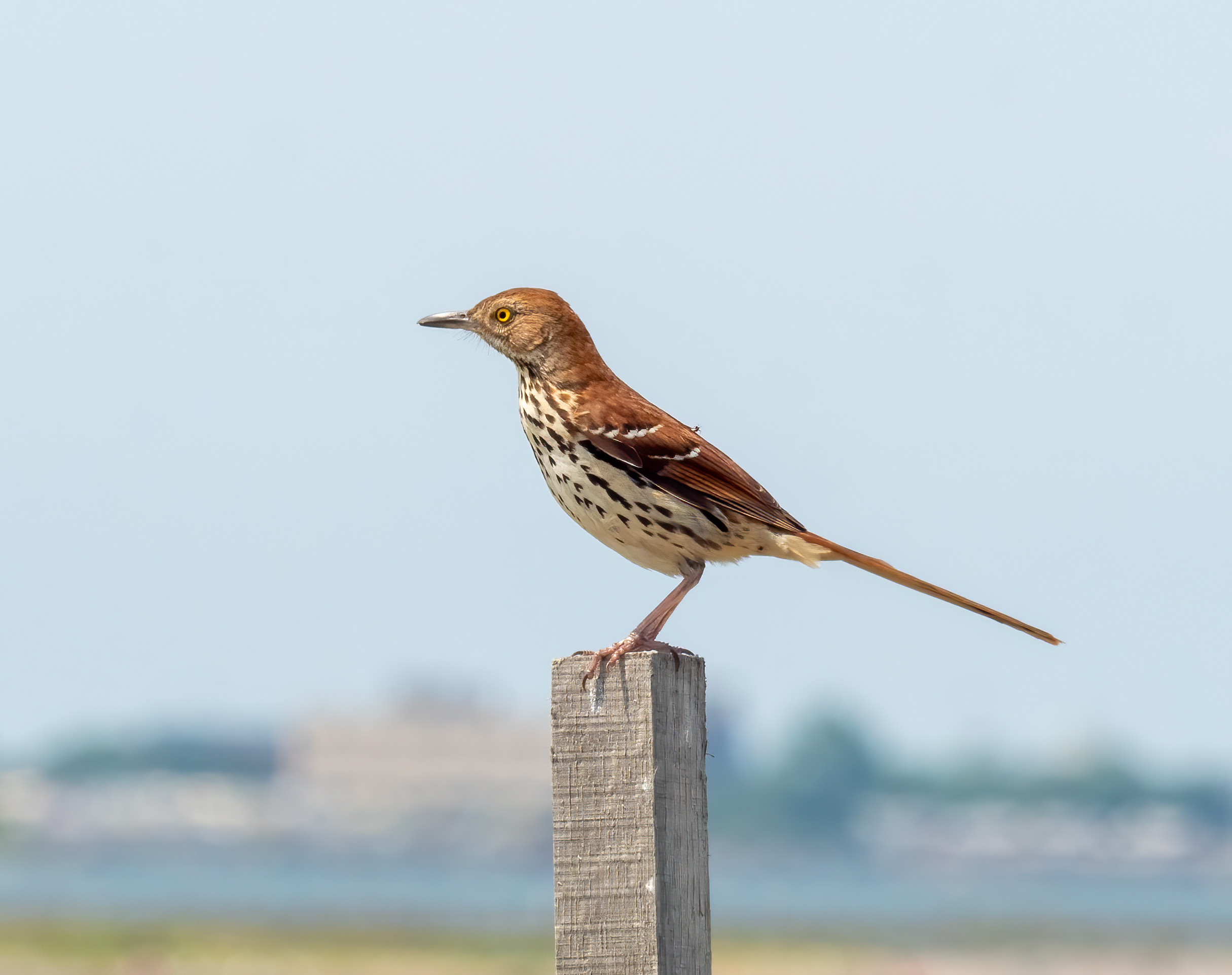
- Foraging style: leaf tossing and ground scratching are central to how the bird finds insects and fruit.
- Best yard support: native shrubs, fruit, and leaf litter beat a standard tube feeder.
- Seasonal shift: berries gain importance when insect supply drops outside peak breeding season.
04Nesting data
Why low dense cover owns Brown Thrasher nesting
Brown Thrasher nesting stays close to cover. The bird usually nests low in dense shrubs, small trees, thorny tangles, or other concealed structure where the adult already feeds and escapes.
The nest is not the main field object for most readers. The important clue is low dense cover that can hide eggs, young, and adults from view.
Northern Mockingbird can nest around shrubs and human edges too, but it keeps a more exposed, gray, performance-heavy profile. Brown Thrasher's breeding story is lower, browner, and more tangled.
During breeding season, the song may make the territory obvious while the nest remains hidden. That split is useful: listen high, then read the low cover that supports the actual nesting work.
A yard or field edge that removes every dense shrub may still look tidy, but it removes the structure that makes nesting possible. For this species, messy cover is not decorative. It is the breeding frame.
- Nest zone: low shrubs and thorny tangles provide both cover and structure.
- Visibility shift: singing males become easier to confirm when territory defense pulls them upward.
- Habitat warning: removing every dense shrub can remove the nest sites before the bird disappears.
05Conservation
Why Brown Thrasher needs rough edges, not tidy lawns
Brown Thrasher remains tied to shrubby edges, old fields, hedgerows, brushy lots, and leaf-litter cover. The conservation question is not best framed as drama. It is about whether the landscape still has the dense edge structure the bird uses.
Eastern Bluebird and Mountain Bluebird show different public-facing open-country habitat stories. Hermit Thrush uses quieter shaded woods. Brown Thrasher needs a rougher edge, where song perches, fruit, insects, and hiding cover sit close together.
Georgia's Brown Thrasher choice works because the bird is loud, local, and distinctive without needing bright plumage. The symbolism should point back to song and thicket habitat instead of replacing field detail.
That frame keeps the article honest. The bird is not helped by vague affection for nature as much as by keeping the shrub and leaf-litter structure that makes its behavior possible.
The practical close is straightforward. Native shrubs, leaf litter, brushy margins, and fruiting cover give Brown Thrasher the working habitat behind the song.
- Status: Brown Thrasher depends on shrubby edge habitat more than manicured open space.
- Main pressure: mowing and clearing flatten the cover that supports nesting and foraging.
- Why it matters: the species makes the ecological value of messy native edges easy to hear.
Least Concern. Brown Thrasher is the official state bird in 1 states
What should you check or read next?
A final check on Brown Thrasher separates look-alike comparisons, related bird profiles, and practical next steps.
Questions and answers
How do you identify a Brown Thrasher?
Look for a long-tailed warm brown bird with heavy underpart streaking, a pale eye, a slightly curved bill, and low thicket or leaf-litter behavior.
How is Brown Thrasher different from Northern Mockingbird?
Brown Thrasher is warmer brown, more heavily streaked below, and more tied to dense cover. Northern Mockingbird is grayer, cleaner below, and often more exposed.
Why do Brown Thrashers stay hidden?
They feed and nest in dense cover, where leaf litter, shrubs, and tangles provide food and protection.
Related field context
The strongest adjacent references stay with the same bird, the family, habitat, or state-symbol context already used in the article.