Scissor-tailed Flycatcher: Reading a Bird by Its Forked Tail
Use this profile to identify Scissor-tailed Flycatcher, place it within the tyrant flycatchers family, and move from field marks into feeding, nesting, behavior, and status.
- Family
- Tyrant Flycatchers
- Diet
- Insectivore
- Status
- LC
- State bird
- 1 states
Quick Summary
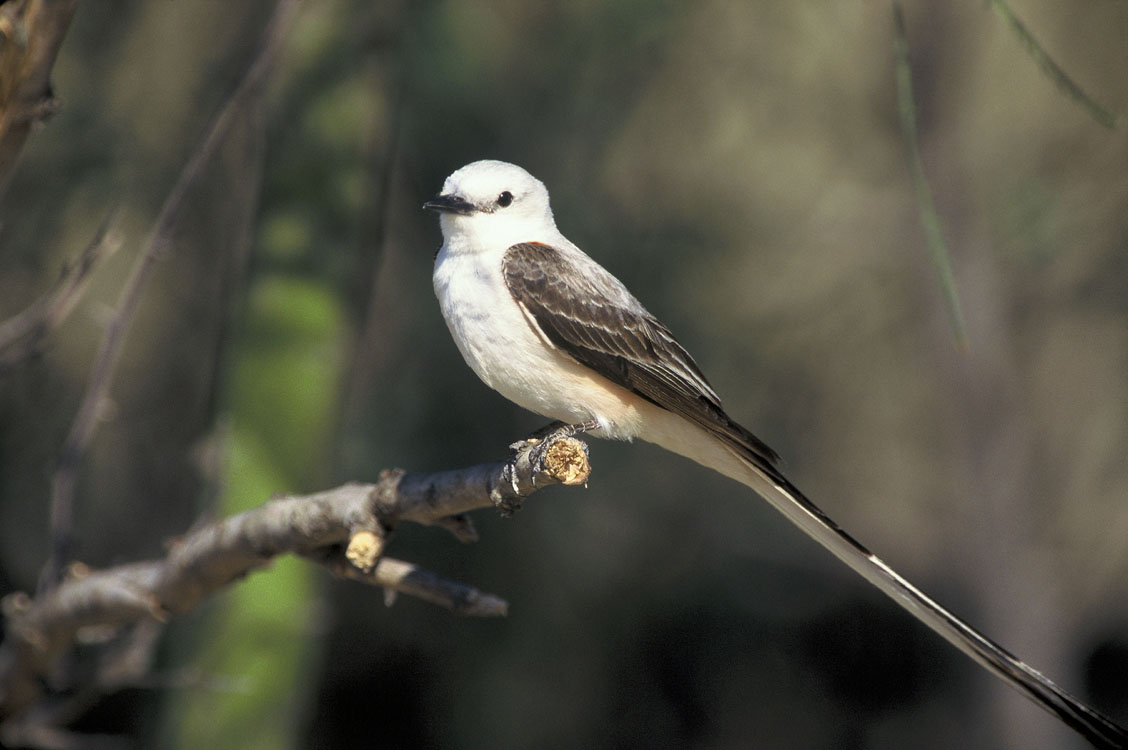
Scissor-tailed Flycatcher is a long-tailed open-country flycatcher, not just a pale bird with a showy tail. The best first read joins the deeply forked tail, kingbird-like body, exposed perch, and aerial insect hunting over pastures, roadsides, wires, and scattered trees.
01Field marks
Tail first, but only with the right open-country body
Start with the silhouette. Adult Scissor-tailed Flycatchers carry an extremely long forked tail behind a slim pale body, with darker wings and soft salmon or pinkish flashes that may show under the wings or along the flanks.
The strongest adult view is almost unfairly distinctive, but the field problem changes when the tail is partly hidden, shortened, or seen on a young bird. Then the bird has to read like a flycatcher: upright on a wire or branch, alert, slim-billed, and ready to launch after insects.
Fork-tailed Flycatcher is the range-and-proportion warning because the name sounds similar and the tail can pull attention away from geography. Eastern Kingbird and Western Kingbird are better everyday comparisons in North America because they share the tyrant flycatcher posture, exposed perches, and aerial hunting style.
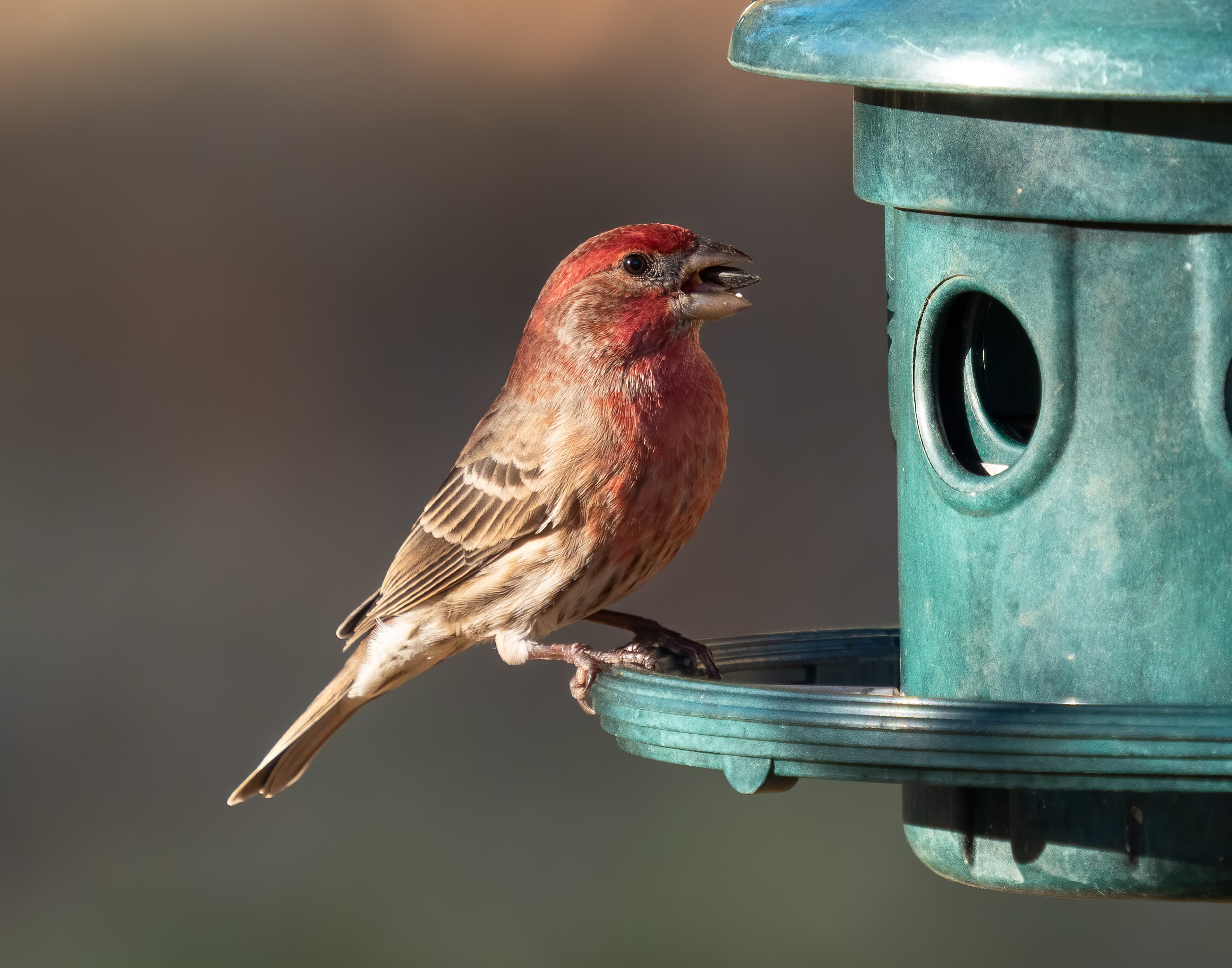
A quick wire view can also make a small bright bird feel distracting. American Goldfinch and Purple Finch do not match the long-tailed kingbird structure, open perch hunting, or pale gray-white body, so they should fall away once shape and behavior are checked.
Look at how the tail is attached to the rest of the bird. On Scissor-tailed Flycatcher, the tail exaggerates an already slim, upright flycatcher shape. It should not feel like a short-bodied finch, a thrush on a lawn, or a low cover bird with a long tail added on.
The underwing color is useful when the bird turns. Salmon flashes can appear suddenly during a sally, display flight, or windy landing, but they should support the long-tail and flycatcher read rather than replace it.
The safest field method is to let tail, body, perch, and motion agree. A long split tail on a bird that launches into open air and returns to a visible perch is a much stronger Scissor-tailed Flycatcher answer than tail length alone.
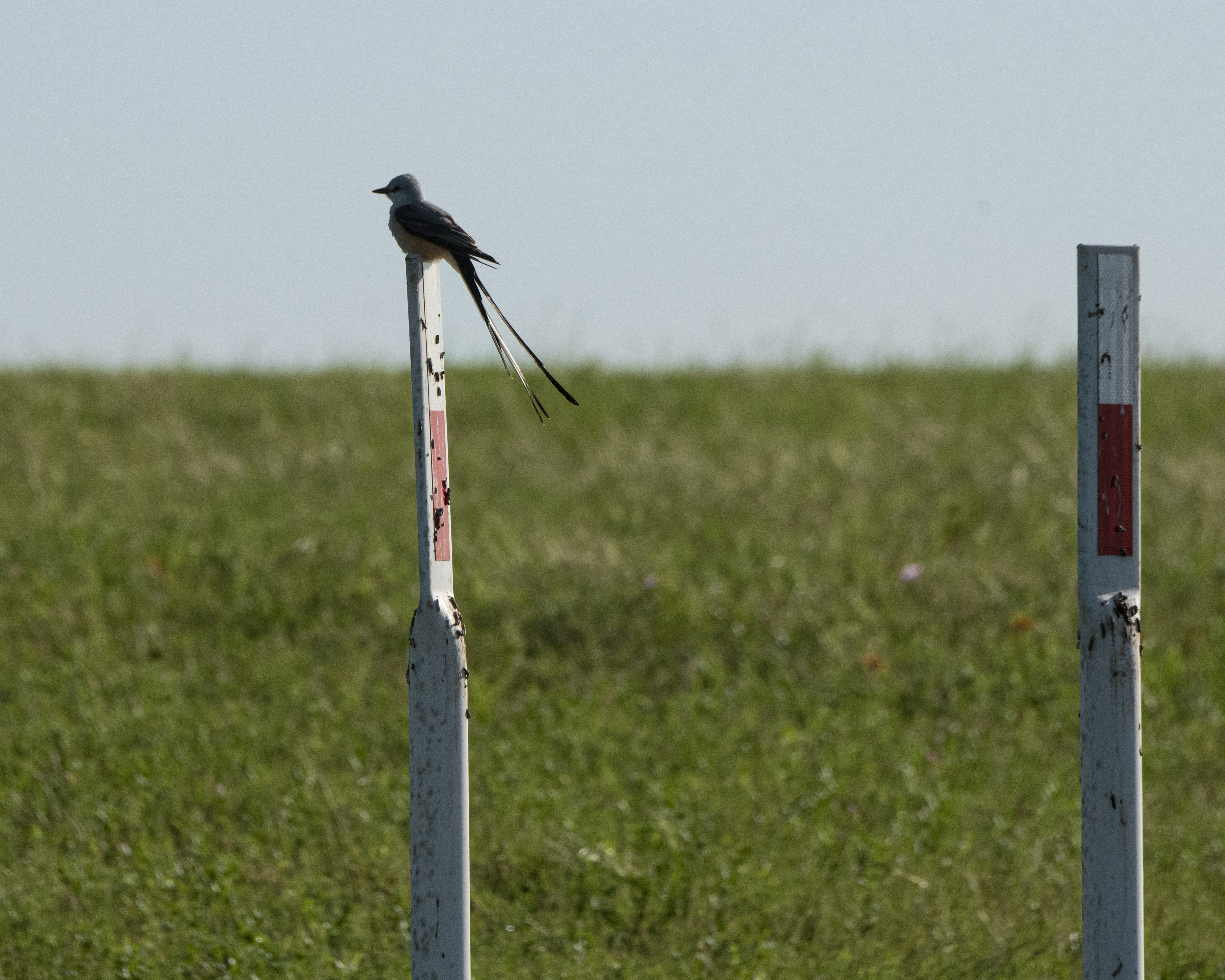
- Tail clue: the extremely long forked tail solves most adult birds almost immediately.
- Body clue: pale gray-white body, dark wings, and salmon flashes support the tail mark.
- Age warning: young birds can have shorter tails, so posture and open habitat still matter.
06Comparison table
Birds most often confused with Scissor-tailed Flycatcher
| Bird | What differs first | Best clue |
|---|---|---|
| Fork-tailed Flycatcher confusion | Range, tail proportions, and body pattern separate very long-tailed flycatchers. | Range, tail proportions, and body pattern separate very long-tailed flycatchers |
| Eastern Kingbird confusion | Kingbird-like behavior changes when tail length, pale body, and open-country posture point elsewhere. | Kingbird-like behavior changes when tail length, pale body, and open-country posture point elsewhere |
| Western Kingbird confusion | Wire-perched open-country flycatchers split by tail shape, color balance, and range. | Wire-perched open-country flycatchers split by tail shape, color balance, and range |
02Food and foraging
How insect hunting makes wires and pastures part of the ID
Food explains why this bird is so often found in open view. Scissor-tailed Flycatchers eat insects caught in the air or taken from vegetation and the ground, and they need enough open space to spot prey, launch, twist, and return.
That is why wires, fence posts, treetops, shrubs, pasture edges, and roadside perches matter. The bird is not using those structures as decoration. They are hunting stations.
Black-capped Chickadee gives a useful contrast because it works branches and feeders in quick close movements. Baltimore Oriole can also take insects, but it usually works canopy foliage, flowers, fruit, or treetop edges rather than the same open-air sallying lane.
A feeding bird may rise from a perch, snap prey in the air, float or twist with the tail open, then return to nearly the same spot. That loop is one of the best ways to confirm the species when plumage detail is poor.
Fruit may matter at times, but insects own the field pattern. If you want to understand where the bird appears, look for open airspace with perches and insect-rich grass or edge habitat, not seed feeders.
This is also why simplified open land can be less useful than it looks. A bare field with no insects and no lookout structure offers less to the bird than a rough pasture edge with wires, shrubs, and active insect life.
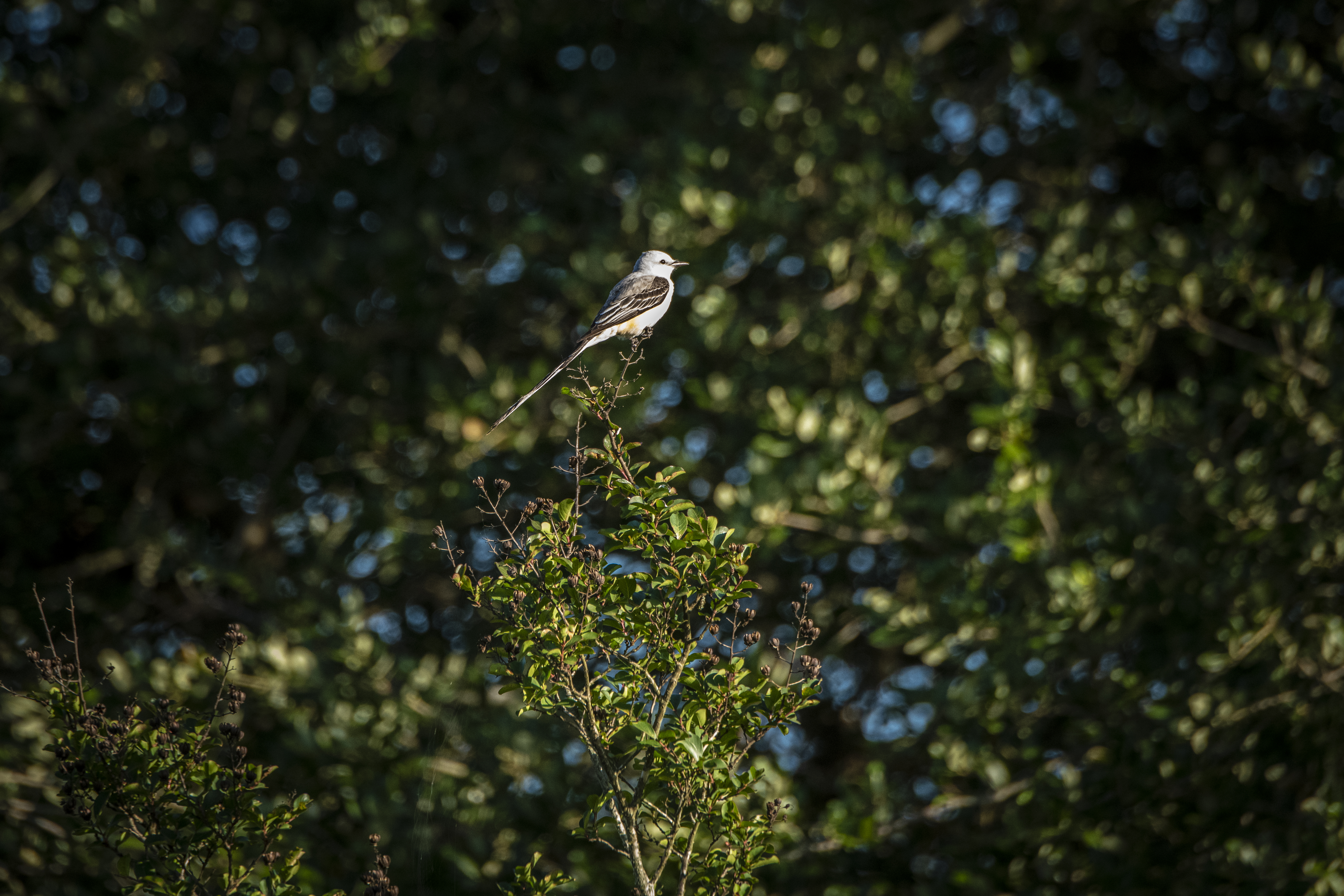
- Hunting style: birds sally from wires, fence posts, shrubs, and treetops after insects.
- Habitat clue: open airspace matters because the bird needs room to launch and twist.
- Flight cue: the tail makes feeding flights look floating and dramatic, not just decorative.
03Nesting data
Why breeding season turns open perches into territory
Breeding season makes the open-perch pattern louder. Scissor-tailed Flycatchers nest in trees, shrubs, or human structures near open habitat, where adults can guard space and keep feeding lanes close.
Pairs often defend a visible territory. An adult may call from a wire, chase intruders, launch at passing birds, or return again and again to the same perch line while the nest stays tucked in nearby structure.
Northern Mockingbird can also use exposed perches and defend space around human edges, but the flycatcher's tail, aerial hunting, and open Plains setting create a different breeding picture.
Watch repeated routes instead of hunting for a nest too closely. Food delivery, territorial chases, and adults using the same few perches can reveal a breeding area without pushing toward a hidden nest site.
The useful nesting clue is not one perfect nest placement. It is the relationship between scattered structure and open insect airspace. Trees, wires, shrubs, and roadside edges work together when they support both nesting and hunting.
That makes breeding evidence different from a general open-country sighting. In breeding season, the bird is not just passing through a wire line. It may be tying the perch line, nest structure, and feeding space into one defended area.
- Nest setting: trees, shrubs, and human structures can work when open feeding space sits nearby.
- Defense clue: breeding adults chase and call from exposed perches.
- Landscape fit: scattered trees and utility lines can support the same open-country hunting lane.
04Behavior and habitat
How flight style separates Scissor-tailed Flycatcher
Behavior is the second half of the identification. Scissor-tailed Flycatcher perches openly, launches after flying insects, twists through the air, and returns to a visible line while the tail trails, splits, and fans behind it.
In wind, the tail can make the bird look almost kite-like. That motion is not just pretty. It helps the observer separate the species from birds that share a perch but not the same floating, acrobatic flight.
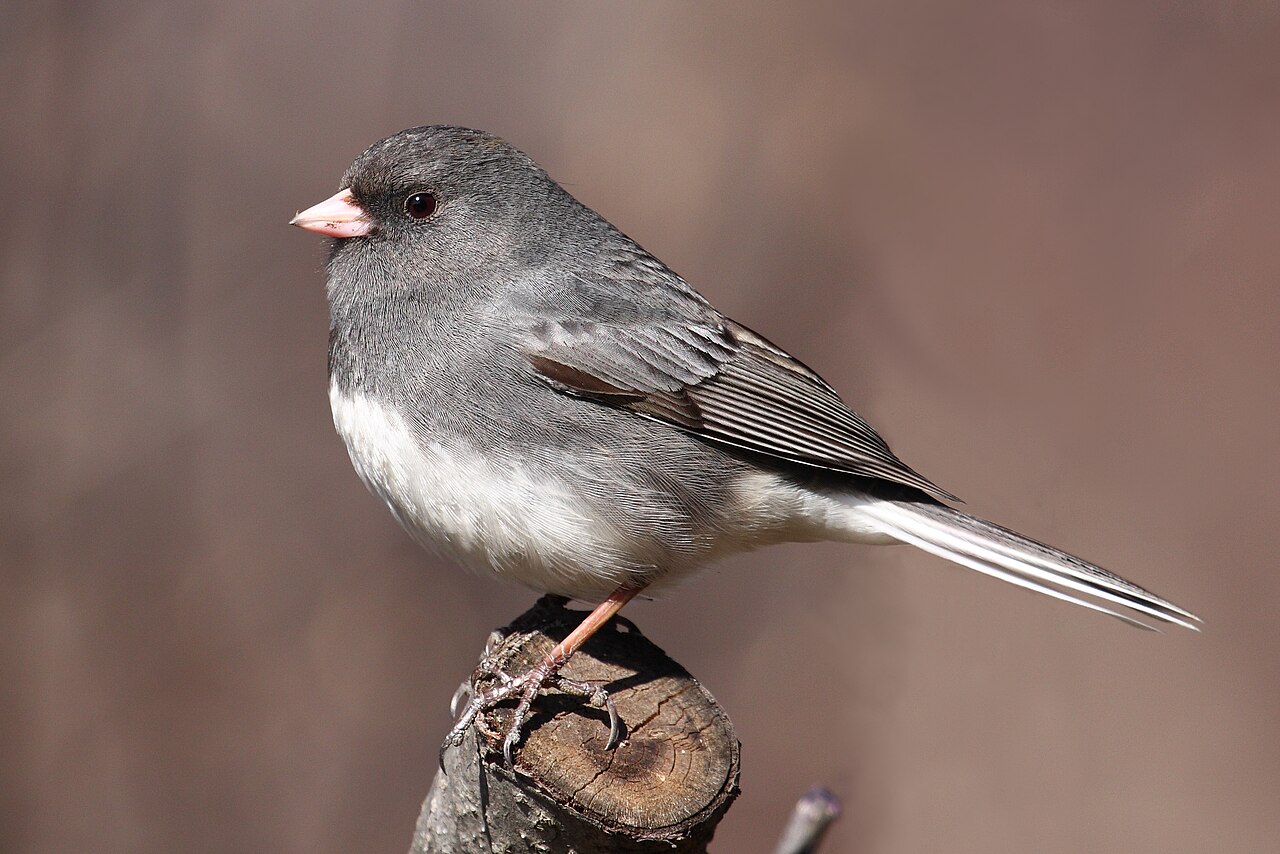
Carolina Wren and Dark-eyed Junco belong to cover and low movement, so they fail the open-air test quickly. American Robin may stand in open places, but it forages with a thrush body and ground rhythm rather than a wire-to-air hunting loop.
Display flight can make the tail even more obvious. A bird may rise, flutter, twist, and show the split tail in a way that feels more like an aerial performance than a simple commute between perches.
Season also controls the read. The species is strongly tied to the southern Plains breeding season, then moves south after nesting, so an unusual sighting needs range, date, and behavior checked together.
Outside the core season or core region, behavior becomes the guardrail. A long-tailed bird in the wrong place should still have the exposed flycatcher posture, aerial sallying, and open-country setting before the ID is treated as solid.
Read Scissor-tailed Flycatcher through the field marks first, then test the state-symbol story against the habitat and behavior that make the bird visible.
- Perch style: the bird sits openly, launches after prey, then returns to the same visible line.
- Wind cue: the long tail can make flight look kite-like in open Plains air.
- Seasonal cue: southern Plains breeding context helps keep unusual sightings in range perspective.
05Conservation
What Oklahoma symbolism should and should not do
The conservation and significance section should stay grounded in habitat, not drama. Scissor-tailed Flycatcher remains tied to open-country structure, insect-rich airspace, scattered trees, fence lines, roadsides, and ranch or pasture edges.
Simplified roadsides, fewer insects, and loss of scattered perch structure can make good-looking open land less useful. The pressure is practical rather than theatrical: fewer hunting stations and fewer insect-rich edges mean fewer places where the bird's normal behavior works well.
Eastern Bluebird and Mountain Bluebird show how open-country birds can depend on visible perches without sharing the same hunting style. Hermit Thrush points the other way, toward shaded woodland behavior that does not fit this flycatcher.
The useful habitat answer is therefore concrete. Keep rough edges, scattered shrubs or trees, safe perch lines, and insect-rich grassland structure where the bird can hunt without losing the open visibility it needs.
Oklahoma's Scissor-tailed Flycatcher choice works because the bird is visible, local, and behaviorally tied to Plains roadsides and summer sky. The symbol should reinforce the field ecology instead of replacing it.
A strong close keeps both ideas together. The bird is memorable because of the tail, but it persists as a real landscape bird through open air, insects, perches, and seasonal Plains habitat.
- Status: Scissor-tailed Flycatcher remains tied to open-country structure and insect-rich airspace.
- Main pressure: simplified roadsides and insect-poor grasslands reduce the working habitat.
- Why it matters: Oklahoma's state bird is distinctive because behavior, shape, and landscape all point the same way.
Least Concern. Scissor-tailed Flycatcher is the official state bird in 1 states
What should you check or read next?
A final check on Scissor-tailed Flycatcher separates look-alike comparisons, related bird profiles, and practical next steps.
Questions and answers
Why is the Scissor-tailed Flycatcher's tail so long?
The long forked tail helps with display and maneuvering, and it is the most obvious field mark on adult birds. Use body shape and open-air hunting too, especially when the tail is partly hidden.
Where do Scissor-tailed Flycatchers live?
They are birds of open country, especially southern Plains roadsides, pastures, fence lines, scattered trees, and other places with perches near insect-rich airspace.
Do young Scissor-tailed Flycatchers have long tails?
Young birds can have shorter tails. Check the slim flycatcher body, exposed perch, open habitat, and sallying flight before relying on tail length alone.
Related field context
The strongest adjacent references stay with the same bird, the family, habitat, or state-symbol context already used in the article.