Western Meadowlark: Family Blackbirds, Field ID, Habitat, and Behavior
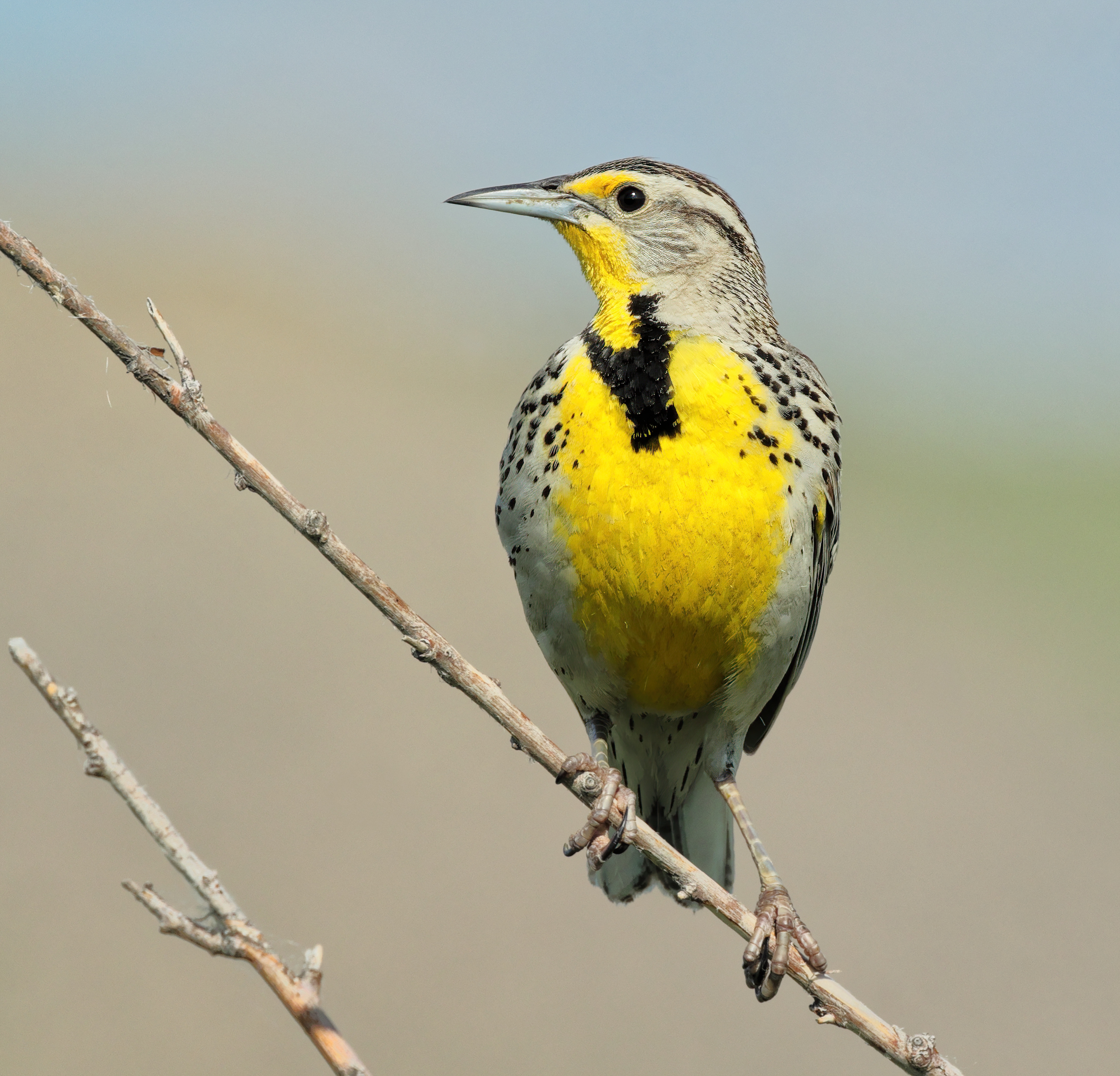
Western Meadowlark turns on yellow underparts, black chest V, pale head stripes, stocky body, and open grassland perch, then on the setting around it: prairie, pasture, hayfields, fence lines, sage edges, and open agricultural.
- Family
- Blackbirds
- Diet
- Omnivore
- Status
- LC
- Range cue
- Michigan eBird frequency
Quick Summary
Western Meadowlark is a stocky open-grassland blackbird with yellow underparts, a black chest V, pale head stripes, and a habit of singing from exposed fence posts or wires. The identification only holds when the bright front, heavy body, walking behavior, and prairie or pasture setting agree.
01Conservation
Why Western Meadowlark became a 6-state symbol
The state-symbol story works because people remember the song and the yellow breast, but the public meaning only works if it points back to grassland.
Native prairie, pasture, hayfields, insect supply, and safe nesting cover are the conservation frame. The bird does not need a backyard feeder answer as much as intact open country.
The contrast with Brown Pelican is useful because pelican conservation often reads as a coastal recovery story. Meadowlark conservation is a grassland-structure story.
The Kansas state bird, Montana state bird, and Nebraska state bird pages should reinforce that same prairie lens rather than just repeat symbolism.
Grassland birds often make conservation feel local because a field can look open while still losing nesting cover, insect supply, or timing. The profile should make that distinction clear without adding unsupported alarm.
A profile that loses the grassland loses the bird. Yellow underparts identify the meadowlark, but open-country sound explains why the bird matters.
The practical close is to keep open grass, insects, and nesting cover in the same conversation. A state symbol becomes meaningful when the living bird still has the landscape that made people recognize it.
Grassland conservation is the core, not a late add-on. Western Meadowlarks depend on open habitats that keep enough vegetation for nesting, enough insects for feeding, and enough large-scale continuity for territories. Fragmented strips may hold a singing bird, but they do not always provide the full breeding setting.
The state-bird link makes the conservation point more concrete. A bird chosen by several states can still decline when prairie, pasture, and hayfield structure change. Symbolism does not protect nests from poorly timed mowing or remove the need for insect-rich habitat. The page should say that plainly because the searcher may know the bird as an emblem before understanding it as a grassland species.
Useful action belongs at the land-management level: protect native prairie where it remains, delay mowing when nesting birds are present, maintain varied grass height, and reduce broad insecticide pressure where possible. For a backyard reader, the honest answer is that this is usually not a feeder bird to attract. It is a bird to find and protect in open country.
- Habitat lens: open grass, insects, and safe nesting cover explain the conservation frame.
- Symbol lens: the bird works as a state symbol only because people meet it in open country.
- Practical close: mowing and grazing timing belong beside prairie protection.
Least Concern. Western Meadowlark is the official state bird in 6 states
02Field marks
How to identify Western Meadowlark in open grass
A meadowlark can look obvious in a perfect front view and confusing the moment it turns sideways. Begin with the yellow underparts and black chest V, then check the stocky body, pointed bill, short tail, and pale head striping.
The perch matters. A bird singing from a fence post over pasture or prairie belongs in a different field problem from a yellow bird inside shrubs or canopy.
When the bird drops down, watch how it uses the ground. Meadowlarks walk and pause through grass instead of flitting through branches.
The black V is strong, but it should not be isolated from body shape. The bird has a heavier blackbird feel, and the bill looks stronger than a small sparrow or bluebird bill.
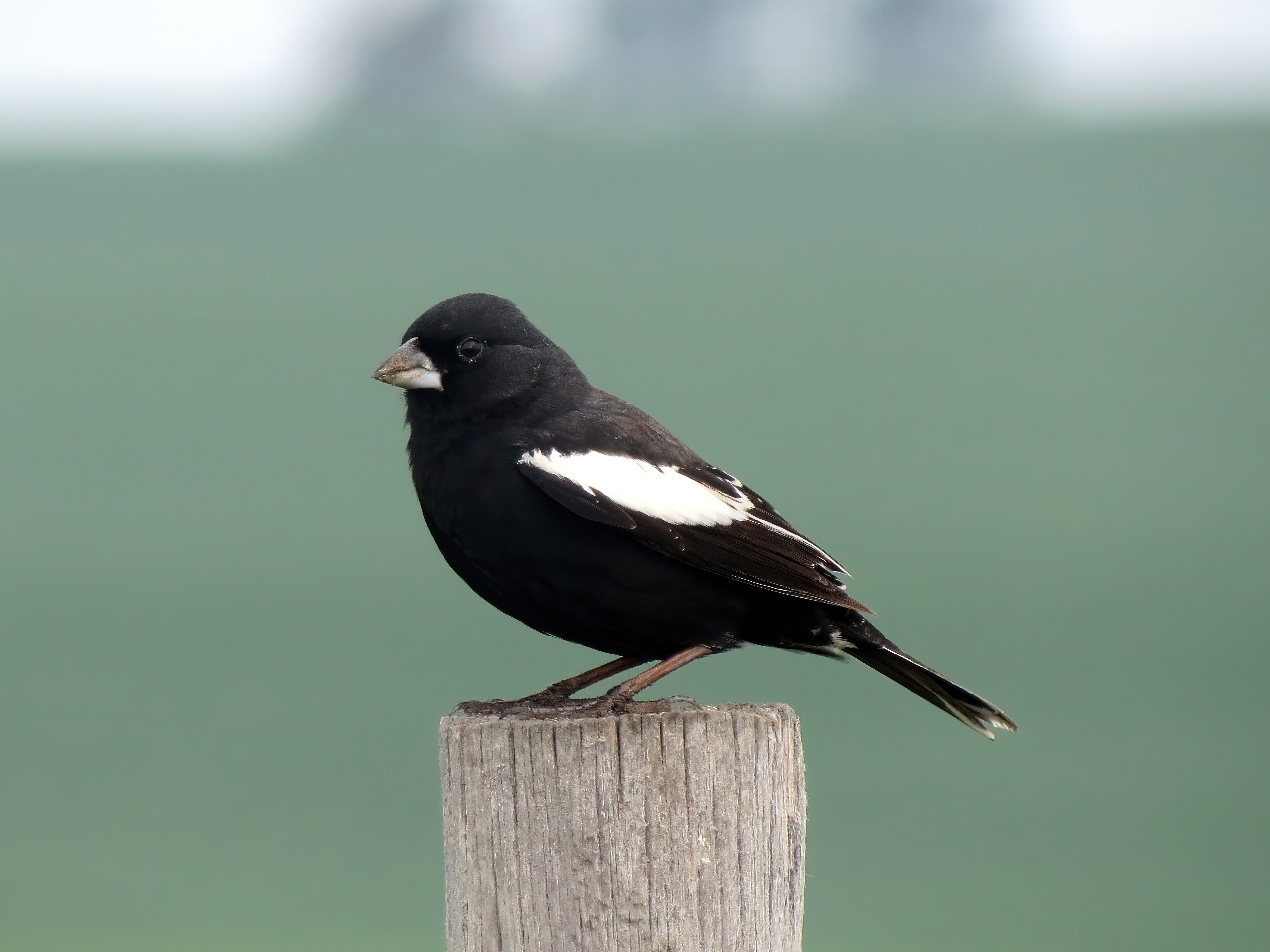
Lark Bunting shares open-country space but lacks the meadowlark's yellow breast and black V. Its seasonal plumage problem is sparrow-like, not blackbird-like.
Red-winged Blackbird gives the family boundary. It is slimmer, more marsh or wet-edge oriented, and identified by shoulder patches rather than a yellow front.
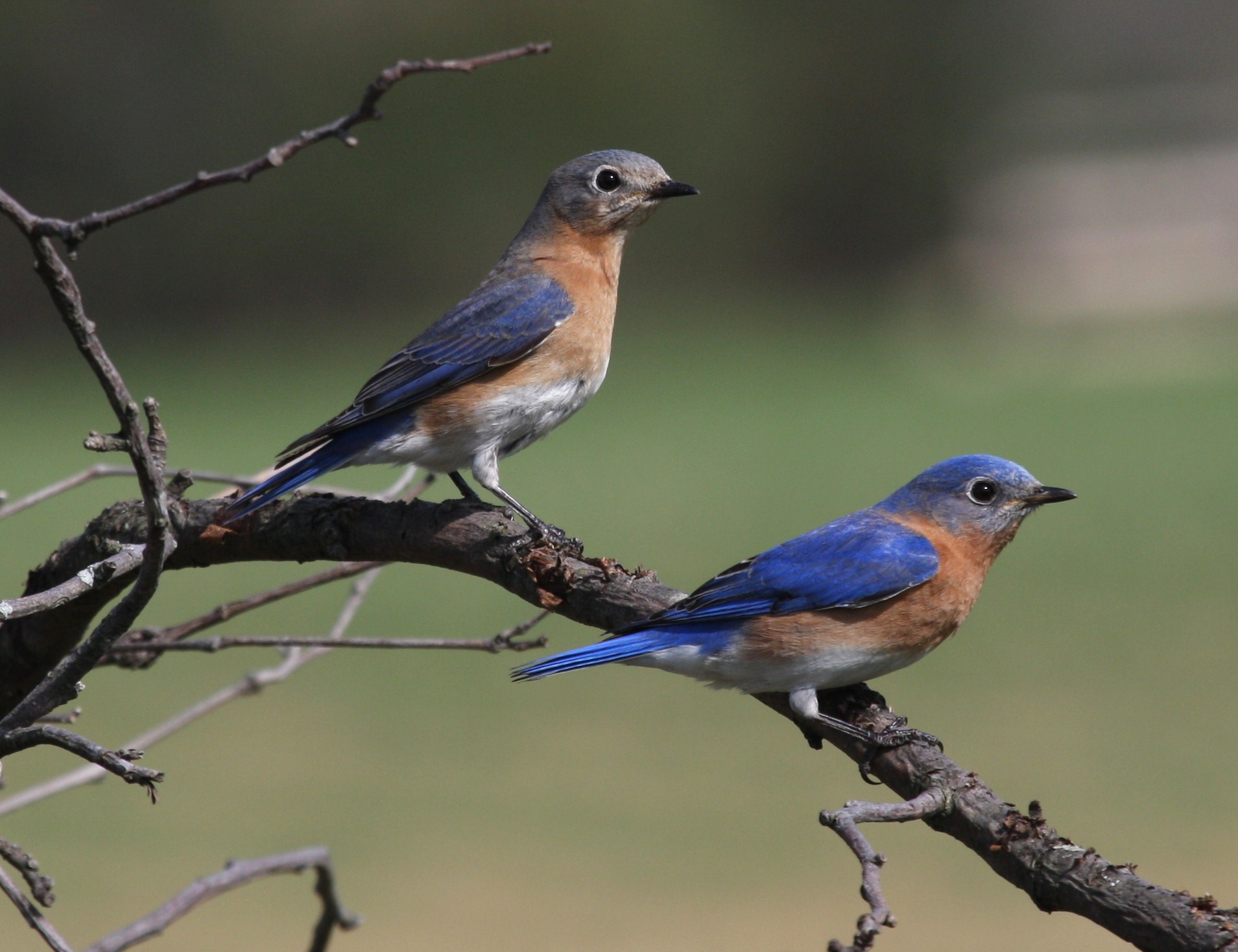
A distant Eastern Bluebird on a fence can share the exposed perch, but the bluebird is slimmer and thrush-like. Meadowlark structure feels heavier before color even settles.
The safest field read is layered: yellow front, black V, open perch, grassland ground use, and song carrying over open country. If the habitat and behavior do not agree, slow down before naming the bird.
Eastern and Western Meadowlarks create a special caution because they are similar in shape and pattern. This page should not pretend every distant meadowlark can be identified safely from yellow and a black V. Range, song, call, and local context matter. In much of the West, the expected bird is Western Meadowlark, but overlap and vagrancy require care where both species are possible.
The best practical ID starts with the whole scene. A stocky bird on a fence post above open grass, giving a rich fluting song, then dropping into pasture is a strong Western Meadowlark pattern in the right region. A silent bird seen briefly from a road may need to remain "meadowlark species" if the location and sound do not settle it. That honesty improves the page because it teaches a field boundary instead of forcing certainty.
Side views add useful marks. The upperparts are streaked and camouflaged, which explains how such a bright-fronted bird can vanish in grass. The pale head stripes and pointed bill support the blackbird structure, while the short tail keeps the silhouette stocky. The article should make the reader expect contrast: obvious from the front, cryptic from above and behind.

- Front view: yellow underparts and a black chest V carry the first meadowlark read.
- Shape: stocky blackbird build, short tail, and pale head striping separate it from bluebirds or buntings.
- Setting: fence posts, pasture wire, prairie, and hayfield edges should all agree with the ID.
Confirm the bird only when the yellow chest, black V, fluted song, and open grassland setting agree.
03Behavior and habitat
How song and fence-line behavior confirm Western Meadowlark
The behavior pattern is public sound followed by sudden concealment. A male sings from a post, wire, mound, or low shrub, then drops into grass where the bright front may vanish.
That shift gives the page its rhythm. The song is not decoration; it is the reason many people find the bird at all.
In open country, sound can carry farther than a field mark. A distant song may pull the eye to a fence line before the yellow chest becomes visible.
A Scissor-tailed Flycatcher can also use wires in open country, but it launches after insects in the air and shows a long tail. Meadowlarks stay heavier and more ground-linked.
In flight, the bird can look broader and less delicate than a small songbird. It often lands back in grass rather than retreating to a tree line.
The best field method is to scan fence lines first, then watch the landing spot. If the bird keeps returning to open grass, the habitat is confirming the ID.
Behavior is also the anti-template key for this page. A generic profile might say the bird sings and feeds, but Western Meadowlark needs the whole sequence: exposed song, open soundscape, drop to grass, and ground movement through prairie or pasture.
Behavior is also the anti-template key for this page. Western Meadowlark is public and hidden in the same minute. It broadcasts from a visible point, then becomes a walking bird inside grass. That contradiction is more specific than a generic "open country bird" label.
The song has geographic meaning because it is one reason the species became a state symbol across prairie and ranch country. People remember the sound carrying over open land. That cultural memory should not float away from biology. The same open land that lets the song travel also contains the insects, grass cover, and ground nest that make the bird possible.
Roadside viewing needs a practical warning. Meadowlarks may perch on fence posts or flush from shoulders, but a car-window view can flatten the ID. A quick yellow chest from a moving vehicle is not enough. Pull off safely where allowed, listen, check the habitat, and watch whether the bird returns to grass rather than trees or shrubs.
For Western Meadowlark, keep yellow underparts, black chest V, pale head stripes, stocky body, and open grassland perch, grasshoppers, beetles, caterpillars, other insects, seeds, and waste grain outside peak insect season, a domed ground nest hidden in grass cover, and native grass, insect supply, safe nesting cover, and mowing or grazing timing that protects ground nests with one page owner instead of repeating them as separate checklist items.
- Song perch: males use posts, wires, and low rises where sound carries over grass.
- Movement: birds drop from a visible perch and disappear quickly into cover.
- Best method: let song, perch choice, and grassland setting confirm the yellow chest.
04Food and foraging
What Western Meadowlark eats in prairie and pasture
Feeding is built into the field. Insects, seeds, and waste grain are taken from open grass, pasture, hayfield, prairie, and agricultural edges.
During breeding season, grasshoppers, beetles, caterpillars, and other insects are central because young need protein-rich food. Later, seeds and grain can matter more.
This diet is why the bird should not be treated like a feeder species. Food is scattered through the habitat, so the reader needs grass height, open ground, insects, and walking behavior rather than a backyard seed mix.
American Robin also works open ground, but it probes lawns and moves like a thrush. Meadowlarks walk through grass with a heavier blackbird build.
Northern Mockingbird may use towns, lawns, and perches, while Mountain Bluebird drops from open perches for insects. The meadowlark's feeding answer still belongs inside grassland, not at a feeder.
Feeding also explains why open country cannot be only visual background. A field with insects, seed heads, and enough cover for walking birds is part of the food system.
The best observation follows the bird after it leaves the post. If it lands in grass and begins walking, probing, or pausing low, the food story is supporting the identification.
The feeding section should make insect abundance feel central to grassland quality. Grasshoppers, beetles, caterpillars, and other insects are not trivia; they connect the bird to prairie, pasture, hayfield, and field-edge management. A grassland with fewer insects can look open and green while offering less food to adults and young.
Foraging also happens at walking speed. Meadowlarks move through grass, pause, pick, and continue, often partly hidden by vegetation. They are not flycatching from wires like a scissor-tailed flycatcher and not probing manicured lawns like a robin. The feeding behavior keeps them tied to ground structure even when the singing perch is exposed.
Seeds and grain matter more outside the insect-heavy breeding period, which gives the annual cycle some depth. Agricultural edges can provide food, but simplified fields do not automatically replace prairie. The page should avoid a false feeder answer and instead explain why mixed grass height, insects, and undisturbed ground create the food lane.
- Breeding food: grasshoppers, beetles, caterpillars, and other insects matter most when young need protein.
- Off-season food: seeds and waste grain become more important as insect supply drops.
- Practical clue: the feeding answer lives in the field, not at a feeder.
05Nesting data
Why Western Meadowlark nests depend on grass cover
The nest makes the grassland requirement nonnegotiable. Western Meadowlarks nest on the ground, hidden in vegetation, sometimes with grass forming a partial cover over the site.
That placement turns mowing, grazing pressure, hay timing, and disturbance into real breeding context. The singing bird may be on a post, but the vulnerable part of the territory is down in the grass.
The nest section should therefore explain timing without inventing dates. Grass that is cut, trampled, or simplified too early can remove the very cover that makes the territory usable.
Northern Flicker can feed on open ground too, yet its nesting story moves to cavities. Meadowlark breeding stays low and exposed to grassland management.
California Quail also nests low, but covey behavior and brush escape cover create a different western ground-bird profile. For meadowlarks, the key is open song territory around hidden grass nests.
Readers should not walk the grass to prove a nest. Watch territory behavior, repeated returns, and adult movement from a distance instead.
The breeding story completes the profile because it connects the public song perch to the hidden ground. The bird can be loud and visible, while the nest remains low, quiet, and easy to damage.
Ground nesting turns every management choice into timing. A field can look perfect from a distance and still fail if mowing, haying, heavy grazing, or disturbance removes cover during the nesting window. The nest is hidden, so the reader may never see the part of the territory most affected by those choices.
The dome or partial roof of grasses, when present, is not decorative detail. It shows how the bird uses vegetation as architecture. Too little cover exposes the nest; too much uniform, dense cover can also change how birds move and feed. Good grassland is a structure problem, not just a green acreage number.
This section should also keep people from walking straight toward singing birds in breeding season. The singer may be away from the nest, and the nest may be in the grass between observer and perch. Watching from roadsides, trails, or field edges protects the hidden part of the territory while still letting the reader understand the bird.
- Nest site: a hidden domed ground nest sits inside grass, not in a cavity or tree fork.
- Risk window: mowing, haying, and grazing timing can affect covered ground nests.
- Field cue: repeated adult movement into one grass patch carries more weight than one singing male.
What should you check or read next?
A final check on Western Meadowlark separates look-alike comparisons, related bird profiles, and practical next steps.
Questions and answers
How do you identify a Western Meadowlark?
Use yellow underparts, a black chest V, pale head stripes, stocky body, open grassland setting, and song from exposed posts or wires together.
What does Western Meadowlark eat?
Western Meadowlark eats insects, seeds, and waste grain, with insects especially important during breeding season.
Why is Western Meadowlark a state bird in several states?
The species is familiar across open western and plains landscapes, where its song, yellow chest, and pasture visibility make it locally representative.
Related field context
The strongest adjacent references stay with the same bird, the family, habitat, or state-symbol context already used in the article.