Kansas State Bird

Quick Answer
The state bird of Kansas is the Western Meadowlark (Sturnella neglecta), designated in 1937.
Quick Facts
- State
- Kansas
- Designated
- 1937
- Family
- Blackbirds
- Length
- 24 cm
- IUCN
- Least Concern
The Kansas state bird is the Western Meadowlark, a grassland bird for a grassland state. Its yellow breast and black V turn a fence post into a field mark, while its ground-nesting life ties the symbol to prairie, pasture, and hayfield.
Inside the state birds collection, Kansas needs a prairie-first answer. The strongest explanation starts with the Flint Hills, open rangeland, and the way meadowlarks make working grasslands feel alive.
01State symbol
Why Kansas chose the Western Meadowlark
Kansas designated the Western Meadowlark in 1937 because it gave the state a symbol that matched the open-country landscape. The bird is visible from roads, ranch tracks, and prairie preserves, which makes it easier to connect with Kansas than a bird hidden in deep woods.
The symbolism rests on posture as much as color. A meadowlark singing from a post above grass reads like a Kansas scene before the bird even moves.
Several states chose the same species, including Montana's meadowlark and Nebraska's state bird. Kansas owns a different version of the story through tallgrass remnants, mixed-grass pasture, and the long edge between prairie conservation and farm country.
02The bird
About the Western Meadowlark
The Western Meadowlark is a chunky grassland songbird with a bright yellow belly, a black V across the chest, streaked brown upperparts, and a pointed bill. In Kansas, the bird often gives itself away by standing above the grass rather than by letting you walk close.
It feeds mostly on insects and seeds, taking many meals on the ground. Nesting happens low in grass cover, so mowing, grazing timing, and grass height can change whether a field works for breeding.
03Where to look
Where to see the Western Meadowlark in Kansas
Konza Prairie Biological Station and Tallgrass Prairie National Preserve give Kansas readers the cleanest state-symbol setting. Scan fence posts, shrubs, and taller clumps where a bird can rise just above the grass.
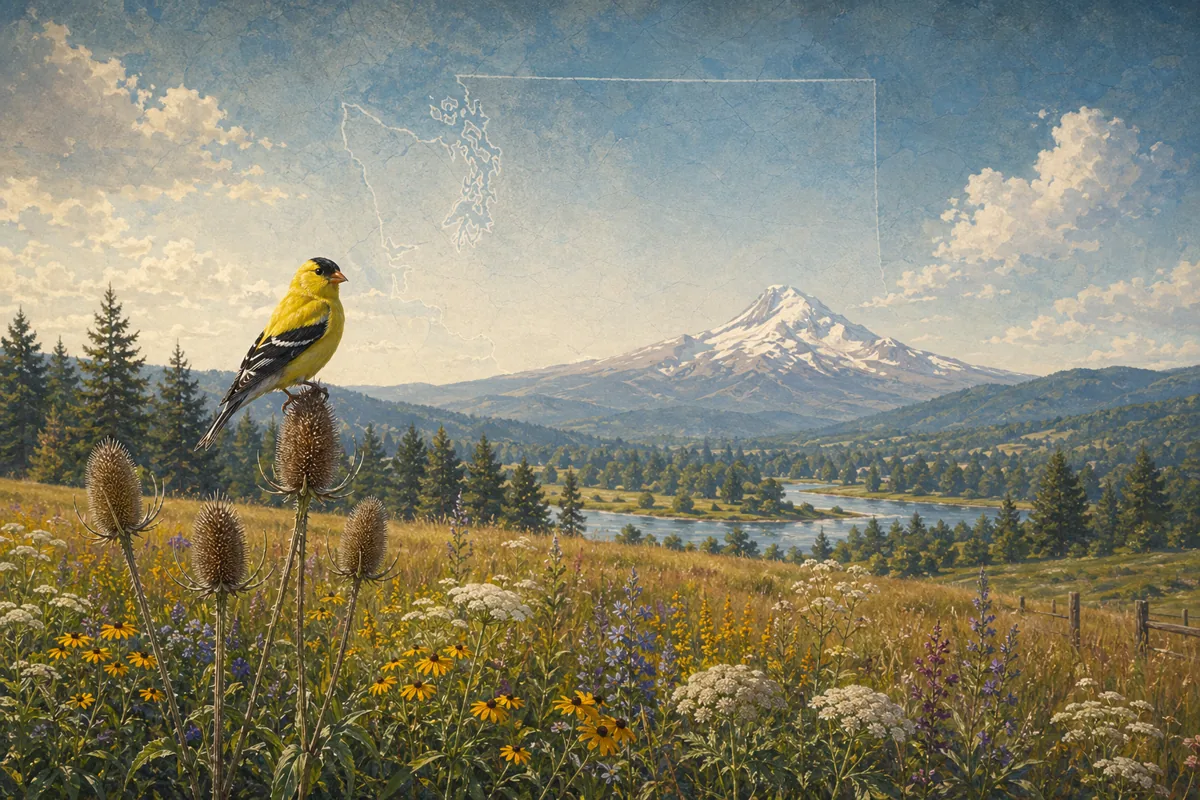
Quivira National Wildlife Refuge adds a wetter open-country angle. Meadowlarks may use drier grassland edges around refuge roads, so the best search is not the middle of open water but the prairie and pasture border around it.
This field pattern also explains why North Dakota's meadowlark can share the species while still owning a colder northern-plains context.
04Conservation
Conservation of the Western Meadowlark
The Western Meadowlark is listed as LC, but that label should not hide the pressure on grassland birds. Kansas conservation value comes from keeping working grasslands usable, especially during the nesting season.
A state symbol tied to prairie needs actual prairie structure. That keeps this page from pretending every state-bird story has the same habitat stakes.
Least Concern. Western Meadowlark remains the official state bird of Kansas.
Where should you go next?
Continue with nearby state birds, the wider location layer for Kansas, or the full species profile for the Western Meadowlark.


Questions and answers
What is the Kansas state bird?
The Kansas state bird is the Western Meadowlark, officially designated in 1937.
Why is the Western Meadowlark the Kansas state bird?
Kansas chose the Western Meadowlark because it reflects the state's prairie identity, open grasslands, fence-line perches, and familiar rural birdlife.
Where can I see a Western Meadowlark in Kansas?
Try Konza Prairie, Tallgrass Prairie National Preserve, Quivira's grassland edges, rangeland roads, and fence posts in spring or early summer.
Continue exploring
The strongest next reads stay with the state collection, the location layer, or the bird itself.