Cactus Wren: Desert Survival Read Through Its Behavior
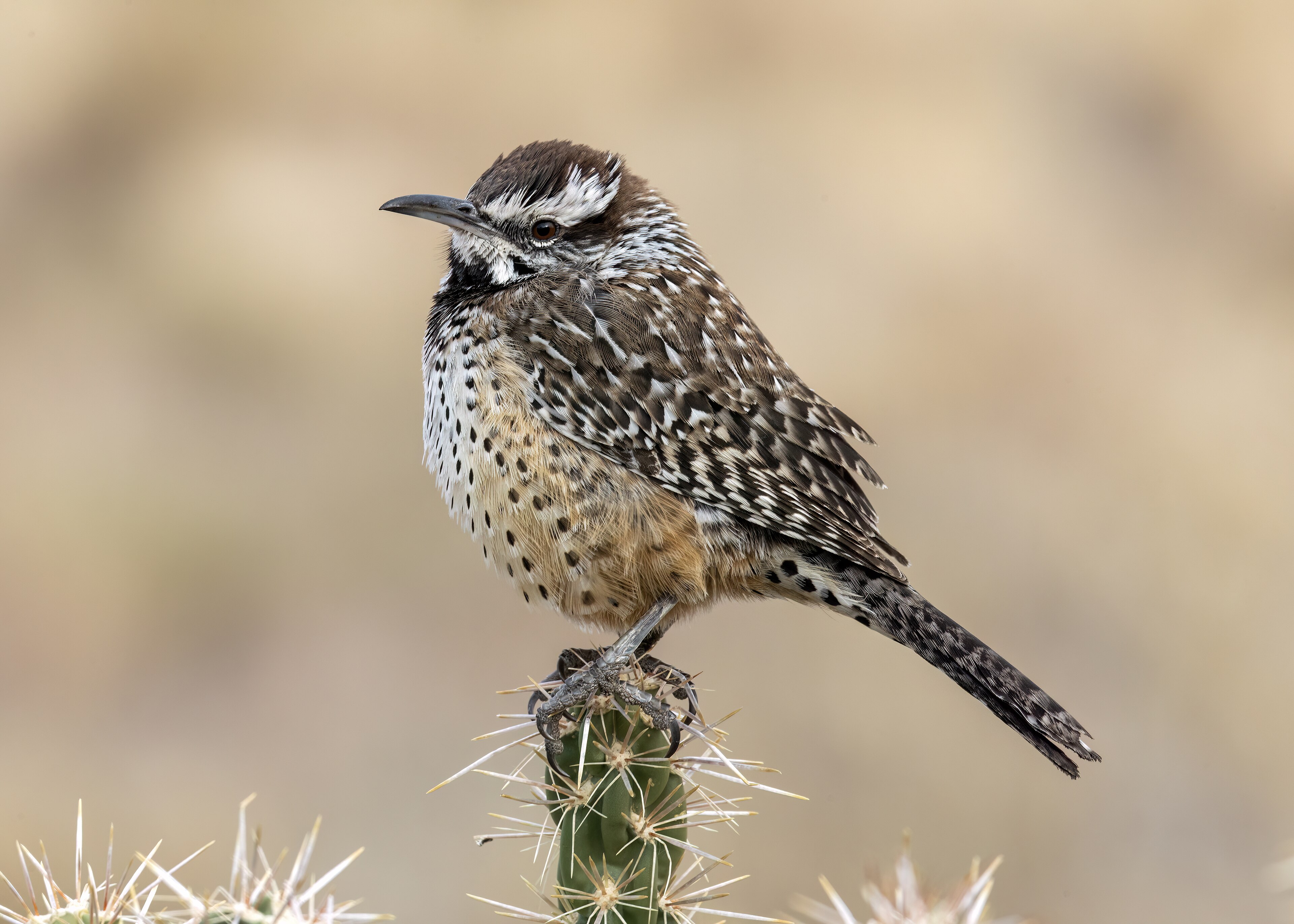
Cactus Wren turns on long body, bold white eyebrow, spotted underparts, barred tail, and cactus-country posture, then on the setting around it: cholla, prickly pear, saguaro edges, thorn scrub, desert washes, and arid yards.
- Family
- Wrens
- Diet
- Omnivore
- Status
- LC
- State bird
- 1 states
Quick Summary
Cactus Wren is the large, bold wren of cactus country. The direct answer is shape plus place: a big wren with a white eyebrow, spotted underparts, rough voice, and year-round ties to thorny desert cover in the arid Southwest.
01Nesting data
A Fortress Built From Cactus Spines
The nest is a core ownership point. Cactus Wrens build bulky enclosed nests inside cactus or thorny shrubs, often with an entrance tunnel that helps shade and protect the chamber.
They may build extra roosting nests, so a cactus with more than one bulky structure can still fit the species. That detail gives the section real depth and prevents it from becoming a generic nest-location note, because nesting, shelter, pair presence, and desert weather are all connected.
Nest shape, plant choice, and heat protection belong together, which is why this section should carry more than one sentence.
- Nest form: bulky enclosed nests fit cactus and thorny shrubs.
- Tunnel clue: entrance shape helps shade and protect the chamber.
- Extra nests: roosting structures can appear beyond the active nest.
02Behavior and habitat
Life as a Year-Round Desert Resident
Cactus Wrens behave like residents of a defended desert neighborhood. Pairs stay vocal, climb through spines, use exposed song perches, and keep returning to the same cover network across the year.
The voice is harsh and mechanical compared with many sweet songbirds. That sound is a practical field clue because the bird often calls from a cactus top or shrub crown before it drops back into cover, making voice and perch choice part of the same behavior pattern.
Desert region, resident pairs, and thorny cover make state birding routes useful for understanding where the species should feel expected.
For Cactus Wren, field observation habits should start with desert structure, song perch, and thorny cover rather than a quick size comparison.
Regional season and habitat context make birding by state useful when Cactus Wren feels expected in one landscape and scarce in another.
Practical field habits should start with movement, cover, and sound before a single color mark.
For Cactus Wren, keep long body, bold white eyebrow, spotted underparts, barred tail, and cactus-country posture, insects, spiders, fruit, seeds, small lizards, and cactus-associated prey, a bulky enclosed nest tucked into cactus or thorny shrubs, and native cactus, connected desert scrub, reduced clearing, and keeping thorny nest structure intact with one page owner instead of repeating them as separate checklist items.
- Resident clue: pairs use the same desert neighborhood through the year.
- Voice clue: harsh song from cactus tops often gives the bird away.
- Habitat fit: spines, shrubs, and open desert exposure shape every section.

03Field marks
Big Wren, Bold Eyebrow, Cluttered Chest
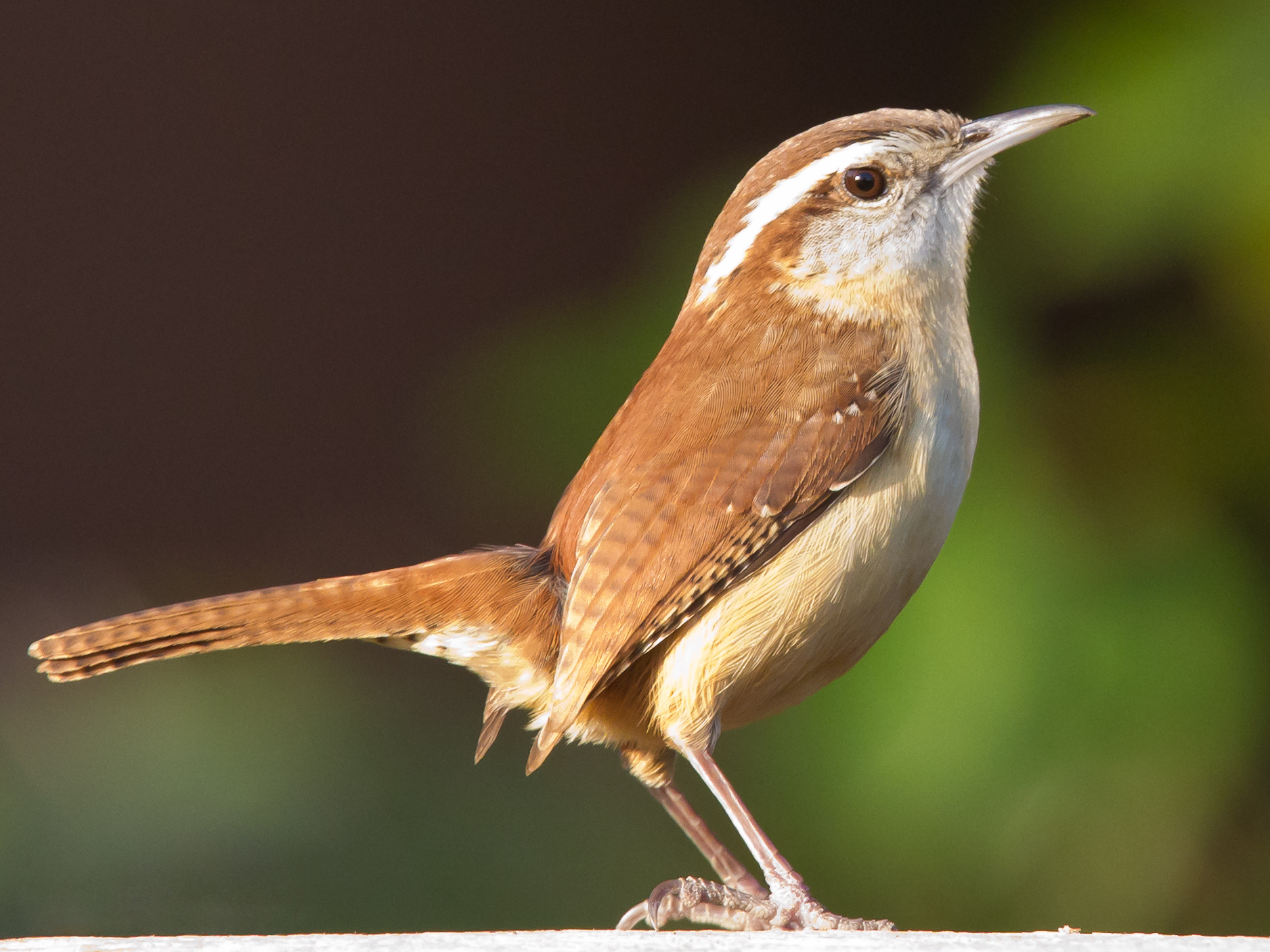
Start with size and pattern. Cactus Wren looks larger and longer than familiar house or marsh wrens, with a bold white eyebrow, streaked brown back, spotted underparts, and a strong tail often held with attitude.
Restless movement and loud voice fit the wrens family, while cactus structure separates this bird from smaller yard wrens.
Habitat confirms what plumage starts. A bird climbing through cholla, saguaro, mesquite, or thorny desert scrub is operating in the Cactus Wren lane. Smaller wrens may share restless movement, but they rarely combine this size, spotting, bold eyebrow, stiff-tailed posture, harsh voice, and open desert exposure.
The best field read joins all of that at once: large wren, loud voice, spotted body, and thorny desert structure.
Do not flatten the bird into size alone. The voice, cactus perch, stiff-tailed posture, and willingness to work through spiny cover make the identification more reliable than a quick impression of a large brown wren crossing open ground in heat. A bird away from cactus country needs much more caution before the name should really stick.

- Size clue: this is a large wren, not a tiny backyard wren.
- Pattern clue: white eyebrow, spotted underparts, and streaked back work together.
- Place clue: cactus and thorny desert scrub confirm the ID frame.
04Food and foraging
How This Wren Eats Its Way Out of Thirst
Cactus Wrens take insects, spiders, fruit, seeds, and small desert foods by searching low vegetation and ground edges. The feeding pattern matches a bird that can work through harsh cover without needing a lush backyard feeder setup.
In a desert yard, cover and structure matter as much as food. Native cactus, thorny shrubs, leaf litter pockets, and shallow water can support the same foraging behavior better than a seed station placed in open heat, where exposure works against the bird's normal low-cover movement and predator-aware routine.
Native cactus, thorny shrubs, and water access create Cactus Wren-friendly habitat better than exposed seed alone.
The practical answer is habitat-shaped: make food findable inside cover rather than treating seed as the whole attraction plan.
General backyard bird attraction methods work here only when they respect desert cover, heat, and low foraging lanes.
Cholla, prickly pear, saguaro edges, thorn scrub, desert washes, and arid yards with native structure creates Cactus Wren-friendly habitat when food and cover work together.
Broader backyard habitat advice only helps when it supports insects, spiders, fruit, seeds, small lizards, and cactus-associated prey and the bird's normal movement pattern.
- Food lane: insects, spiders, fruit, and seeds come from low desert cover.
- Yard clue: native cactus, shrubs, and shallow water beat exposed seed alone.
- Behavior cue: climbing through spines explains how the bird finds food safely.
05Conservation
Secure Bird, Shrinking Desert
The conservation frame is habitat integrity. Cactus Wren depends on desert scrub, cactus structure, and thorny cover, so clearing, fragmentation, and simplified landscaping can remove the features the bird uses every day.
Landscape-tied state birds work best when the symbol remains attached to habitat, voice, and behavior.
Arizona's state-bird choice works because the species feels inseparable from the landscape. The closure should tie the bird to cactus, voice, nest structure, and desert identity rather than treating it as a mascot detached from habitat, since the same plants supply cover, food access, nest sites, shade, and visibility.
Desert structure, loud song, and cactus-country visibility all support Arizona's Cactus Wren choice.
- Status frame: desert habitat quality carries the conservation story.
- Main pressure: clearing and fragmentation remove cover, nest sites, and food.
- Why it matters: Arizona symbolism works because the bird is inseparable from cactus country.
Least Concern. Cactus Wren is the official state bird in 1 states
What should you check or read next?
A final check on Cactus Wren separates look-alike comparisons, related bird profiles, and practical next steps.
Questions and answers
Do Cactus Wrens live in cactus?
Yes. Cactus Wrens use cactus and thorny desert shrubs for nesting, roosting, cover, and song perches, especially in arid Southwest habitats.
How do you identify a Cactus Wren?
Look for a large wren with a bold white eyebrow, spotted underparts, streaked back, harsh voice, and strong ties to cactus or desert scrub.
Why is the Cactus Wren Arizona's state bird?
It fits Arizona because the species is strongly tied to cactus country, desert scrub, loud resident behavior, and year-round visibility.

Related field context
The strongest adjacent references stay with the same bird, the family, habitat, or state-symbol context already used in the article.