Baltimore Oriole: The Oriole That Weaves a Hanging Nest
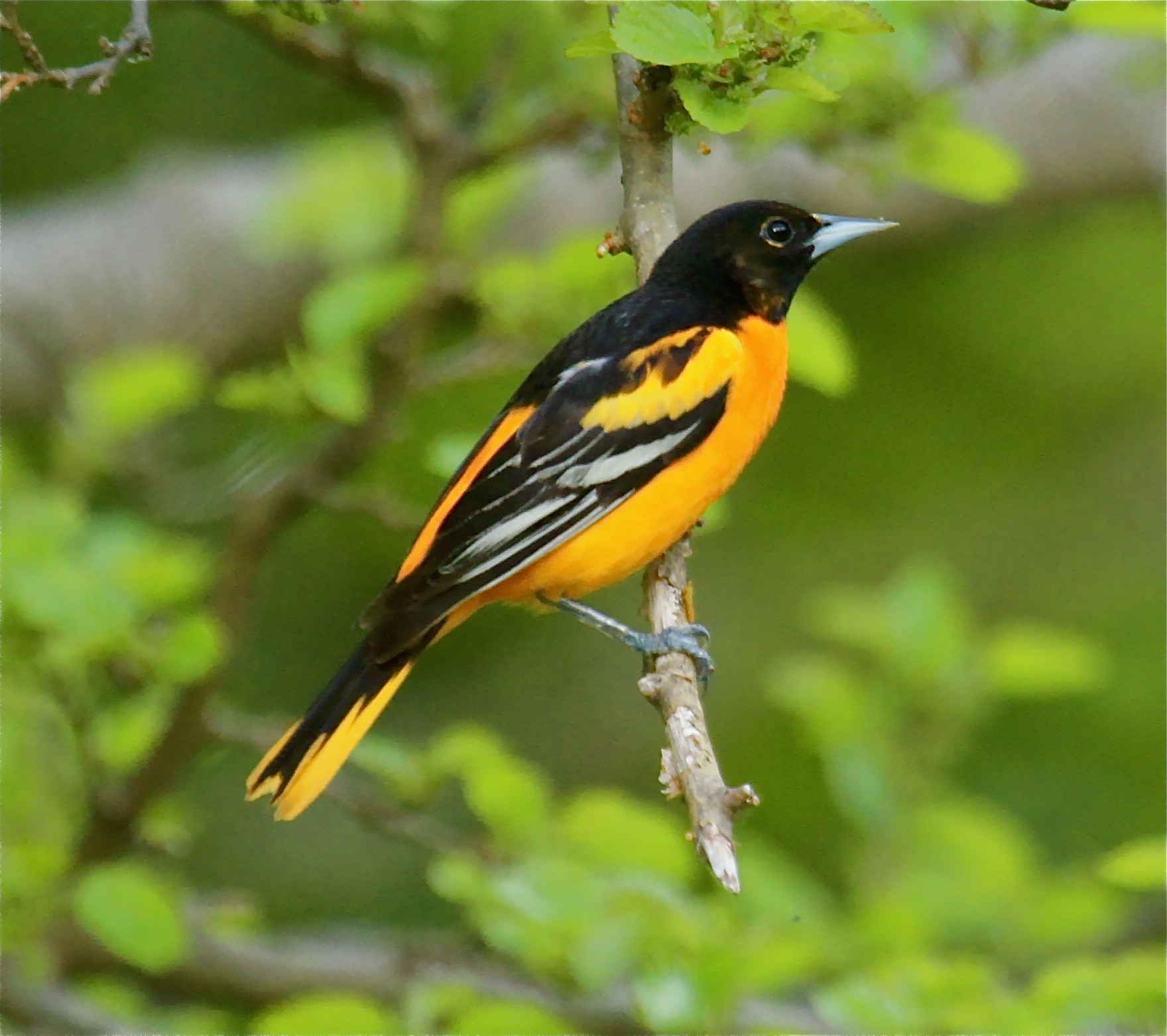
Baltimore Oriole turns on rich orange body, black head on males, slim pointed bill, and hanging pouch nest, then on the setting around it: mature deciduous trees, river edges, orchards, parks, and leafy yards.
- Family
- Blackbirds
- Diet
- Omnivore
- Status
- LC
- Range cue
- Michigan eBird frequency
Quick Summary
Baltimore Oriole is a slim blackbird relative of leafy deciduous trees, recognized by orange-and-black male plumage, pointed bill, fluty song, and a deep hanging pouch nest. Feeders can bring the bird close during migration and early summer, but the real profile is canopy movement, caterpillars, fruit, nectar, and outer-branch nesting.
01Field marks
Orange-black color only works with canopy behavior
Adult males give the fastest answer: black head and upperparts, rich orange underparts, white wing detail, and a slim pointed bill. That view is memorable, but it is not the only view readers get.
Females and immature birds can look yellow-orange, olive, or brownish from below. Shape and behavior become more important when the color is duller.
A Baltimore Oriole should feel like a canopy bird. It moves through outer branches, pauses to sing high, probes leaves and blossoms, and crosses gaps with direct flight.
The pointed bill matters because it separates the bird from seed-cracking finches. Orioles probe, pick, and work foliage, flowers, fruit, and soft food with a different tool.
American Goldfinch can create a yellow-orange flash, but it is smaller, seed-focused, and flockier. It does not have the same pointed bill or treetop blackbird structure.
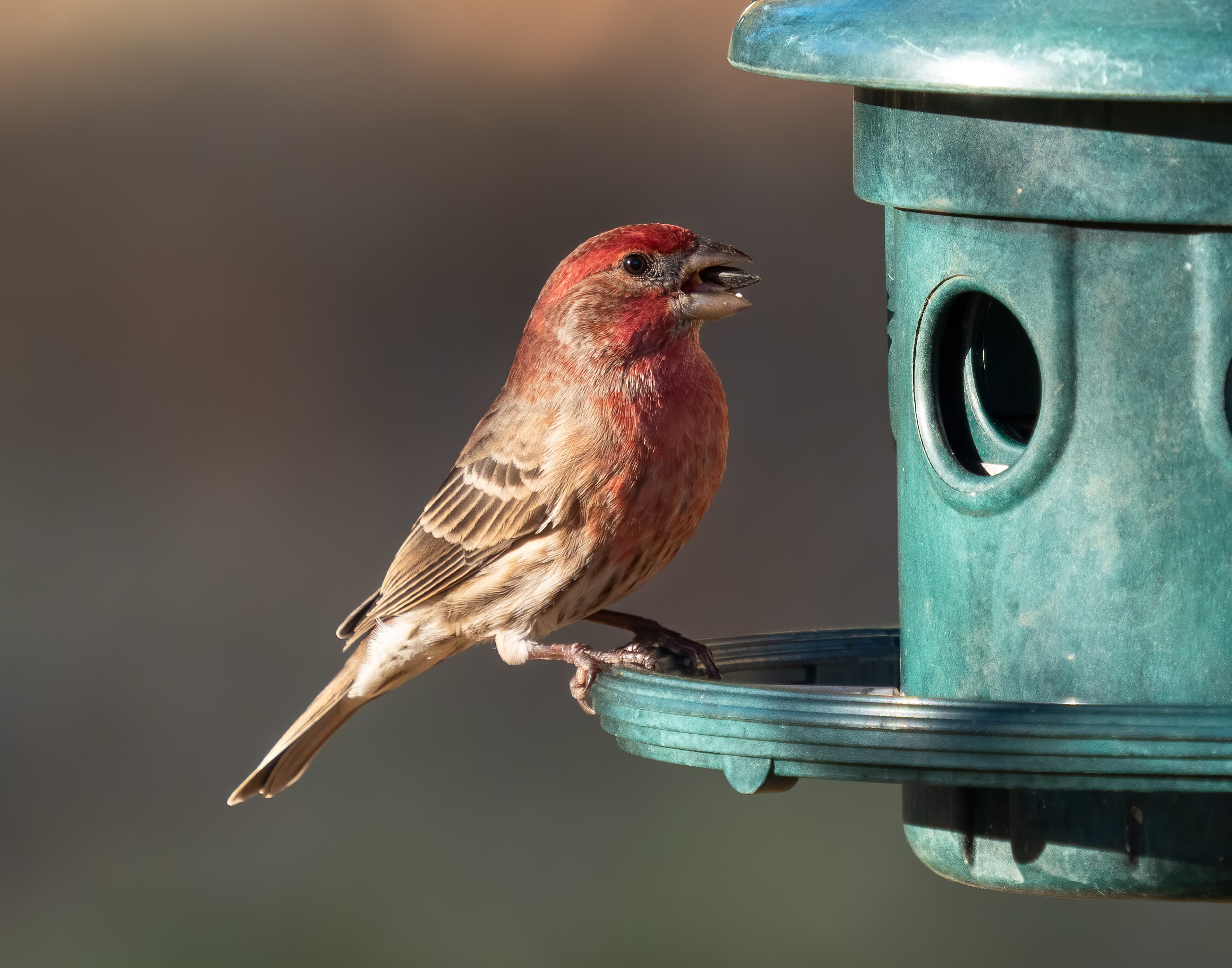
Purple Finch creates a feeder-color problem for some readers, yet its conical bill and streaking pull the ID into finch territory.
A nest can settle the page better than color. A deep hanging pouch at the tip of a deciduous branch is an oriole clue that no normal feeder visit can replace.
The safest field method is vertical. Listen high, scan outer leaves, watch for orange movement behind the canopy, then use the pointed bill and slim body when the bird crosses a gap.
Female and immature Baltimore Orioles need more attention because many readers first see a duller yellow-orange bird high in leaves. The ID should lean on structure and setting: slim body, pointed bill, longish shape, outer-branch movement, and canopy song. Color can be warm without the crisp black-and-orange male pattern, especially in quick views from below.
Orchard Oriole is the comparison that keeps this section honest in parts of the range. Male Orchard Orioles are darker chestnut, and females are smaller, greener-yellow, and more delicate. Baltimore Oriole tends to look larger and brighter, with a stronger orange impression in males and a different canopy presence. If the view is only a yellow bird in leaves, the page should push the reader to bill, size, song, and behavior before deciding.
The species is also easy to misread at feeders. A bird on an orange half gives a simple close view, but that is only one behavior window. The same bird may spend most of its time hidden by leaves. A strong ID should still work after the feeder is removed from the scene: pointed bill, fluty song, canopy movement, orange or yellow-orange body, and a route through mature deciduous trees.

- Start high: canopy movement, slim bill, and orange-black contrast solve most good views.
- Female warning: duller yellow-orange birds still show oriole shape and treetop behavior.
- Nest clue: the hanging pouch nest is stronger evidence than color alone.
02Nesting data
Why the hanging nest is the real Baltimore Oriole clue
The hanging pouch is the breeding feature that makes Baltimore Oriole unmistakable. Females weave plant fibers, grasses, bark strips, hair, and other flexible material into a deep suspended nest.
Placement matters as much as form. The nest hangs from outer branches of deciduous trees, often where leaves and fine twigs conceal it better than a trunk cavity would.
That architecture changes the search image. Do not look only at trunks, boxes, or shrub forks. Look outward and slightly down from branch tips.
The nest also explains why mature trees matter. A young yard with only small ornamental shrubs may offer a feeder visit, but it does not offer the branch structure that defines breeding habitat.
Northern Mockingbird shows why this distinction matters. Mockingbirds nest in shrubs and small trees with much more exposed territorial behavior around people.
For orioles, the practical breeding answer is branch architecture. A feeder in an open yard may attract a passing bird, but nesting needs tall deciduous structure first.
The page should not imply that readers need to find the nest to identify the species. The point is that pouch nests, canopy movement, and outer-branch behavior all describe the same bird from different angles.
The pouch nest should get enough depth because it is one of the bird's least swappable facts. A female weaves flexible fibers into a suspended bag that can hang from slender outer branches. The structure moves with wind, sits away from the trunk, and is often hard to see until leaves shift or fall. It is not a cavity, platform, shrub cup, or nest-box story.
Nest placement also explains why mature deciduous trees are more than scenery. Outer branches must be fine enough for suspension but strong enough to support the nest. The surrounding leaves help conceal the structure, while nearby foliage holds insects for adults and young. This is a canopy architecture problem, not simply a preference for "trees."
Readers should be careful with late-season discoveries. A dangling pouch noticed after leaves drop may be old and empty, while an active nest in summer can be missed even from below. The page should teach the form without encouraging people to stand under a branch and search repeatedly during breeding. The safer field method is to watch adult movements and listen from a distance.
- Nest form: females weave a deep hanging pouch from flexible fibers.
- Nest place: branch tips high in deciduous trees keep the nest hard to reach.
- Field cue: repeated trips to one outer branch can reveal nest activity.
03Food and foraging
How fruit, nectar, and insects keep orioles high in trees
Spring feeding starts in the leaves. Baltimore Orioles take caterpillars and other insects from foliage, which is why mature deciduous trees matter before any feeder enters the answer.
That insect work becomes especially important when adults feed young. The bird is not just visiting a yard for sweet food; it is using the canopy as a hunting surface.
Orange halves, grape jelly, nectar, ripe fruit, and fresh water can still help readers see the bird. These foods work best during migration and early summer, when orioles are already moving through or nesting nearby.
The warning is hygiene. Jelly ferments, nectar spoils, and sticky feeders can become a worse answer than no feeder if they are not cleaned.
Black-capped Chickadee gives the contrast because it can use seed and suet stations more consistently. Baltimore Oriole feeding remains tied to trees, insects, fruit, and short low visits before returning high.
The feeder is a window into the bird, not the whole bird. A yard with canopy trees and insect life has more to offer than a cup of sugar in an open lawn.
Season also changes what readers see. Spring birds may be vocal and bright in the canopy, while later birds can become quieter around fruiting trees and feeders.
A good feeding section should leave the reader with a hierarchy: trees first, insects and fruit second, clean sweet offerings third. Reverse that order and the article becomes a feeder blurb instead of an oriole profile.
The food story has seasonal tension. Insects and caterpillars matter in spring and breeding, while fruit and nectar become more visible to people because they can offer them. The article should keep those two lanes separate enough that readers do not reduce the bird to jelly. Sweet foods attract attention; insects and canopy foliage help explain the bird's actual breeding ecology.
Feeder timing matters. Orange halves or jelly may work best when birds are arriving, passing through, or feeding young nearby. Later in summer, feeder use can change as natural fruit, insects, and family movements shift. A reader who sees orioles for only a short window may not be doing anything wrong. The bird's seasonal route is bigger than the yard.
Hygiene deserves plain language because sweet food spoils fast. Replace jelly before it ferments, keep nectar fresh, wash sticky surfaces, and do not leave fruit to rot in heat. Small portions are better than a large cup that sits too long. That advice supports the oriole instead of turning the page into feeder enthusiasm.
- Spring food: caterpillars and canopy insects drive breeding-season foraging.
- Feeder food: oranges, grape jelly, nectar, and water work better than seed.
- Setup clue: food near trees and cover fits short visits better than exposed feeder poles.
04Behavior and habitat
How mature trees make the bird visible and easy to miss
Baltimore Orioles often arrive as sound before color. The song is clear and fluty, and it pulls attention upward before the orange bird appears between leaves.
Once seen, the bird rarely behaves like a feeder bird for long. It slips through foliage, probes flowers or leaves, crosses a gap, and vanishes back into canopy shade.
American Robin reverses the viewing problem because it often identifies itself on lawns before moving into trees. Baltimore Oriole usually asks the reader to look up first.
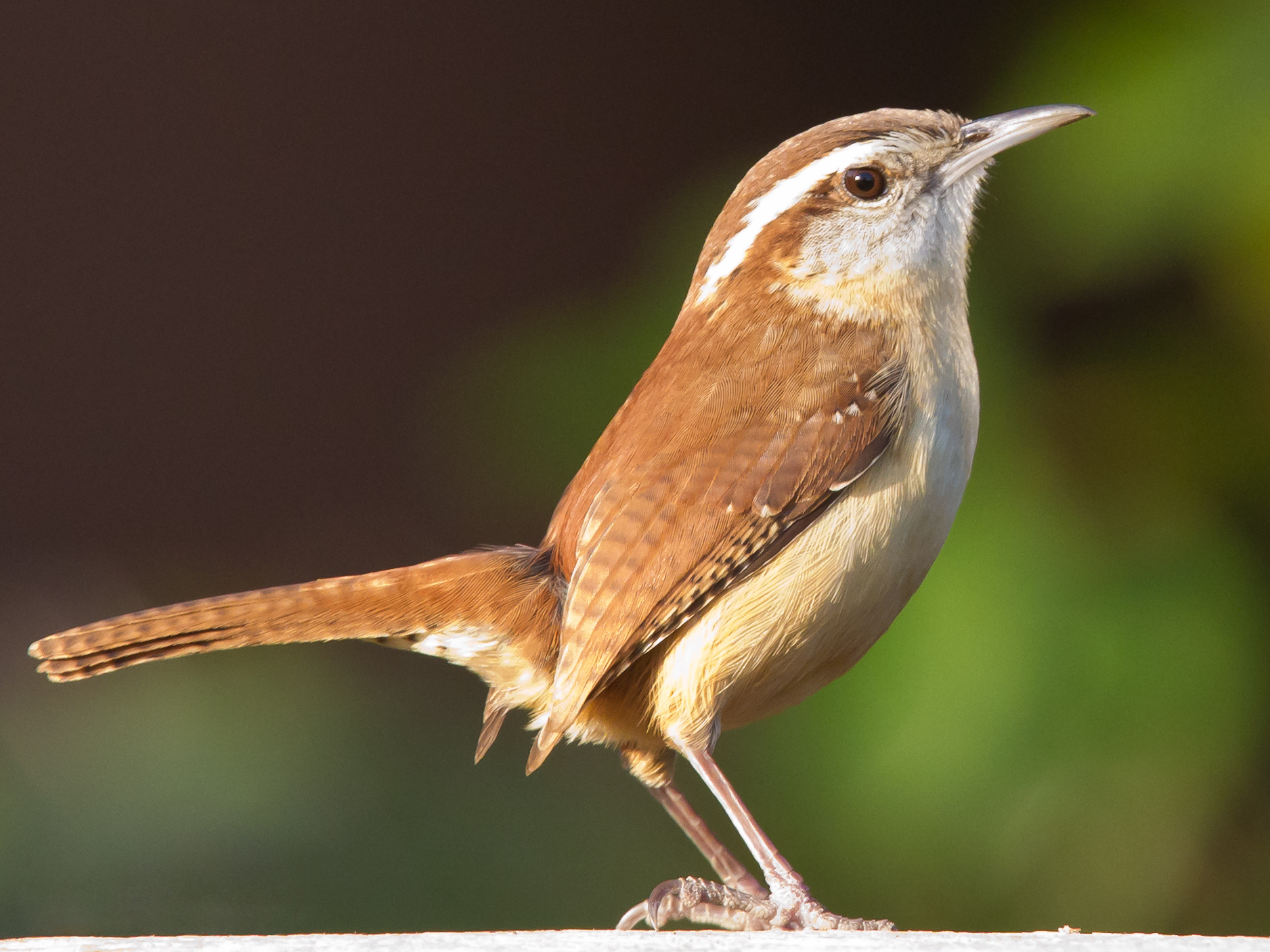
Carolina Wren is almost the opposite sound problem: loud, low, and tied to dense cover. Oriole sound comes from above and can feel detached from the bird until a flash of orange moves.
Season changes the behavior. Spring and early summer bring song, courtship, and nesting activity, while later birds may become quieter and easier to miss.
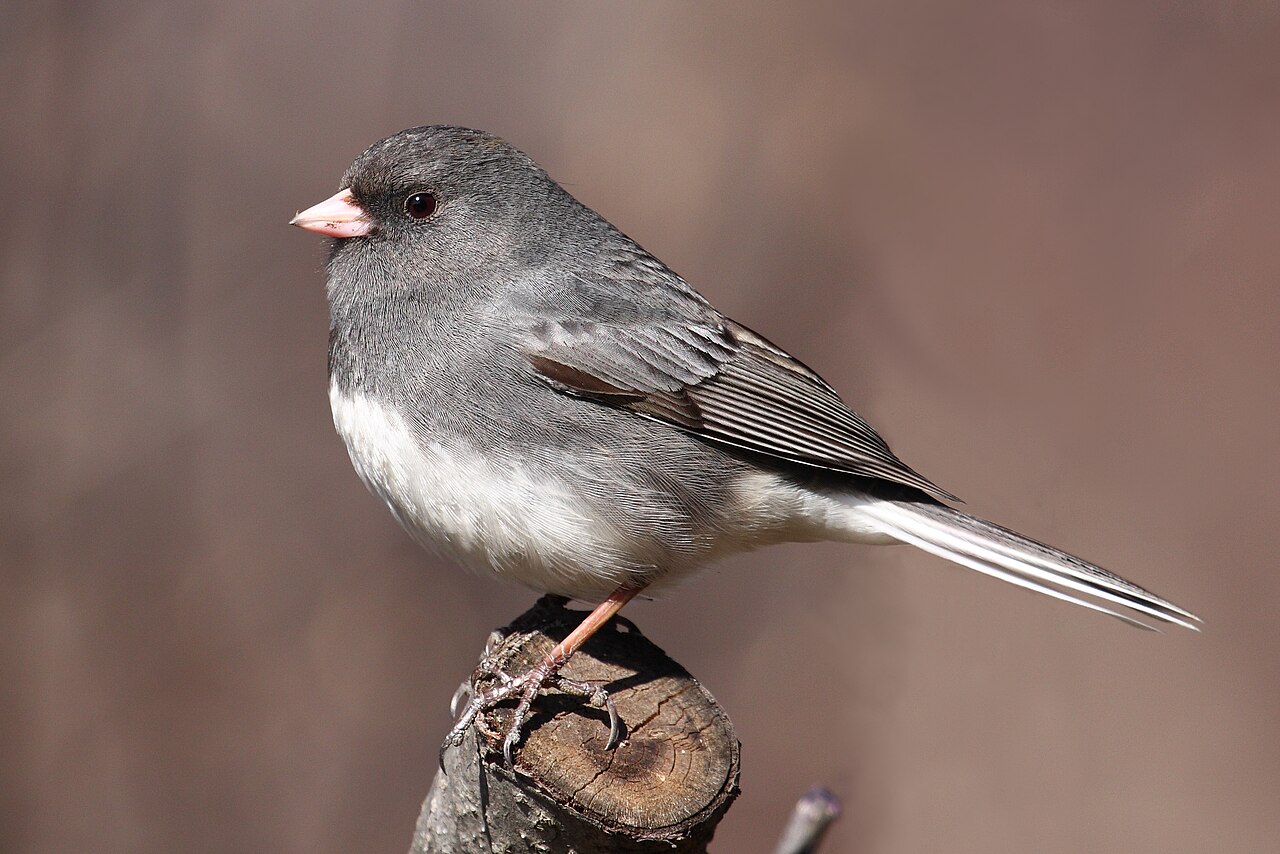
A ground bird such as Dark-eyed Junco solves almost none of the same field problem. For Baltimore Oriole, listen up, then watch leaf edges and outer branches.
The bird can look bold at a jelly feeder and nearly invisible five minutes later. That contrast is not a contradiction; it is the normal shift between a brief low visit and a canopy life.
A good behavior section should teach search strategy. Stand back from the tree, listen before scanning, watch outer branch tips, and expect the bird to cross openings rather than pose in the open.
Canopy behavior changes how the reader should scan. Start with sound and movement near the outer crown, not with the trunk. The bird often appears as a flash through leaves, then pauses just long enough for the bill or orange body to register. Patience matters more than chasing the first flash across the yard.
Migration adds another behavior layer. Orioles can appear suddenly when flowering trees, fruit, insects, and feeders line up, then become less obvious as nesting settles or family groups move. A yard visit may be brief, but a brief visit still fits the bird. The page should not imply that successful attraction means daily feeder attendance all season.
The flight between trees is direct enough to reveal shape, especially when the bird crosses a gap. Watch for a slim blackbird relative moving from canopy to canopy rather than a bouncing finch flock or a robin dropping to a lawn. That movement keeps the profile anchored above eye level and protects it from becoming another backyard-feeder article.
For Baltimore Oriole, keep rich orange body, black head on males, slim pointed bill, and hanging pouch nest, caterpillars, insects, fruit, nectar, orange halves, and jelly when feeder hygiene stays good, a hanging woven pouch suspended from outer deciduous branches, and mature deciduous trees, insect-rich canopy, clean sweet-food feeders, and reduced pesticide pressure with one page owner instead of repeating them as separate checklist items.
- Sound first: fluty song often points attention upward before color appears.
- Seasonal cue: spring migration makes orioles more visible around flowering trees.
- Habitat fit: mature deciduous canopy explains feeding, nesting, and visibility together.
05Conservation
Why Maryland symbolism should point back to canopy
Baltimore Oriole conservation should begin with mature deciduous canopy, insect-rich leaves, safe nesting branches, and connected green space. The main point is habitat function, not one dramatic slogan.
The Maryland state bird connection makes the bird culturally familiar, but symbolism should send readers back to living trees and seasonal food.
Feeder care belongs here because people interact with orioles through sweet offerings. Replace jelly before it spoils, clean nectar ports, keep fruit fresh, and avoid sticky setups that can foul feathers.
Eastern Bluebird and Mountain Bluebird show a different public-help lane because nest boxes can be central. Orioles need branch tips and canopy insects before they need a box.
Hermit Thrush gives a quieter forest contrast, with a lower woodland lens. Baltimore Oriole asks for a canopy-first lens.
Protect or plant native shade trees, reduce broad insecticide use, and keep flowering or fruiting plants available. If the upper branches hold insects and safe nesting surfaces, the bird has something real to use.
The article should close on habitat rather than nostalgia. Orange-and-black symbolism is memorable, but the living bird depends on leaves, insects, fruit, song perches, and a branch tip strong enough to hold a hanging nest.
The conservation owner should connect three things readers can actually control or support: mature trees, insect-rich foliage, and clean sweet-food stations. Removing large deciduous trees strips away the bird's nesting and foraging structure. Heavy pesticide use can reduce the caterpillar and insect prey that matter during nesting. Dirty jelly or nectar stations can harm the birds people are trying to enjoy.
For yards, the strongest action is to keep or plant appropriate canopy trees where space allows, add native shrubs and flowering plants that support insects, and treat feeders as a seasonal viewing aid rather than the habitat itself. An oriole can visit a jelly cup in a yard that would never support a nest. The article should make that difference visible.
The Maryland symbol note belongs only if it returns to the bird's biology. Baltimore Oriole is culturally recognizable because of color and name, but the living bird is still a migratory canopy blackbird. A good close should leave readers looking upward into trees, listening for fluty song, and keeping sweet feeders clean if they choose to offer them.
- Status frame: habitat structure matters more than dramatic scarcity language.
- Main pressure: simplified yards remove insects, fruit, and canopy nesting options.
- Why it matters: Maryland symbolism works because ecology and color both feel local.
Least Concern. Baltimore Oriole is the official state bird in 1 states
What should you check or read next?
A final check on Baltimore Oriole separates look-alike comparisons, related bird profiles, and practical next steps.
Questions and answers
Do Baltimore Orioles come to feeders?
Yes. Baltimore Orioles may visit oranges, grape jelly, nectar, and fresh water, especially during migration and early summer. They still depend on trees, insects, and canopy cover more than a feeder alone.
How do you identify a female Baltimore Oriole?
Look for warm yellow-orange underparts, a slim pointed bill, wing bars, and high outer-branch movement. Female and immature birds are duller than males, so shape and behavior matter.
Where do Baltimore Orioles nest?
They usually nest high in deciduous trees. The female weaves a hanging pouch from plant fibers and suspends it from a drooping branch tip.

Related field context
The strongest adjacent references stay with the same bird, the family, habitat, or state-symbol context already used in the article.