Black-capped Chickadee: A Tiny Feeder Bird With a Sharp Memory
Use this profile to identify Black-capped Chickadee, place it within the tits and chickadees family, and move from field marks into feeding, nesting, behavior, and status.
- Family
- Tits and Chickadees
- Diet
- Omnivore
- Status
- LC
- Range cue
- Michigan eBird frequency
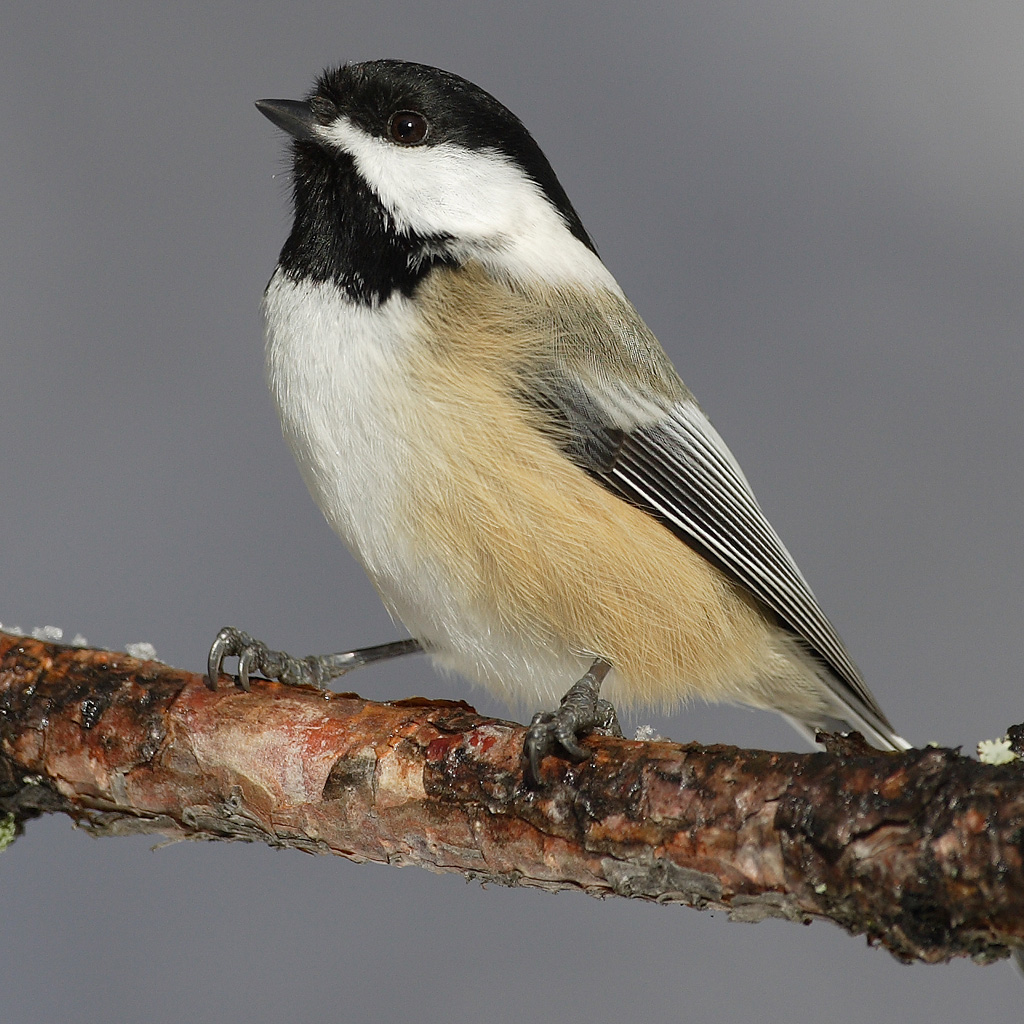
Quick Summary
Black-capped Chickadee is a tiny northern bird where the black cap, white cheeks, bib, quick motion, and familiar call solve the ID fast. The feeder visits matter, but the deeper story is caching, memory, winter flocks, and cavity use.
01Field marks
Black cap, white cheeks, tiny body, quick motion
Start with the head pattern. Black-capped Chickadee shows a clean black cap, black bib, bright white cheeks, gray back, pale underparts, and a compact body that looks quick and round-headed.
The bird rarely sits still for long. It lands, checks a twig or feeder edge, grabs food, and leaves, which makes motion part of the ID rather than a distraction.
Carolina Wren is a resident yard-bird contrast, but it is warmer, longer-billed, cock-tailed, and much louder in a different way. American Robin changes the scale completely because it is a large upright thrush, not a tiny canopy-and-feeder bird.
In overlap areas, Carolina Chickadee can be the harder real-world problem, but the page can still teach the core method: cap and cheek pattern, small body, call, range, and behavior have to agree.
The cheek patch is especially useful in winter light. Snow, gray bark, and bare branches can flatten color, but the black cap against the white cheek keeps the face readable.
Watch the tail and wings as the bird moves through twigs. The compact shape, short bill, and quick hops keep it from feeling like a nuthatch, sparrow, or tiny woodpecker.
A safe read joins the black cap, white cheeks, short bill, tiny body, restless movement, and chick-a-dee call.
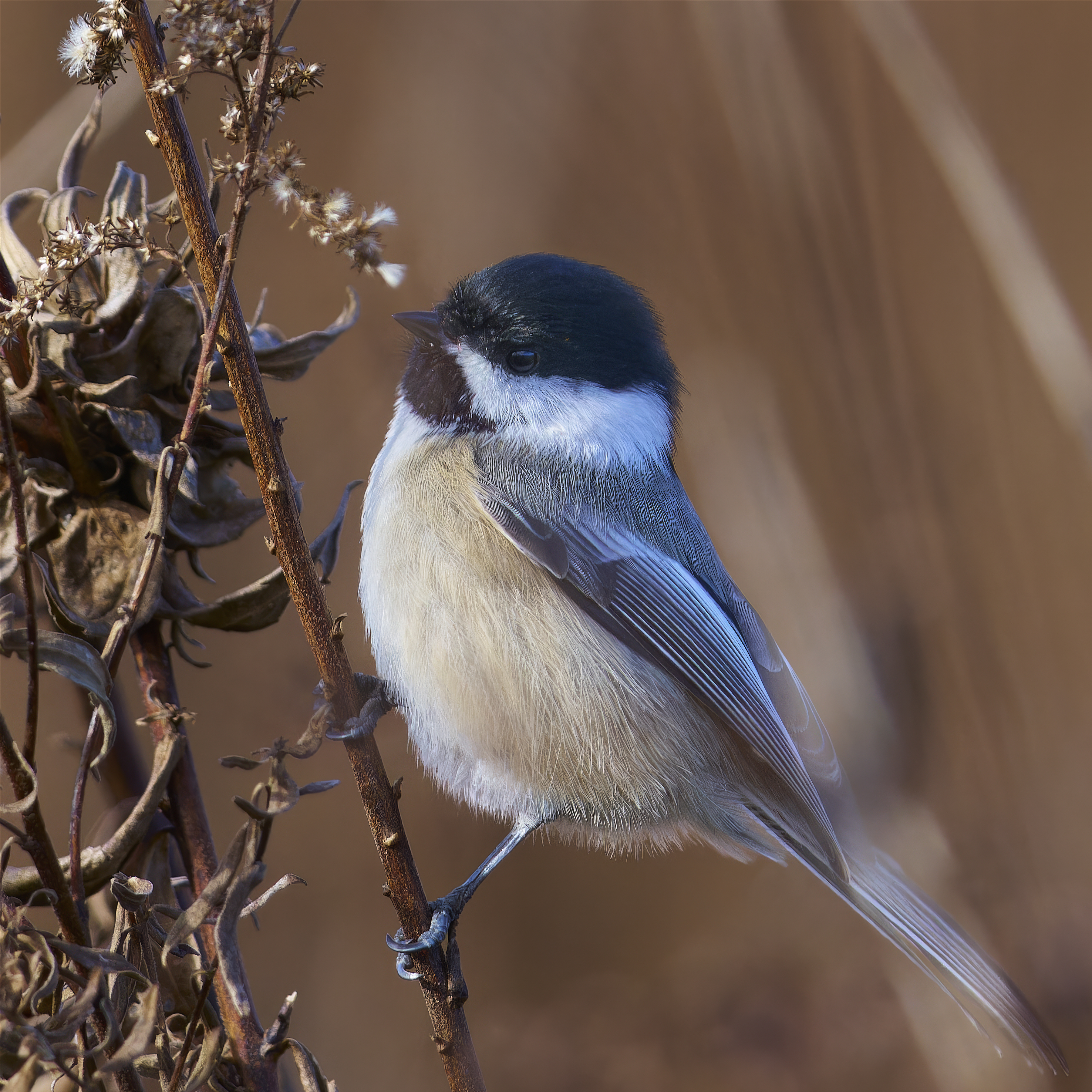
- Head pattern: black cap, black bib, and white cheeks solve most close views quickly.
- Shape clue: the bird looks tiny, round-headed, and quick instead of long-bodied or heavy.
- Voice clue: the chick-a-dee call and clear whistle often confirm the bird before a long look.
06Comparison table
Birds most often confused with Black-capped Chickadee
| Bird | What differs first | Best clue |
|---|---|---|
| Carolina Chickadee confusion | Range overlap makes cap edge, bib edge, wing panel, and voice more important than chickadee shape alone. | Range overlap makes cap edge, bib edge, wing panel, and voice more important than chickadee shape alone |
| Tufted Titmouse confusion | A crest, heavier body, and different flock behavior move a gray feeder bird away from chickadee structure. | A crest, heavier body, and different flock behavior move a gray feeder bird away from chickadee structure |
| White-breasted Nuthatch confusion | Bark work, bill shape, posture, and upside-down movement separate nuthatch behavior from chickadee behavior. | Bark work, bill shape, posture, and upside-down movement separate nuthatch behavior from chickadee behavior |
02Food and foraging
Why feeder visits make sense only with caching
Black-capped Chickadees eat insects, spiders, seeds, berries, suet, and small food items they can carry away. At feeders, sunflower, hulled sunflower, peanut pieces, and suet fit the bird better than a narrow decorative mix.
The key behavior is caching. A chickadee often takes one seed and leaves because it may store food in bark, moss, or a branch crevice rather than eating everything on the spot.
American Goldfinch and Purple Finch sit in a finch lane, cracking and sorting seed with conical bills. Brown Thrasher works leaf litter, while Baltimore Oriole uses canopy insects, fruit, and nectar. Chickadee feeding is smaller, quicker, and more tied to bark, twigs, and cache sites.
That makes habitat as important as the feeder. Trees, shrubs, rough bark, seed plants, and winter cover give the bird places to find natural food and hide stored food.
A clean feeder helps, but it is not the whole answer. The bird's normal feeding life is a network of quick visits, tiny prey, seed carrying, and remembered storage spots.
Caching also explains why a feeder can seem busy even when no bird stays long. The activity is spread across many hidden places, so the feeder is only one stop in a larger winter map.
In warmer months, insects and spiders become more visible in the diet. The same bird that takes sunflower in January may spend breeding season searching bark, leaves, and twigs for small prey.
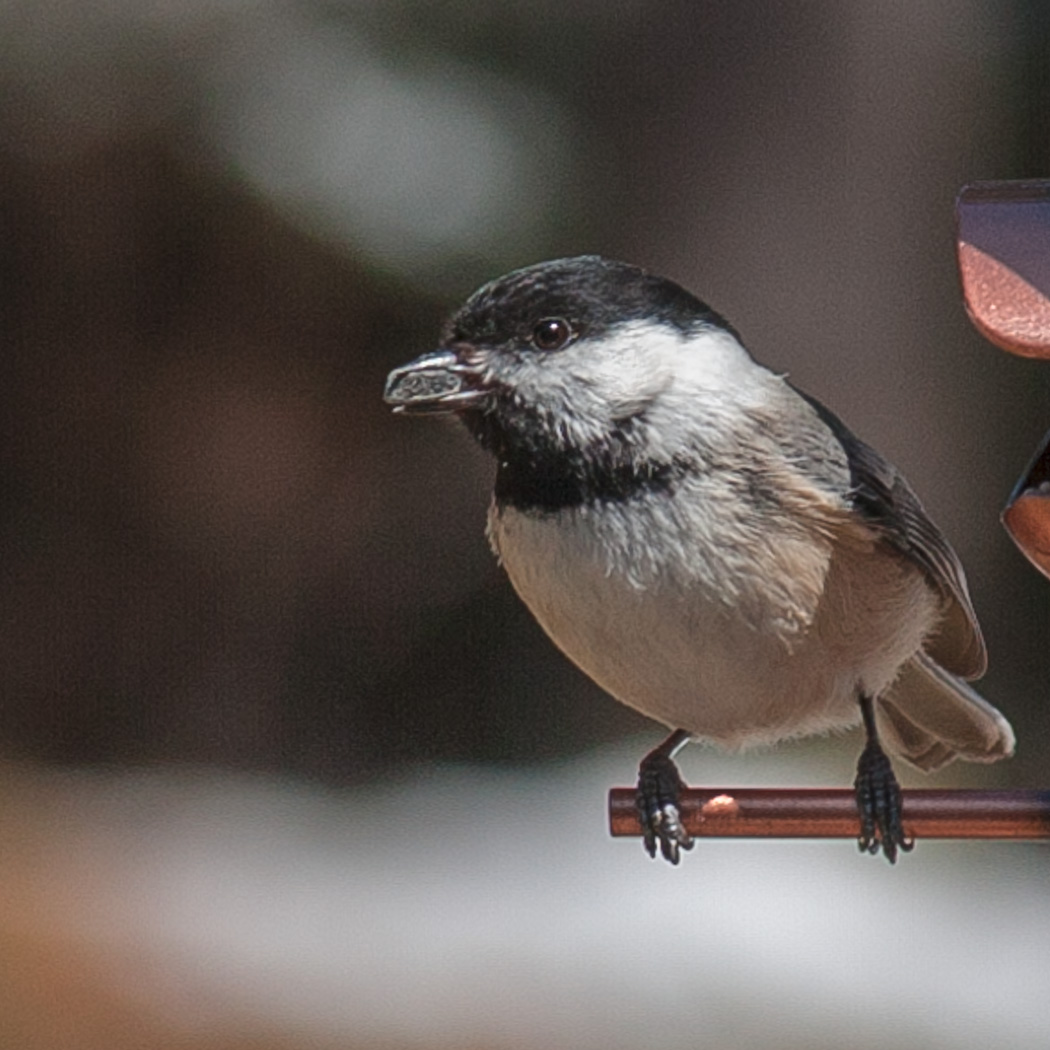
- Feeder pattern: one seed and a fast exit often means caching, not nervous feeding.
- Best foods: sunflower, peanut pieces, and suet match the short bill and winter energy needs.
- Natural lane: bark, shrubs, and twig tips still matter because dormant insects remain part of the diet.
03Behavior and habitat
How calls and winter flocks help you find chickadees
Black-capped Chickadee behavior is built around quick decisions. The bird calls, checks bark, joins other small birds, takes one food item, and shifts position before a larger bird would finish settling.
Winter mixed flocks make the species especially useful to birders. One chickadee can lead attention to nuthatches, titmice, woodpeckers, kinglets, and other small birds moving through the same trees.
Northern Mockingbird is also vocal around people, but it sings from exposed perches with a long-tailed, territorial style. Hermit Thrush keeps quieter shaded understory behavior, not the same bright call-and-flock rhythm.
Memory is part of the behavior story. Caching only works because the bird can relocate many stored items later, which ties feeder visits to real winter survival rather than simple tameness.
The field method is to listen first, then watch motion. A chick-a-dee call from a winter tree line often means the flock is already moving past you.
The call itself can change intensity. More dee notes can signal agitation, while softer contact calls help birds keep track of each other as they move through branches.
That social movement makes the species a useful winter scout. Finding one chickadee often means the observer should slow down and watch the whole tree line.
Read Black-capped Chickadee through the field marks first, then test the state-symbol story against the habitat and behavior that make the bird visible.
- Memory clue: food caches explain the repeated grab-and-go rhythm at feeders.
- Flock clue: one chickadee call often means nuthatches, titmice, or woodpeckers are nearby.
- Winter lane: shrubs, bark, feeders, and mixed flocks all support the same survival strategy.
04Nesting data
How cavities make dead wood and nest boxes matter
Black-capped Chickadees nest in cavities, including old holes, nest boxes, and soft rotten wood they can excavate further. The cavity has to be small enough to feel secure and close enough to food and cover for repeated adult trips.
Northern Flicker shows the large woodpecker side of cavity nesting, with a much bigger body and cavity scale. Eastern Bluebird can use nest boxes too, but its open-country posture and bluebird behavior are different from chickadee cavity life.
The breeding section belongs to structure. Dead limbs, soft snags, small cavities, and properly sized boxes matter because they give the pair a place to hide eggs and young.
A tidy yard with every dead branch removed may lose the exact material a chickadee investigates first. That does not mean leaving dangerous trees standing, but it does mean preserving safe small-scale cavity structure where possible.
The cavity also keeps breeding behavior easy to miss. Adults can vanish into a small opening with food, then reappear seconds later, so repeated trips to one snag or box can be more useful than a long open view.
Nest boxes work best when they match the bird's size and sit near cover. A box in a barren spot may be technically available but less useful than one connected to trees and shrubs.
- Nest site: cavities, nest boxes, and soft rotten wood all fit chickadee breeding behavior.
- Season shift: winter flocks break into tighter breeding territories once pairs settle.
- Yard cue: dead limbs and small snags can be useful nesting structure, not clutter.
05Conservation
Why a tiny common bird became a northern symbol
Black-capped Chickadee remains common because it can use several habitat layers at once: trees for cavities, bark for insects, shrubs for cover, feeders for winter food, and mixed flocks for safer movement.
Maine's Black-capped Chickadee choice and Massachusetts's Black-capped Chickadee choice work because the bird is familiar through cold weather, ordinary yards, and northern woods. The symbolism is strongest when it stays tied to that daily winter presence.
The practical pressure point is simplification. Removing shrubs, dead limbs, seed plants, and rough bark can leave a yard with food in one place but fewer natural feeding and nesting options.
That makes the bird a good test of small habitat structure. A yard can support chickadees with many ordinary pieces rather than one dramatic feature.
The useful close is small-scale habitat. Keep native shrubs, safe cavity structure, clean feeders, seed plants, and winter cover, and the chickadee has more than one way to make a yard work.
- Status: Black-capped Chickadee stays common where tree and shrub structure remains available.
- Main pressure: over-cleaned yards remove cavities, cover, and natural insect foraging surfaces.
- Why it matters: the species turns ordinary northern yards into real winter habitat when structure stays intact.
Least Concern. Black-capped Chickadee is the official state bird in 2 states
What should you check or read next?
A final check on Black-capped Chickadee separates look-alike comparisons, related bird profiles, and practical next steps.
Questions and answers
How do you identify a Black-capped Chickadee?
Look for a tiny bird with a black cap and bib, white cheeks, gray back, short bill, restless movement, and the familiar chick-a-dee call.
Why do Black-capped Chickadees take one seed and leave?
They often cache food. A chickadee may carry a seed away and hide it in bark, moss, or another small crevice for later.
Do Black-capped Chickadees use nest boxes?
Yes. They can use small nest boxes or natural cavities, especially when the site is near trees, cover, and food.
Related field context
The strongest adjacent references stay with the same bird, the family, habitat, or state-symbol context already used in the article.