Song Sparrow: A Streaky Singer With a Signature Spot
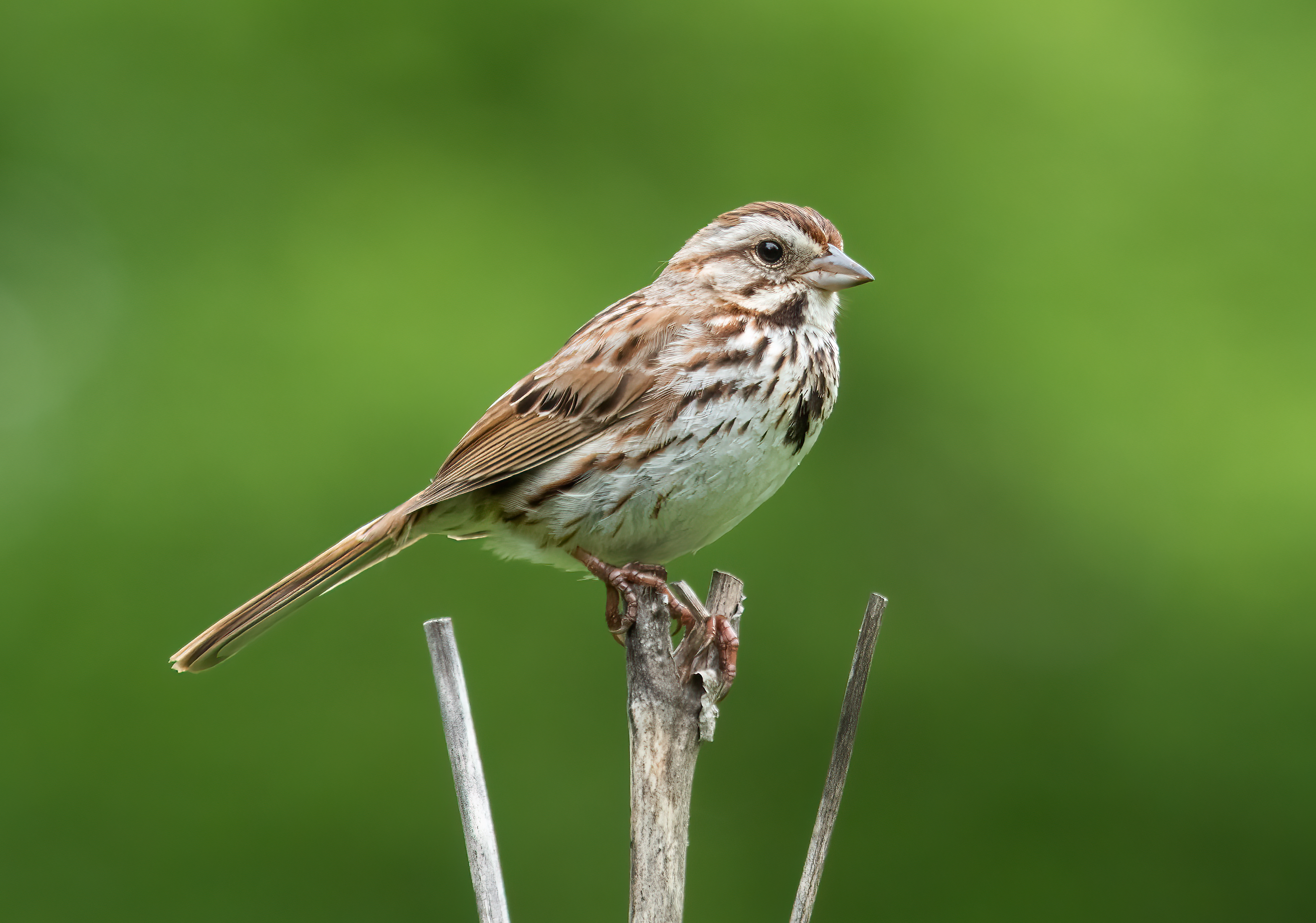
Song Sparrow turns on brown streaking, rounded tail, patterned face, and often a central breast spot, then on the setting around it: wet margins, garden borders, weedy lots, brush piles, streamside shrubs, and low.
- Family
- New World Sparrows
- Range cue
- Michigan eBird frequency
Quick Summary
Song Sparrow is a streaked brown sparrow best solved by the combination of breast streaking, rounded tail, low cover, and song from a brushy perch. A central breast spot helps when visible, but the bird often identifies itself by popping up to sing and dropping back into weeds or shrubs.
01Behavior and habitat
Why Song Sparrow song starts the ID
The behavior loop is rise, sing, drop. The bird climbs just high enough to broadcast, then slips back into cover where its streaking becomes hard to follow.
That loop is why sound belongs inside the ID, not in a separate decorative note. The song points to the perch, and the perch points back to the low cover that makes the bird likely.
Song Sparrows can sing from fence lines, shrubs, reeds, garden edges, and streamside tangles. The exact perch changes, but the relationship between song and cover stays steady.
Red-winged Blackbird may sing from marsh edges too, but its exposed cattail display and blackbird shape make a different scene. Song Sparrow owns the lower, browner layer.
A winter edge can also hold Black-capped Chickadee, juncos, and wrens. Song Sparrow separates itself by staying streaked, low, and tied to a repeated patch of brush.
The bird can look secretive and obvious within the same minute. It may sing loudly from a visible perch, then vanish so completely that the same patch seems empty.
A good search method respects that rhythm. Listen first, watch the cover line, and wait for the bird to reappear near the place where the song stopped.
Song Sparrow behavior often starts as sound inside clutter. The bird may be close, but the first clue is a phrase from a fence line, reed edge, blackberry tangle, or brush pile. Then the body appears for a few seconds, tail rounded, breast streaked, head alert, before it drops out of sight. That short viewing window is exactly why the page should not depend on a perfect portrait.
Different habitats change the stage without changing the loop. In a marsh, the perch may be a reed or cattail stem. In a yard, it may be a fence, shrub, or garden stake. Along a stream, it may be a low branch over damp cover. The shared feature is not the object itself. It is the bird's use of a slightly raised singing point above immediate escape cover.
Song also helps separate this page from generic sparrow text. The species is named for a reason, and the song is tied to visibility, territory, and reader success. A silent brown bird in deep brush can be hard; a singing bird that rises and drops gives the reader a repeatable method. The article should make that method the center of the profile.
For Song Sparrow, keep brown streaking, rounded tail, patterned face, and often a central breast spot, seeds, insects, spiders, small invertebrates, and plant material through the seasons, a hidden cup nest low in grass, shrubs, or tangled vegetation, and native seed heads, low shrubs, unmown edges, and messy cover that keeps small sparrows visible and safe with one page owner instead of repeating them as separate checklist items.
- Song clue: a loud, varied song from low cover often gives the bird away before color does.
- Habitat fit: wet edges, thickets, weedy lots, gardens, and brushy stream borders all work.
- Movement: short flights and quick retreats keep the bird tied to cover.
02Field marks
How to identify Song Sparrow in brush
Start with the underparts, then ask where the bird went. Song Sparrow usually shows brown streaking across the breast and flanks, often gathering toward a darker central spot.
That spot is useful but not mandatory. Feather posture, light, and angle can hide it, so a safer ID joins streaking with rounded tail, patterned face, and low cover.
The face can carry several smaller clues. Look for a patterned head, malar stripes, a brown-and-gray impression, and a bill that fits a sparrow rather than a finch. None of those marks should stand alone, but together they sharpen a quick view.
Posture matters because Song Sparrows often look alert and ready to drop. A bird may perch just high enough to sing, then return to the same weeds before you get a clean second view.
White-throated Sparrow can share winter brush, but its crown stripes and white throat create a bolder head-first impression. Song Sparrow stays browner and streakier below.
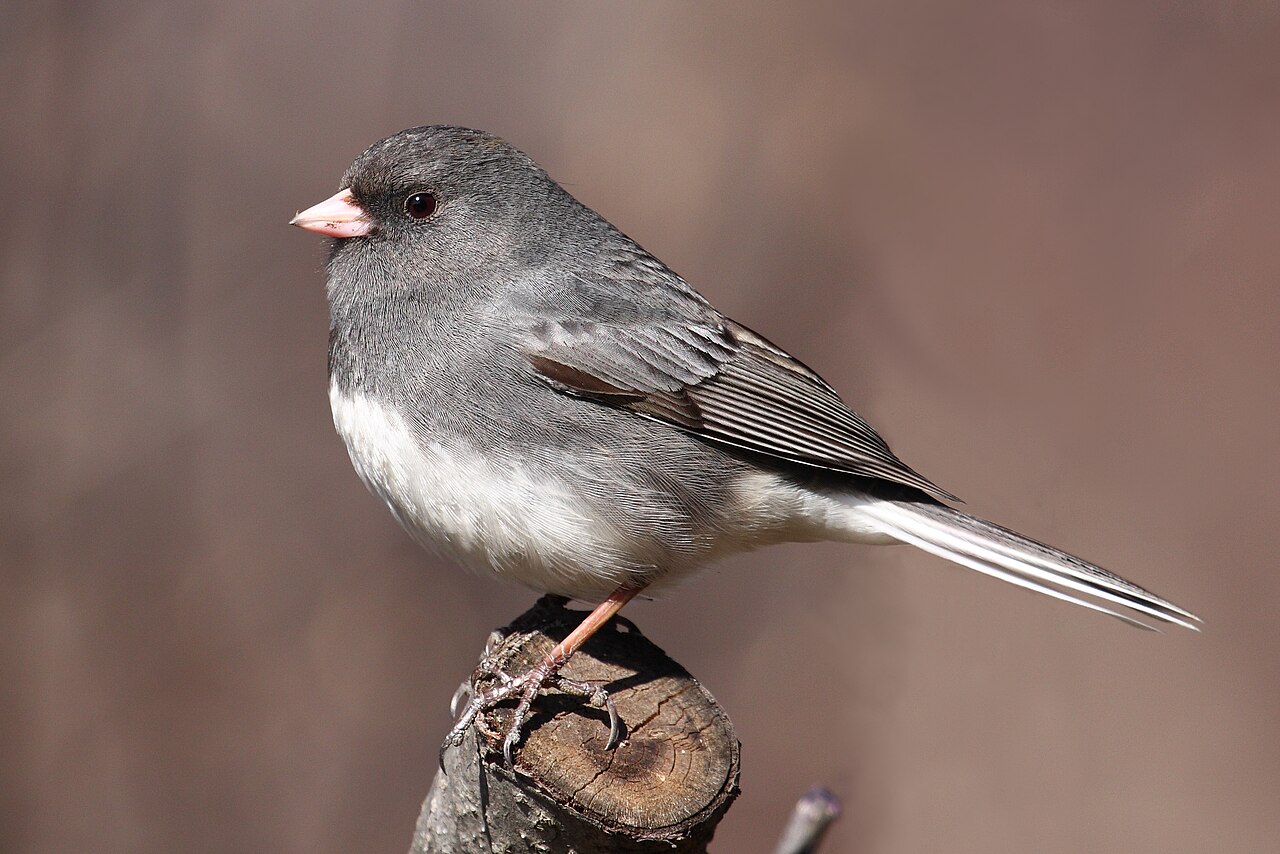
Dark-eyed Junco usually looks cleaner underneath and flashes white outer tail feathers. That makes junco movement feel plainer and more two-toned.
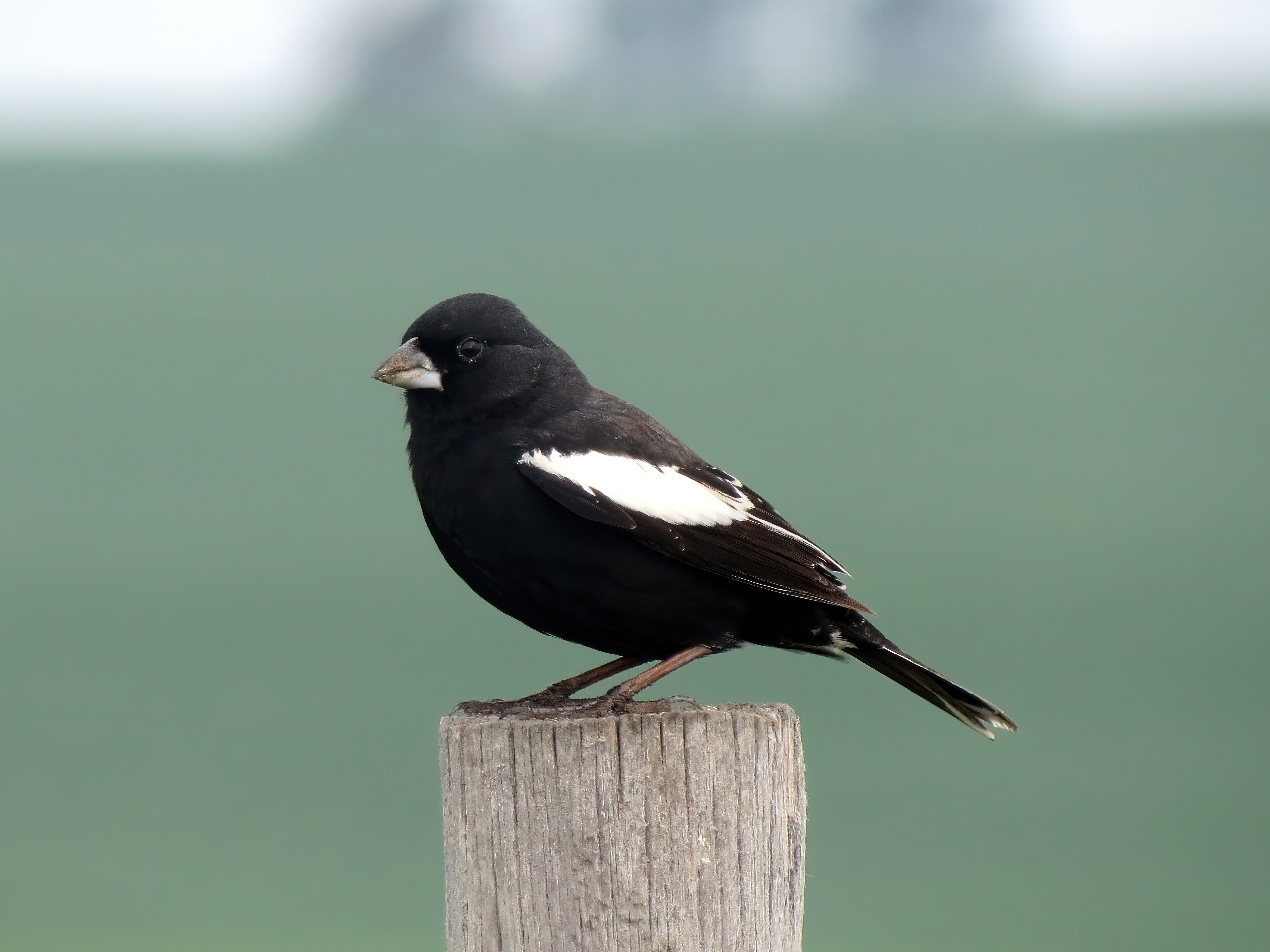
Lark Bunting belongs to a wider grassland problem, especially when seasonal plumage changes the bird. Song Sparrow is more often a brush-edge singer with a low, repeating route through cover.
A strong ID joins streaking, rounded tail, low brush, and repeated song from the same patch. If the bird never uses cover, never sings from low vegetation, and never shows streaking, do not force Song Sparrow.
The central breast spot is helpful, but the article should not make it a pass-fail mark. Some birds show it clearly, some hide it with posture, and some views are too brief. A stronger method is to combine streaked underparts, rounded tail, patterned face, low posture, and the habit of popping up from cover. That cluster is what breaks if the keyword is swapped with a finch, wren, or blackbird.
Brown-sparrow confusion needs practical order. White-throated Sparrow has a bolder head and throat pattern when seen well. Chipping Sparrow is cleaner below and more delicate in many views. Fox Sparrow can be larger, richer, and more forceful in scratching. Savannah Sparrow may share streaking but often reads flatter and more open-ground oriented. Song Sparrow sits in the brush-edge middle: streaked, vocal, low, and ready to drop.
Tail behavior helps because the bird often gives only partial views. A rounded tail that pumps or flicks as the bird moves through stems supports the ID when the breast is hidden. The reader should leave this section with a field sequence: hear or notice movement, find the low perch, check streaking and face pattern, then watch where the bird disappears.

- First read: brown streaking, a rounded tail, and a central breast spot point toward Song Sparrow.
- Face clue: malar stripes and a patterned head help when the breast spot is hidden.
- Behavior cue: the bird often pops from brush to sing, then drops back into cover.
Confirm Song Sparrow by joining streaked breast, low cover, and repeated song from the same patch.
03Conservation
Why messy edges help Song Sparrow
The conservation note should stay local and concrete. The species remains widespread, but the low edges it uses can disappear quickly when yards and stream margins become too tidy.
Leaving native seed heads, unmown strips, damp margins, and connected shrubs helps the same bird feed, sing, and nest. That is the page's practical action.
American Robin can use open lawn in a way Song Sparrow usually cannot. If the article advice no longer points to low, messy cover, it has drifted away from the bird.
The best habitat advice is not exotic. Keep a strip of vegetation along a fence, leave some stems through winter, protect brush near damp ground, and avoid turning every edge into short turf.
This is also a depth check for the article. Song Sparrow is common enough that a broad alarm paragraph would feel false, but its everyday habitat can still be erased at the yard scale.
The final field consequence is simple: the song is easier to keep when the cover stays real. Remove the tangle, and the bird loses the same place it uses for food, song, and nesting.
The useful conservation action is to keep edges functional. That can mean leaving part of a fence line unshaved, keeping native stems through winter, protecting shrubs near a wet spot, or reducing pesticide use where insects feed young. None of those actions require a large property. They require not turning every border into short, exposed turf.
Public parks, stream corridors, community gardens, and backyard margins can all support the same pattern when low cover remains connected. Fragmenting every patch into isolated ornamental shrubs makes the bird less easy to use the space. A Song Sparrow needs small routes through cover, not just one decorative bush in open mulch.
The page should keep the tone proportionate. Song Sparrow is still a familiar bird, so a crisis paragraph would feel inflated. The stronger point is more concrete: common birds reveal whether everyday edges still have seeds, insects, damp margins, and hiding cover. If those pieces vanish, the song may vanish from the yard long before the species disappears from the region.
- Status: Song Sparrow remains widespread because it uses many kinds of low edge cover.
- Main pressure: over-cleaned yards and cleared stream margins remove the messy structure it uses.
- Practical close: brush, seed heads, and native edge plants keep the song connected to real habitat.
04Food and foraging
What Song Sparrow eats in weedy edges
Food sits in the same messy edges where this sparrow hides. Seeds, insects, spiders, and small invertebrates all matter, with insects carrying more weight when adults feed young.
The food is rarely separated from structure. Weeds, damp margins, low stems, leaf litter, and shrub bases put food and cover in the same small zone.
Season changes the emphasis. In breeding season, insects and other small animal prey help support young. In colder months, weed seeds and ground food become more important.
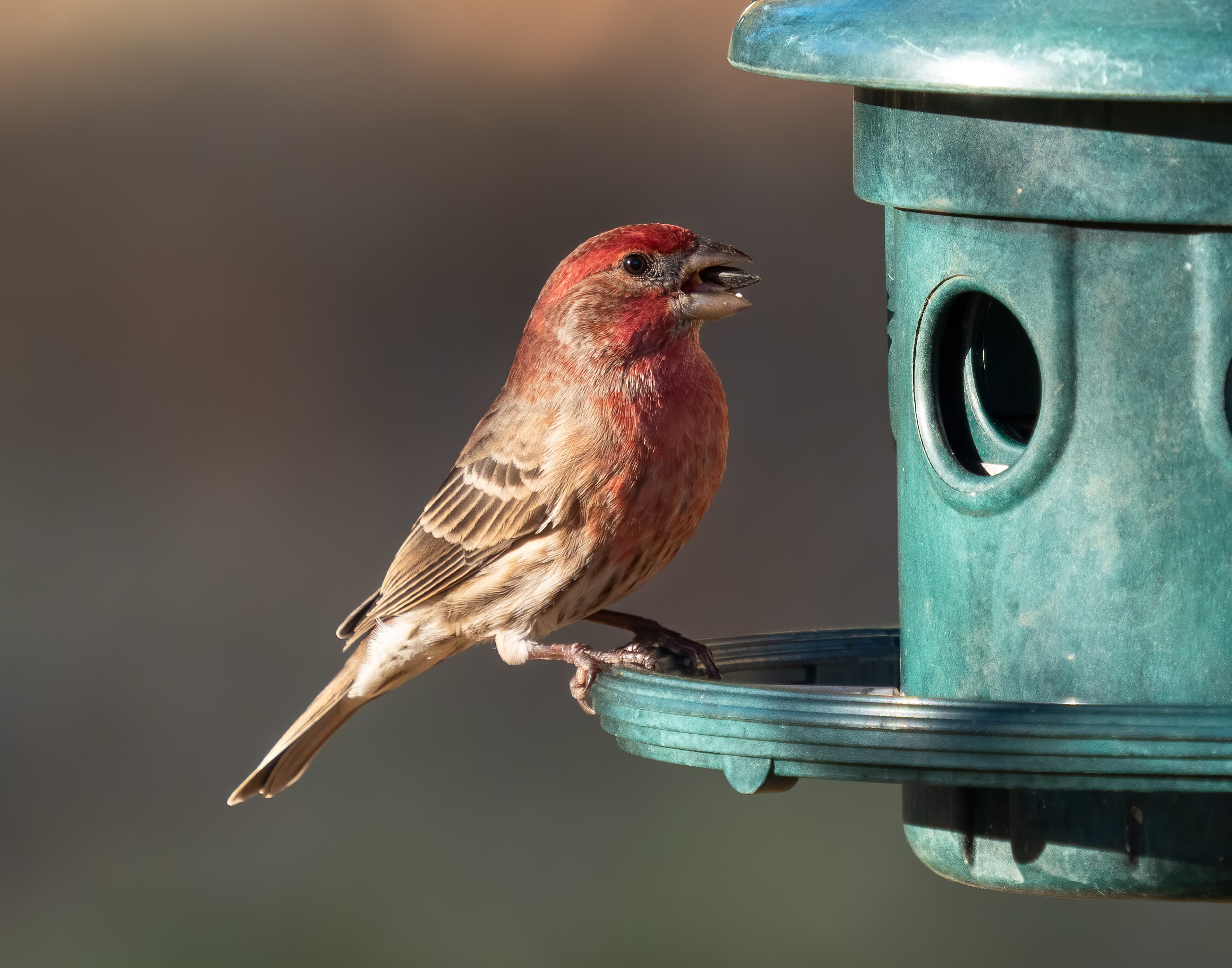
A House Finch sits higher with a thicker seed-cracking bill. Song Sparrow works lower, moves through tangles, and often disappears between feeding moments.
American Goldfinch gives another seed-bird contrast. Goldfinches cling to seed heads and move in buoyant flocks, while Song Sparrows stay tied to brush, damp edges, and short ground movements.
The yard lesson is practical. A neat lawn with one feeder may bring other birds, but it will not explain Song Sparrow as well as native seed heads, low stems, and a brushy edge near the food.
Feeding behavior also helps with identification. A streaked bird working damp leaf litter, popping to a low perch, then dropping back into weeds is showing diet and field marks together.
Feeding should feel like a continuation of the edge, not a separate menu. A Song Sparrow walks, hops, and slips through weeds, damp margins, brush bases, and leaf litter because those places hold seeds and small prey. It does not need a clean feeder scene to explain itself. The food is built into the cover.
Breeding season changes the value of insects. Adults may still take seeds, but insects and other small invertebrates become important when young are growing. That makes pesticide-heavy, over-cleaned edges a worse fit even when they look tidy to people. A strip of native stems or damp vegetation can hold both cover and food, which is why the same habitat advice repeats only once in this page as the main owner.
Winter feeding is quieter. Weed seeds, fallen seeds, and small ground food matter more, and birds can be easier to miss because they stay low while brighter feeder birds draw attention. If Song Sparrows visit a yard, they are often along the messy perimeter rather than at the most exposed feeder port.
- Natural lane: seeds, insects, and small invertebrates tie the bird to weedy and brushy edges.
- Feeder reality: ground scatter or low platform food fits better than high, narrow perches.
- Season shift: insects matter more in breeding season, while seeds carry more weight in colder months.
Low scattered seed works better than a high tube, but brush cover nearby matters more.
05Nesting data
Why Song Sparrow nests stay low
Nesting keeps the article grounded in cover. Nests are usually low, often in grasses, shrubs, marsh edges, garden tangles, or dense vegetation near the ground.
The placement matches the adult's escape pattern. A bird that sings from a perch and drops into the same low patch may be using that cover for territory, feeding, or nesting.
This is why the breeding section should not become an egg-data paragraph. The reader needs to understand why low vegetation, damp edges, and tangled stems matter to the whole bird.
Do not turn this into a nest-hunting instruction. Repeated adult movement into one tangle is enough evidence for most readers, and disturbing low cover can do more harm than good.
Brown Thrasher also values shrubs, but it is larger, longer-tailed, and more forceful in leaf litter. Song Sparrow remains small, streaked, and close to fine stems.
Carolina Wren can nest in sheltered places near people, yet its warm body, cocked tail, and loud resident voice create a different yard problem.
The practical close is to protect the cover you are watching. If the bird's route depends on one brushy patch, that patch is not clutter; it is the structure that makes the bird's breeding behavior possible.
Song Sparrow breeding is best explained through concealment and repeated routes. A pair may use dense grasses, low shrubs, marsh vegetation, garden tangles, or streamside growth, and the actual nest can be hidden below the level where the bird sings. That creates a two-layer territory: public song above, private nesting below.
This distinction matters for reader behavior. A person may hear the bird every morning from a visible perch and assume the nest is easy to locate. It usually is not, and searching through low cover can damage the exact structure the bird needs. The article should teach the pattern without making the nest a target.
Territory also connects song to breeding. A male that repeats song from a fence, shrub, reed, or branch is not just providing a sound clue for birders. He is advertising in relation to nearby cover. When the same bird drops back into the same tangle after singing, the page's identification, behavior, and breeding sections all point to one non-swappable Song Sparrow routine.
What should you check or read next?
A final check on Song Sparrow separates look-alike comparisons, related bird profiles, and practical next steps.
Questions and answers
How do you identify a Song Sparrow?
Use the streaked breast, possible central breast spot, rounded tail, low-cover behavior, and repeated song from brush together.
What does Song Sparrow eat?
Song Sparrow eats seeds, insects, spiders, and other small invertebrates, with insects more important during breeding and seeds more important in colder months.
Where do Song Sparrows nest?
They usually nest low in grasses, shrubs, marsh edges, garden tangles, or dense vegetation near the ground.
Related field context
The strongest adjacent references stay with the same bird, the family, habitat, or state-symbol context already used in the article.