Dark-eyed Junco: One 'Snowbird,' Many Regional Forms
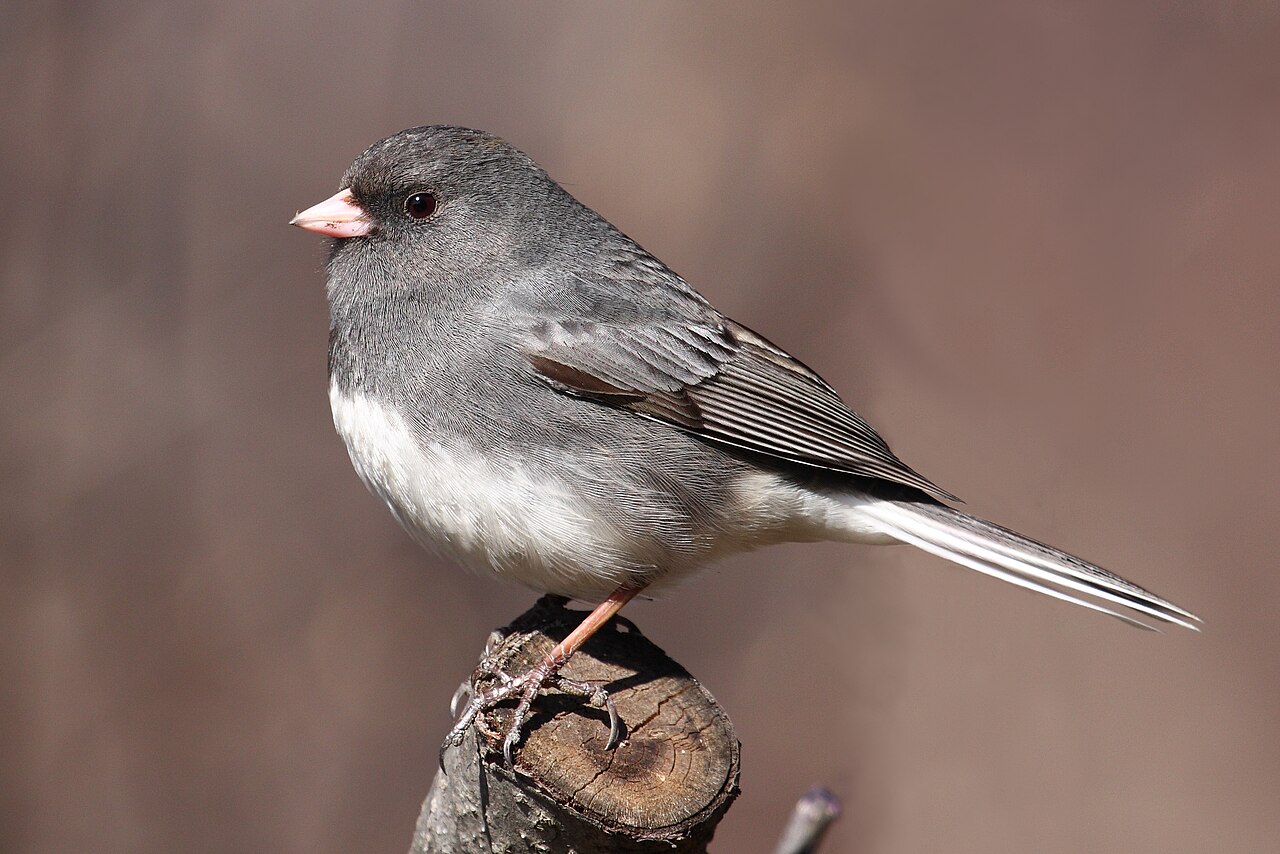
Dark-eyed Junco turns on dark hood or head pattern, pale belly, pinkish bill, and flashing white outer tail feathers, then on the setting around it: woodland edges, brush, leaf litter, conifer openings, snowy yards.
- Family
- New World Sparrows
- Range cue
- Michigan eBird frequency
Quick Summary
Dark-eyed Junco is a small ground-feeding sparrow best recognized by a dark hood or head pattern, pale belly, pinkish bill, and white outer tail feathers that flash when it moves. The bird is easy to miss until it hops out from under shrubs, works fallen seed, or flushes a short distance back into cover.
01Behavior and habitat
Why Dark-eyed Junco earns the snowbird name
The nickname snowbird works because winter makes the bird's behavior visible. Snow, bare ground, and feeder spill expose the small hops that leaf litter hides in other seasons.
Watch the first movement. Juncos often hop, pause, flick the tail, then flush only a short distance instead of crossing the yard in a long open flight.
Mixed winter flocks can make the scene noisy. Black-capped Chickadee works branches and feeders with quick acrobatics, while junco motion keeps pulling your eye down to the ground.
Tufted Titmouse adds another above-ground contrast with a crest, heavier head, and bolder branch use. The junco is more often the bird under the action.
Loose groups often spread along an edge rather than packing into one tight flock. One bird may hop under a shrub, another may pause near bare soil, and another may flush into a low branch before dropping back down. That scattered rhythm is useful because it keeps the whole scene low.
The tail flash is behavior as much as plumage. You may miss it while the bird feeds, then see it clearly when the bird turns, flicks, or makes a short escape flight. That is why a patient view beats a single still frame.
A good field method starts at shrub bases, brush piles, and the edge of the feeder shadow. If the bird keeps using low cover and shows white tail edges during short flights, the ID has a stronger foundation than color alone.
Flock behavior is another non-swappable clue. Juncos often feed in loose groups that look organized by edge, not by a tight flock center. Several birds may use the same strip of shrubs, but each bird keeps enough spacing to hop, scratch, and retreat. A sudden flush can send them into low branches, after which they drop back to the ground when the disturbance passes.
Voice can support the ID without carrying the whole page. Dry calls from low cover, simple trills in the breeding season, and small contact notes in a winter group all fit the bird, but most readers will find the profile by sight first. The useful behavior claim is that sound, tail flash, and ground use point to the same low edge. When those cues agree, the bird holds together even if the regional plumage is not the neat slate-and-white picture shown in many field marks.
For Dark-eyed Junco, keep dark hood or head pattern, pale belly, pinkish bill, and flashing white outer tail feathers, grass seeds, weed seeds, fallen feeder seed, small insects, and low plant material, a concealed ground or low nest tucked into slopes, roots, grass, or low vegetation, and brushy cover, native seed plants, leaf litter, and clean ground-feeding areas with one page owner instead of repeating them as separate checklist items.
- Movement: birds hop low, flick the tail, and flush short distances back into cover.
- Flock cue: winter groups often mix loosely with other small feeder and edge birds.
- Field method: watch the ground first, then use the white tail flash when the bird moves.
02Field marks
How to identify Dark-eyed Junco on the ground
Begin a junco ID by looking at the level of the bird. A strong candidate is usually low, close to cover, and moving over soil, snow, leaves, or feeder spill instead of sitting high in a tree.
The classic view shows a small sparrow shape, a dark hood or dark head, a pale lower belly, a short pinkish bill, and white outer tail feathers. The white tail edges may not show while the bird feeds, so wait for a hop, flick, or short flush before deciding the mark is absent.
Regional variation is the reason this section needs depth. Some birds look clean slate-gray above and white below. Others show browner backs, rusty sides, duller hoods, or a less tidy division between head and belly. The species still reads as a compact ground sparrow with a pale bill and repeated tail flashes.
Lighting can also flatten the bird. On snow the belly may look brighter and the hood darker; in leaf litter the same bird can feel softer and browner. A field view that joins shape, bill, ground use, and a quick white tail flash is stronger than one perfect color cue.
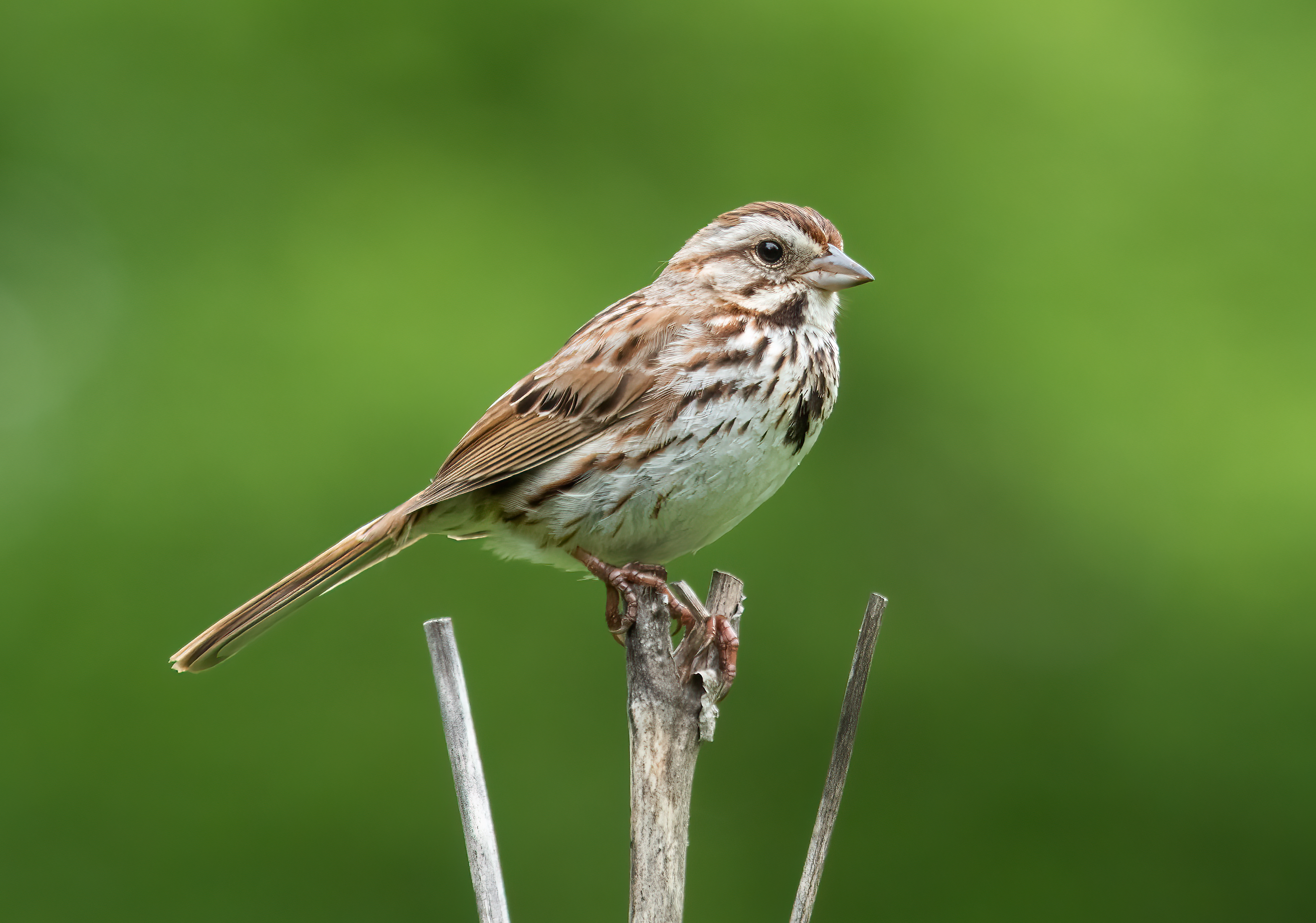
Song Sparrow creates the most useful low-cover comparison. Song Sparrow looks streakier below, often shows a central breast spot, and usually reads as a brush singer rather than a clean-bellied ground bird.
White-throated Sparrow can share the same winter edge, but its striped crown and bright throat pull the eye to the head pattern. A junco usually gives the answer by looking plainer below and flashing white from the tail as it leaves.
If the bird stays on the ground, shows a pale bill, keeps a rounded sparrow profile, and retreats into cover with white tail edges, the ID has several independent supports. If only one of those clues appears, keep watching before naming it.
A useful field sequence is size, level, bill, tail. Size keeps it in the small-sparrow lane, level keeps it near the ground, the pale bill removes many darker-faced sparrows, and the tail flash confirms the bird when it moves. This order also protects the reader from overvaluing one plumage label. Oregon-type, slate-colored, pink-sided, and other regional forms can look different enough that a color-first answer becomes brittle. The profile should let a reader in the Rockies, the Pacific Northwest, or the East still solve the same bird from structure and behavior.
Confusion usually comes from other winter sparrows at the same edge. White-throated Sparrow shows a stronger head pattern and often a brighter throat or yellow lores. Song Sparrow is browner, more streaked below, and usually less hooded. Chipping Sparrow can look clean and small, but winter Chipping Sparrows do not give the same dark-hood, pale-belly, white-tail combination. If the view is brief, the safest question is not "how gray was it?" but "did a low sparrow flash white tail corners as it slipped back into cover?"

- First read: a small dark-hooded sparrow with a pale belly and flashing white outer tail feathers.
- Variation warning: regional forms differ, so tail flashes, posture, and winter ground use carry weight.
- Best setting: woodland edges, brush, leaf litter, and ground below feeders fit better than high canopy.
Watch the ground and wait for the white tail flash when a junco hops or flushes.
03Food and foraging
What Dark-eyed Junco eats below feeders
Food sits where seed and shelter meet. Grass seeds, weed seeds, fallen feeder seed, and small insects all fit the bird, but the feeding lane is usually low and close to escape cover.
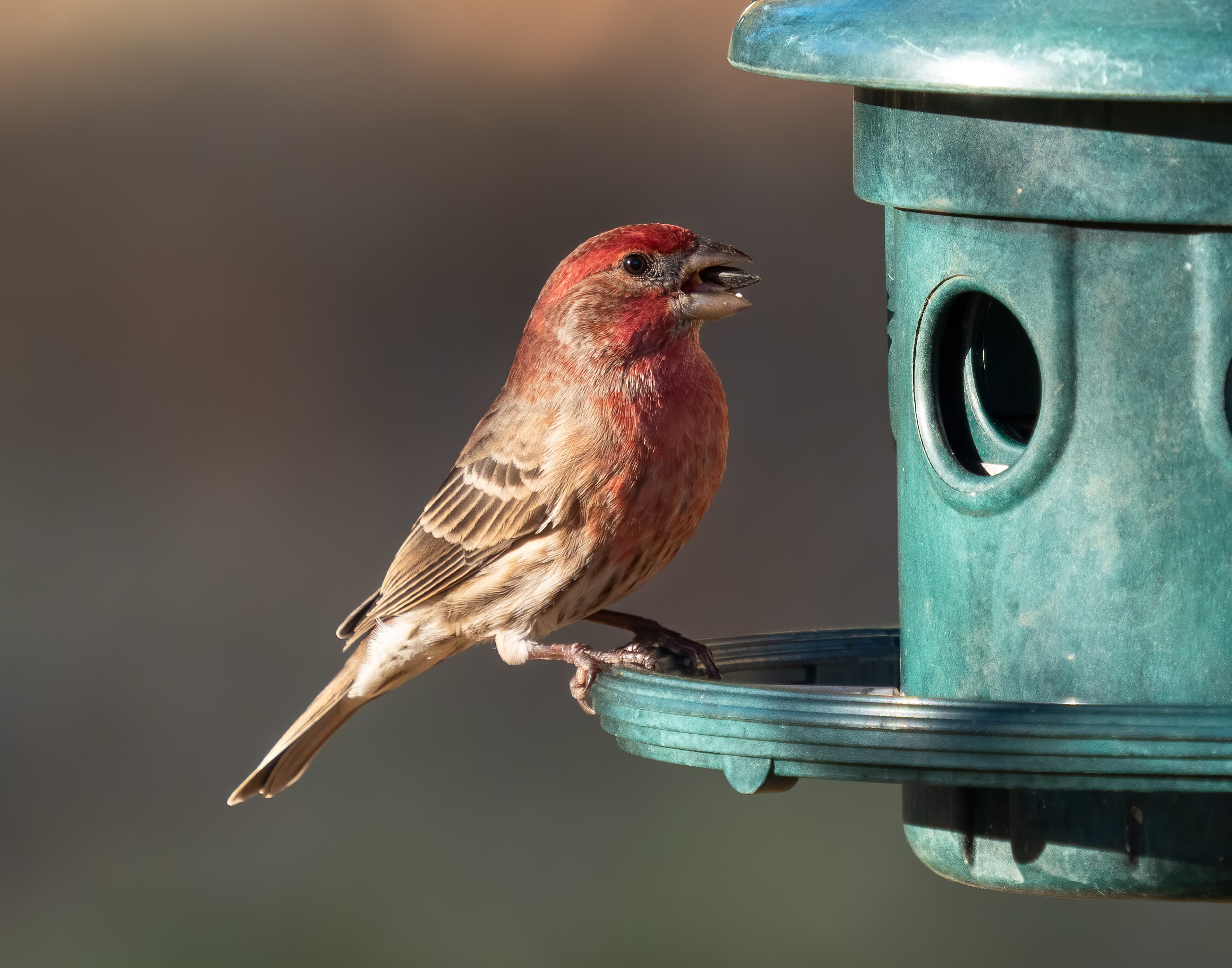
At a backyard station, the important clue is height. A House Finch can sit at a port and crack seed in the open, while a junco often works the spill zone under the feeder.
A American Goldfinch may cling to seed heads or feeder perches with a lighter, more buoyant feel. Junco feeding looks quieter and lower, with short hops through leaf litter, snow edges, or bare soil.
Winter makes this pattern easier to see. Snow or bare ground exposes seed, and the dark upperparts make each hop more obvious. A bird that appears below the feeder only after other birds scatter seed is still following its natural ground-feeding logic.
Natural seed matters because juncos do not need a formal feeder to use a yard. Standing grasses, late-season weed heads, low native plants, and leaves under shrubs can hold food in places where the bird can feed without crossing open space.
The best yard support is not a bigger seed pile in open lawn. It is a small messy edge: seed heads left standing, leaves under shrubs, brush close enough for cover, and clean ground feeding space that does not force the bird far into the open.
That feeding pattern also helps with identification. A small sparrow repeatedly dropping below shrubs, picking at the ground, and retreating with white tail flashes is showing diet, habitat, and field marks in the same behavior.
The feeding pattern also explains why juncos appear suddenly after weather changes. A light snow can push birds toward shoveled edges, exposed leaves, driveway margins, and feeder spill. Rain can make bare soil and leaf litter easier to probe. The food has not changed into a backyard-only diet; the bird is simply using the places where small seeds are reachable without leaving cover for long.
This is why a junco-friendly yard is less about buying a special food and more about arranging food and safety close together. Low native seed heads, a brushy corner, a loose leaf layer, and a feeder that does not dump moldy seed can all fit the bird's routine. A platform or ground tray may attract juncos, but it also needs cleaning because damp seed on the ground spoils quickly. The best feeding advice is modest: keep seed dry, keep the ground under feeders from turning into waste, and leave enough nearby cover that birds are not forced to cross open lawn for every bite.
- Ground lane: juncos pick millet, cracked seed, and fallen seed from the ground more than tube perches.
- Natural food: grass seeds, weed seeds, and small insects explain the edge habitat.
- Winter cue: snow or bare leaf litter makes their hopping and tail flashes easier to read.
Scatter seed low or use a ground platform; juncos usually feed below hanging tubes.
04Conservation
Why low cover keeps Dark-eyed Junco common
The useful conservation note should stay practical instead of dramatic. This is a familiar bird, but familiar birds still depend on the small habitat features people often remove from yards.
A tidy yard can remove the seed heads, leaf litter, and cover that make juncos easy to see. Some brush, native grasses, and winter stems give the bird food near shelter.
That differs from American Robin, which can work open lawns for earthworms and fruit. A junco usually needs the edge, not the middle of the grass.
Cedar Waxwing tells a fruit-flock story in the same cold season, but juncos are seed and cover birds. The best close is modest: leave a little structure where the ground-feeding sparrow can feed without crossing empty space.
Clean feeding matters too. Seed that piles up wet on the ground can spoil, while a scattered, clean feeding area near cover better matches how the bird already uses the edge.
The article's swap test is simple. If the advice starts sounding like a general feeder-bird paragraph, it has drifted away from juncos. The real public action is keeping winter seed, leaf litter, and low escape cover in the same small place.
Because the bird is familiar, the article should avoid both complacency and alarm. The practical conservation lane is winter structure, clean feeding, and pesticide-light yards where seed and small invertebrates remain available. A perfect lawn with no stems, leaves, or shrub bases gives the bird very little to work with even when a feeder is full.
That action is small but specific. Leave a weedy strip where it will not cause a problem, keep a brush pile or dense shrub edge if the yard can support it, and clean the area under feeders before wet seed accumulates. Those choices match the same ID logic used earlier in the page: Dark-eyed Juncos are easiest to understand when food, ground, and nearby escape cover are treated as one system.
05Nesting data
Where Dark-eyed Junco nests out of sight
The breeding story explains why the winter bird loves low cover. Many nests are hidden on or near the ground, tucked into slopes, root tangles, grass, banks, logs, or low vegetation.
That does not mean every winter yard bird nests in the same yard. Many juncos shift with elevation or latitude, and the article should not invent dates or nest counts when the structured data is not carrying them.
The useful point is placement. A bird that spends winter near leaf litter and low cover also has a breeding logic built around concealment, ground routes, and nearby food. The profile becomes sharper when the winter scene and nesting scene point to the same low layer.
Repeated adult movement into a bank, grass clump, or root tangle can be more meaningful than a visible nest. The safest field behavior is watching from distance, because low nests are easy to disturb by stepping into the cover that protects them.
Brown Thrasher also uses dense cover, but its size, long tail, and leaf-tossing movement change the whole scene. A junco is smaller, lower, and more likely to vanish with one quick tail flash.
Carolina Wren gives a second boundary. Wrens often investigate cavities, ledges, and sheltered human-edge spaces, while junco nesting logic stays tied to low natural cover and concealed ground routes.
The breeding section should not become a generic paragraph about birds raising young. It should show why the same bird that eats fallen seed in winter still needs slopes, roots, grass, and brush when the season changes.
Regional movement adds another reason not to read every yard junco the same way. Some birds seen in winter may breed far north or upslope, while local breeding birds in higher or cooler habitats can be much less obvious to a backyard observer. The page should not promise that the winter flock under a feeder will become a nest in the same shrubs. It should explain the connection between low cover and the species' life history.
The nest placement also changes what counts as responsible observation. A ground or bank nest can be hidden so well that a person only notices it after getting too close. If a junco repeatedly carries food into a low patch or gives nervous calls from nearby cover, the better choice is to back away and let the pattern tell the story. This protects the bird and keeps the article from turning a breeding fact into an invitation to search through cover.
What should you check or read next?
A final check on Dark-eyed Junco separates look-alike comparisons, related bird profiles, and practical next steps.
Questions and answers
How do you identify a Dark-eyed Junco?
Look for a small ground-feeding sparrow with a dark hood or head pattern, pale belly, pinkish bill, and white outer tail feathers that flash when it moves.
Why do juncos show up in winter?
Many juncos become more visible in colder months when they move through yards, woodland edges, and lower elevations where fallen seed and bare ground are easier to use.
Do Dark-eyed Juncos use feeders?
Yes, but they usually feed below feeders or on low platforms rather than clinging to narrow tube feeder perches.

Related field context
The strongest adjacent references stay with the same bird, the family, habitat, or state-symbol context already used in the article.