House Finch: The Western Bird That Conquered the East
House Finch turns on conical bill, streaked brown body, variable red on males, and social feeder behavior, then on the setting around it: yards, towns, farms, desert edges, vines, shrubs, orchards, and feeder stations.
- Family
- Finches, Euphonias, and Allies
- Range cue
- Michigan eBird frequency
Quick Summary
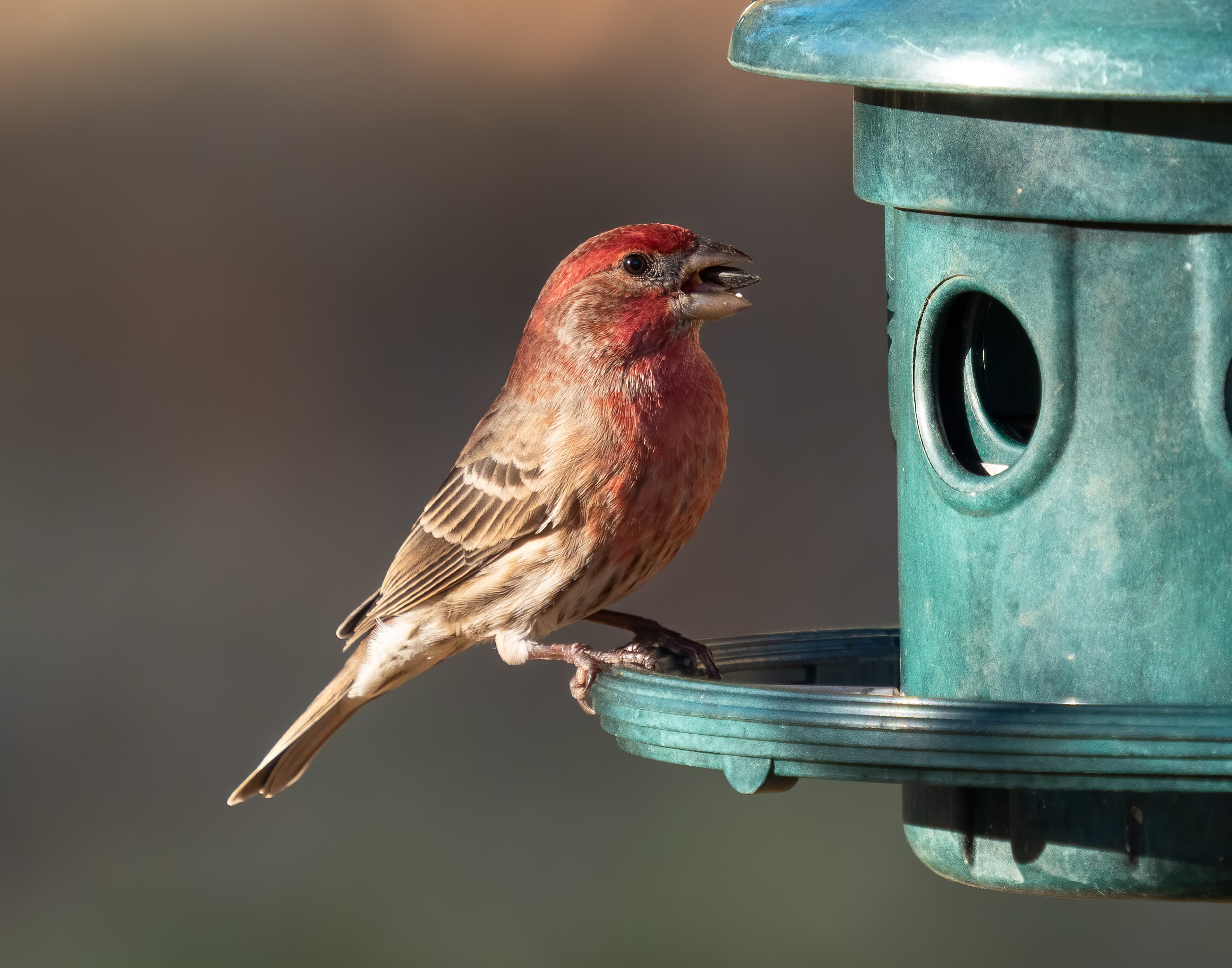
House Finch is a compact, social finch with a short conical bill, brown streaking, and variable red, orange, or yellow wash on many males. The field problem is that red color is unreliable by itself, so bill shape, flank streaking, feeder posture, and noisy group behavior need to agree.
01Behavior and habitat
How House Finch changed town birding
Ordinary urban edges feel busy when small finch groups start moving through them. Birds shift between wires, rooftops, fruiting shrubs, feeders, and street trees instead of staying hidden in one patch.
Males often sing from exposed perches rather than deep cover. The song can come from a wire above traffic, a roofline, a tree top, or a feeder-side shrub.
The social piece matters. House Finches call, shuffle, return, and gather in ways that make a feeder feel occupied for long stretches. A single bird can be useful, but a small group often shows the behavior better.
A fruiting tree can pull in Cedar Waxwing, but waxwings look sleeker, smoother, and more fruit-flock oriented. House Finches chatter, perch, and return to seed or buds with thicker bills.
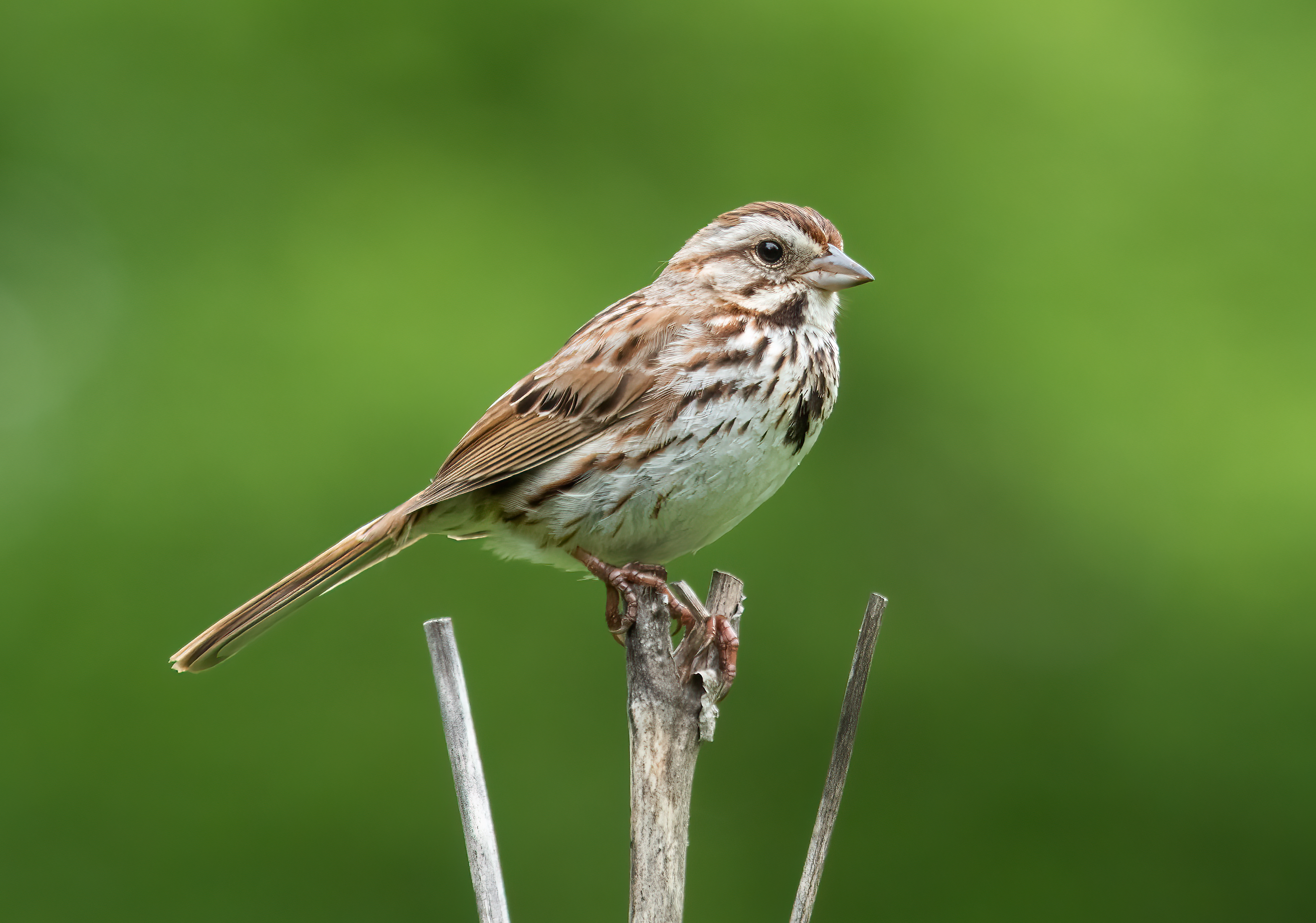
Song Sparrow can share a shrub edge and brown streaking, but it stays lower and more hidden. A House Finch is more likely to be on a wire, feeder, or open branch in a social group.
The human-edge pattern explains the bird better than a range statement. A porch, wire, hedge, and feeder can function as one small territory, with each piece serving a different behavior.
If the bird keeps moving from an exposed perch to seed, then back to a shrub or wire, the behavior is confirming the structure. That is the part a red-only ID misses.
House Finch behavior has a social texture that separates it from many single-bird yard sightings. A group may arrive unevenly, with one bird landing on a wire, another dropping to a feeder, and others calling from a shrub before the whole scene settles. They are not as synchronized as waxwings and not as grab-and-go as chickadees. The repeated return to the same small network of perches is the clue.
Flight between perches often looks direct and practical rather than acrobatic. The bird is moving from wire to feeder, feeder to shrub, shrub to tree, then back again. In towns this creates a route that may cross driveways, roofs, alley trees, and storefront plantings. The profile should make that built-edge route visible, because it is more specific than saying the bird likes "urban habitat."
Sound gives another layer. House Finches produce lively, jumbled song from exposed spots, and contact calls help hold small groups together. The sound does not need a long music lesson, but it explains why a reader may notice finches before seeing red. A singing male above a parking lot or backyard feeder is not out of place; that exposed perch is part of the species' public routine.
For House Finch, keep conical bill, streaked brown body, variable red on males, and social feeder behavior, sunflower, millet, weed seeds, buds, berries, fruit, and plant material, a cup nest in shrubs, ledges, hanging planters, building edges, or dense ornamental cover, and clean feeders, disease-aware spacing, fruiting shrubs, and reduced crowding during conjunctivitis outbreaks with one page owner instead of repeating them as separate checklist items.
- Social read: small groups move through feeders, vines, shrubs, and fruiting edges.
- Song clue: males deliver long, jumbled songs from exposed perches near people.
- Range clue: western origin and eastern expansion explain why the bird feels common around towns.
02Field marks
How to identify House Finch without trusting red alone
Start with the bill before judging the red. The short conical bill is built for seed, and it gives the bird a finch profile before color enters the decision.
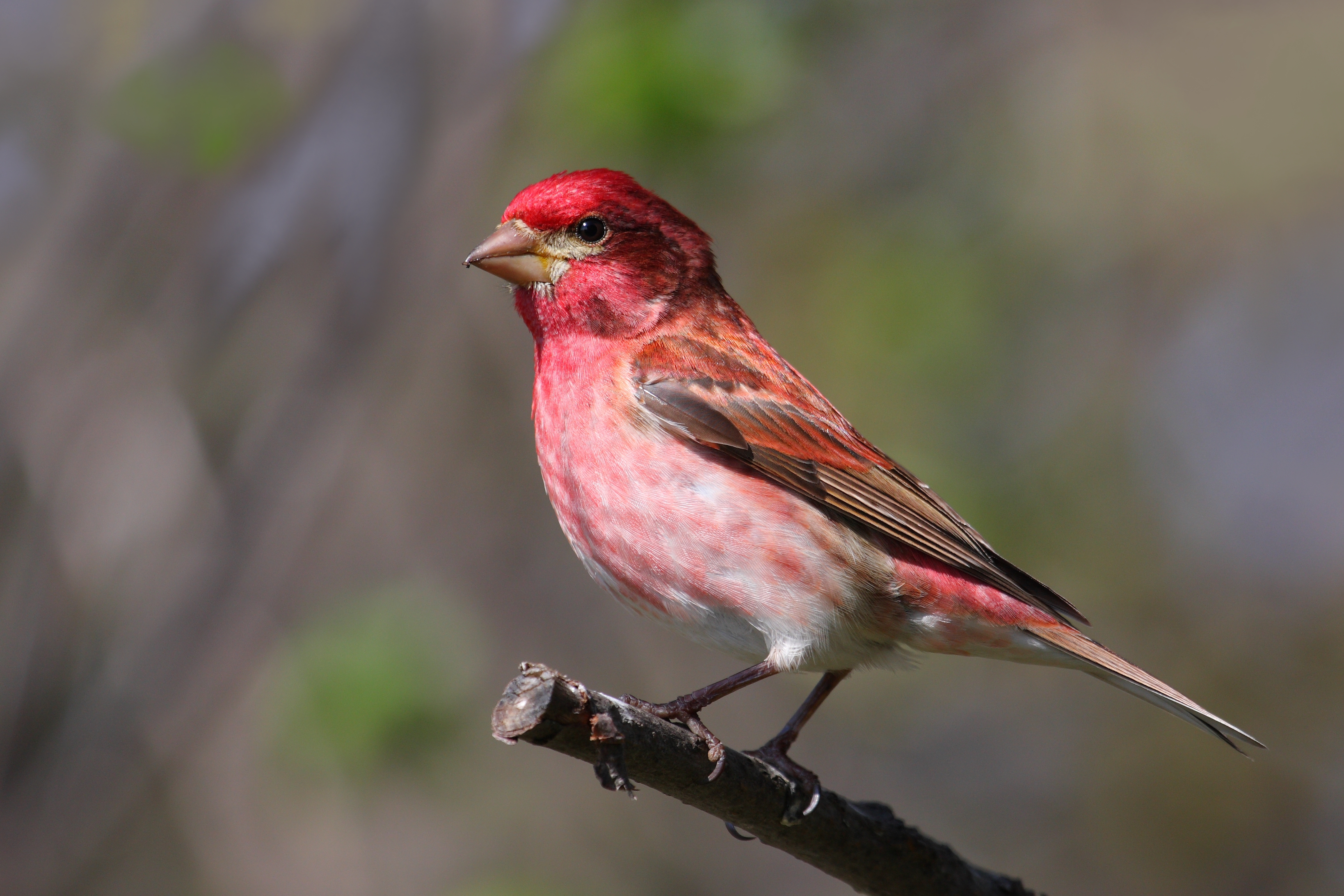
Adult males often show red on the head, chest, and rump, but the color can run orange or yellow. Diet, molt, feather wear, and individual variation all change the impression, which is why a bright male is easy but a dull male is still a House Finch candidate.
Females and immature birds are the better test of the page. They are brown and streaked, with a compact body, rounded head, and seed-cracking bill. If the article cannot identify them, it is leaning too hard on male color.
The side streaking matters because it separates House Finch from smoother red birds and from some sparrows. The streaks usually run along the flanks and lower body, while the face can look plain compared with the stronger face pattern on some look-alikes.
Purple Finch is the main trap. Purple Finch often looks more evenly washed with reddish color and can show a stronger face pattern, while House Finch tends to look browner, streakier, and more tied to buildings and feeders.
American Goldfinch teaches the other boundary. It has a smaller bill, different wing pattern, and a bouncier flight style, even when nonbreeding plumage looks dull.
A good House Finch ID does not ask red color to do every job. Bill shape, flank streaking, social feeder behavior, and exposed singing perches should all point in the same direction before the name feels settled.
Female House Finches deserve extra space because they are where many bad IDs start. They do not offer the red headline, so the reader has to build the ID from structure: compact finch body, rounded head, short conical bill, brown streaking, and a habit of sitting up at feeders or exposed perches. If a brown bird has a thinner bill, stronger face stripes, and keeps dropping into brush, it may be a sparrow problem instead of a finch problem.
Male color needs the same caution in the opposite direction. A red male can still be confused with Purple Finch, especially where both occur. House Finch usually looks slimmer and more streaked below, with red concentrated on the head, upper chest, and rump rather than washing broadly through the body. Purple Finch often gives a richer raspberry wash and a different head pattern. The practical field answer is to make color confirm structure, not replace it.
Bill posture helps at feeders. House Finches turn and crack seed with the bill as the working tool, then sit long enough for the streaks and head shape to settle into view. A quick flash of red through a shrub is not enough by itself. A bird that keeps returning to a feeder port, shows a seed bill, and carries streaking down the sides is much harder to misread.

- Male clue: red concentrates on head, chest, and rump instead of washing evenly across the whole body.
- Female clue: plain brown streaking and a compact finch bill separate her from sparrows when posture is visible.
- Best comparison: face pattern, flank streaking, and bill shape decide House Finch against Purple Finch.
Use face pattern and flank streaking before deciding that every red finch is a House Finch.
03Conservation
Why feeder health matters for House Finch
Common status does not make feeder care optional. House Finch is one of the clearest examples of a bird people help and harm at the same station.
Crowded feeders can spread eye disease when ports stay dirty or seed stays wet. The article should not become veterinary advice, but it should give the reader a practical boundary.
If birds look sick, clean equipment and pause feeding long enough to reduce crowding. That advice is more useful than pretending all feeding is automatically good.
White-throated Sparrow shows why winter cover still matters around feeding areas. Shrubs, leaf litter, and quiet edges keep birds from clustering at one exposed point.
The habitat action is not complicated. Keep seed dry, clean the feeder, avoid overcrowding, and provide nearby shrubs or vines so birds can move away from the port.
This is also a trust boundary. The page should not invent disease rates or population numbers when it can give a concrete, accurate action that follows from the bird's behavior.
The close is species-owned: use bill shape plus streaking before trusting red color, and make the feeder clean enough that a social finch can use it safely.
The conservation story is strongest when it stays tied to the reader's feeder and planting choices. House Finches are widespread around people, yet that closeness means small mistakes repeat at scale. Dirty feeders, wet seed, and dense crowding can turn a popular station into a disease point. Clean equipment is not a decorative best practice here; it is the main action most readers control.
Habitat still matters beyond disease. Dense shrubs, vines, and small trees give birds places to wait, sing, nest, and escape. Removing every shrub around a feeder forces birds into a more exposed pattern and can make crowding worse. A better setup gives finches several short movements: feeder to twig, twig to shrub, shrub to roofline, roofline back to seed.
The page should not oversell a rare-bird crisis. The honest message is that a common species can still show whether a yard is being managed carefully. If House Finches are frequent visitors, the reader has a standing maintenance job: clean the feeder, keep seed dry, watch for sick birds, and keep enough plant cover that feeding does not become the whole habitat.
- Status: House Finch is common, but local feeder health can still matter.
- Main pressure: conjunctivitis spreads more easily where many birds crowd dirty feeders.
- Practical close: clean feeding stations and keep shrubs or vines nearby so feeding and cover work together.
04Food and foraging
What House Finch eats at feeders and edges
Seed feeding becomes visible because the species accepts public places. Sunflower, millet, weed seeds, buds, berries, and small fruit all fit, but feeders make the behavior easy to study.
The key feeder clue is lingering. A Black-capped Chickadee often grabs one seed and leaves, while a House Finch may sit at the port and sort food for longer.
Tufted Titmouse can visit the same station with a heavier head and more grab-and-go behavior. The finch pattern is social, seated, and repetitive.
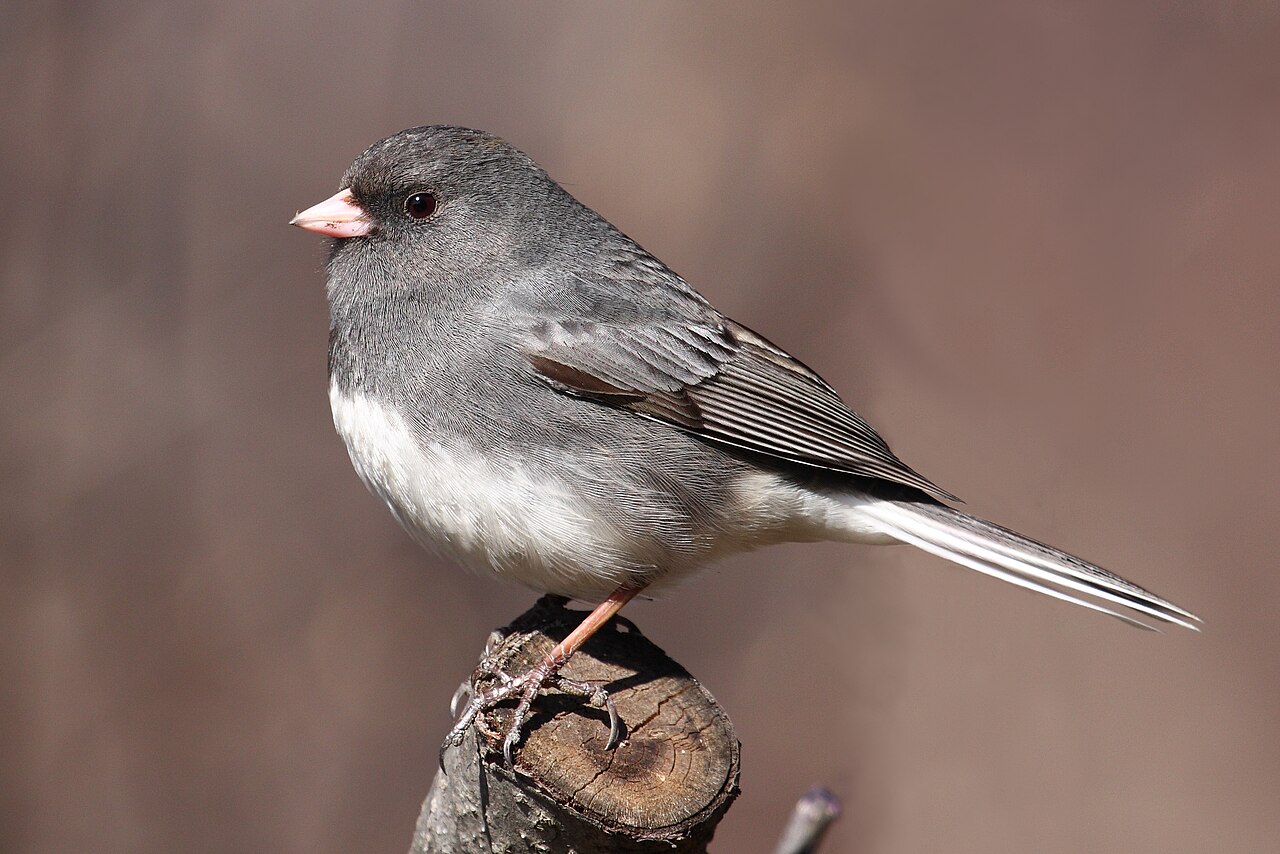
Ground spill changes the cast. Dark-eyed Junco often works below the feeder, while House Finch uses elevated ports and nearby perches more readily.
The food section needs a health boundary because the species gathers in groups. Dry seed, clean ports, and enough spacing make the feeding answer more useful than simply naming another seed.
A dirty feeder can turn a helpful setup into a problem. Wet seed molds, crowded ports keep birds face-to-face, and repeated contact at the same surface can help disease move through a local group.
Natural food still matters. Buds, fruiting shrubs, weed seeds, and small trees give House Finches more than one reason to use a yard, so a reader should not treat a feeder as the whole habitat.
The best feeder read joins behavior and care. A small group that sits, chatters, cracks seed, and returns to nearby shrubs is showing the species clearly, but the station works best when the human part stays clean.
Food choice changes the reader's responsibility. House Finches are adaptable enough to use sunflower, small seeds, buds, berries, and fruit, which means people see them often and can affect them directly. A feeder that concentrates many finches in one place can make observation easy, but it can also increase disease risk when ports are dirty or birds crowd into wet seed.
The health point belongs in the food section because it changes how to feed the bird. Use fresh seed, keep ports dry, remove caked material, and spread feeding pressure across space instead of forcing every bird onto one crowded station. If a bird has swollen or crusted eyes, the useful response is to clean equipment and reduce crowding rather than keep the same setup running because the birds are common.
Natural food also keeps the page from becoming feeder-only. Weedy plants, fruiting shrubs, and small trees provide seed, buds, and cover between feeder visits. A House Finch may spend part of the morning at a feeder and part in street trees or shrubs, so the best yard answer combines clean feeding with plant structure that lets birds move out of the crowd.
- Feeder lane: sunflower, millet, and platform or hopper access explain most yard visits.
- Behavior cue: birds often sit and sort seed instead of taking one item and leaving fast.
- Health cue: crowded feeders raise disease risk, so cleaning matters more than adding more seed.
Clean feeders often, because House Finch groups can spread eye disease when stations stay crowded and dirty.
05Nesting data
Why House Finch nests show up near buildings
Nesting often turns porch corners and plantings into usable cover. Pairs may use shrubs, small trees, ledges, signs, hanging planters, porch corners, vents, or other sheltered structures.
That nest choice makes the bird feel familiar around houses without turning it into a house pet. It remains a wild finch using structures that happen to fit its cup-nest needs.
The male's song perch often sits near the same human-edge space. A wire, roofline, small tree, or exposed branch can mark the territory while the nest itself stays tucked into a planter, shrub, or ledge.
The article should not ask readers to inspect nests closely. Repeated adult movement into one sheltered structure, plus nearby singing and feeder use, is enough to explain the behavior.
Carolina Wren also explores human spaces, but it behaves like a low, loud cavity and nook investigator. House Finch keeps the finch bill, social seed rhythm, and exposed song perches.
American Robin can nest on ledges too, yet its larger mud-lined cup, thrush posture, and lawn feeding create a different yard profile.
The breeding section earns its depth by showing how buildings become habitat surfaces. A planter is not just a cute nesting site; it is a sheltered cup location near food, perches, and daily human edges the species already tolerates.
Human structures matter because they mimic sheltered nest supports, not because the bird has stopped being wild. A hanging planter, porch beam, vine tangle, sign, or ledge can provide the protected cup site a pair needs. That flexibility is one reason House Finches feel so present around houses, shops, courtyards, and apartment edges.
This section should also set a boundary for readers who find a nest near daily life. The nest may be close enough to notice, but close access does not make it a project. Repeated checks, moving planters, or clearing vines can expose eggs or young. The useful guidance is to give the site space, keep pets away when possible, and wait until the nesting attempt is finished before changing the structure.
The male's singing and the nest site often occupy different visibility levels. He may sing from a wire or roofline while the nest sits tucked below an overhang or inside vegetation. That split is a good anti-template fact: the public part of House Finch breeding is sound and perch use, while the actual nest can be hidden in plain human architecture.
What should you check or read next?
A final check on House Finch separates look-alike comparisons, related bird profiles, and practical next steps.
Questions and answers
How do you tell House Finch from Purple Finch?
Use flank streaking, face pattern, and color spread together. House Finch usually looks browner and more streaked on the sides, while Purple Finch often looks more evenly washed with reddish color.
What do House Finches eat?
House Finches eat seeds, buds, berries, and plant material. At feeders they commonly use sunflower, millet, and mixed seed.
Why do House Finches get eye disease at feeders?
Crowded or dirty feeding stations can help conjunctivitis spread between birds. Cleaning feeders and replacing wet seed lowers that risk.

Related field context
The strongest adjacent references stay with the same bird, the family, habitat, or state-symbol context already used in the article.