West Virginia State Bird

Quick Answer
The state bird of West Virginia is the Northern Cardinal (Cardinalis cardinalis), designated in 1949.
Quick Facts
- State
- West Virginia
- Designated
- 1949
- Family
- Cardinals
- Length
- 22 cm
- IUCN
- Least Concern
The West Virginia state bird is the Northern Cardinal, a bright resident of wooded towns, brushy hollows, and mountain-valley edges. The bird fits the state because it stays close to people while still depending on the same layered cover that shapes many Appalachian backyards and creek corridors.
This is the mountain cardinal page inside the state birds collection. West Virginia's stronger answer is that cardinals make the state's wooded edges visible in winter, spring, and every settled valley between.
01State symbol
Why West Virginia chose the Northern Cardinal
West Virginia designated the Northern Cardinal in 1949. A state symbol needs to be easy to recognize, and few birds are easier to place than a crested cardinal calling from a shrub line on a gray day.
West Virginia did not need a remote wilderness bird to represent mountain country. It chose a bird that lives where people meet the woods, including town edges, porch feeders, old fence lines, and thickets above small streams.
The same species represents Virginia's state bird, but the reader job changes here. West Virginia needs the wooded-hollow explanation first, because the state identity is narrower, steeper, and more Appalachian.
02The bird
About the Northern Cardinal
The cardinal's field marks are compact and reliable. Look for a tall crest, a short thick bill, and a long tail, then use color as the final cue.
Males are deep red with a dark face. Females are brown with red in the wings and tail, which matters in West Virginia because many quick looks happen in shaded cover.
As a ground-and-shrub feeder, the Northern Cardinal eats seeds, insects, and fruit. It nests in low dense vegetation, so a messy hedge or brushy creek edge can matter more than a tall mature tree.
03Where to look
Where to see the Northern Cardinal in West Virginia
In West Virginia, start with the kind of edge that lets you see into cover. New River Gorge National Park and Preserve has cardinals around visitor areas, woodland openings, and neighborhood borders near the park, not just along cliff views.
Canaan Valley National Wildlife Refuge and Blackwater Falls State Park add colder upland settings. Watch the first sunny shrub line after a trail enters open ground, especially in late winter and early spring when red males stand out before leaves close the view.
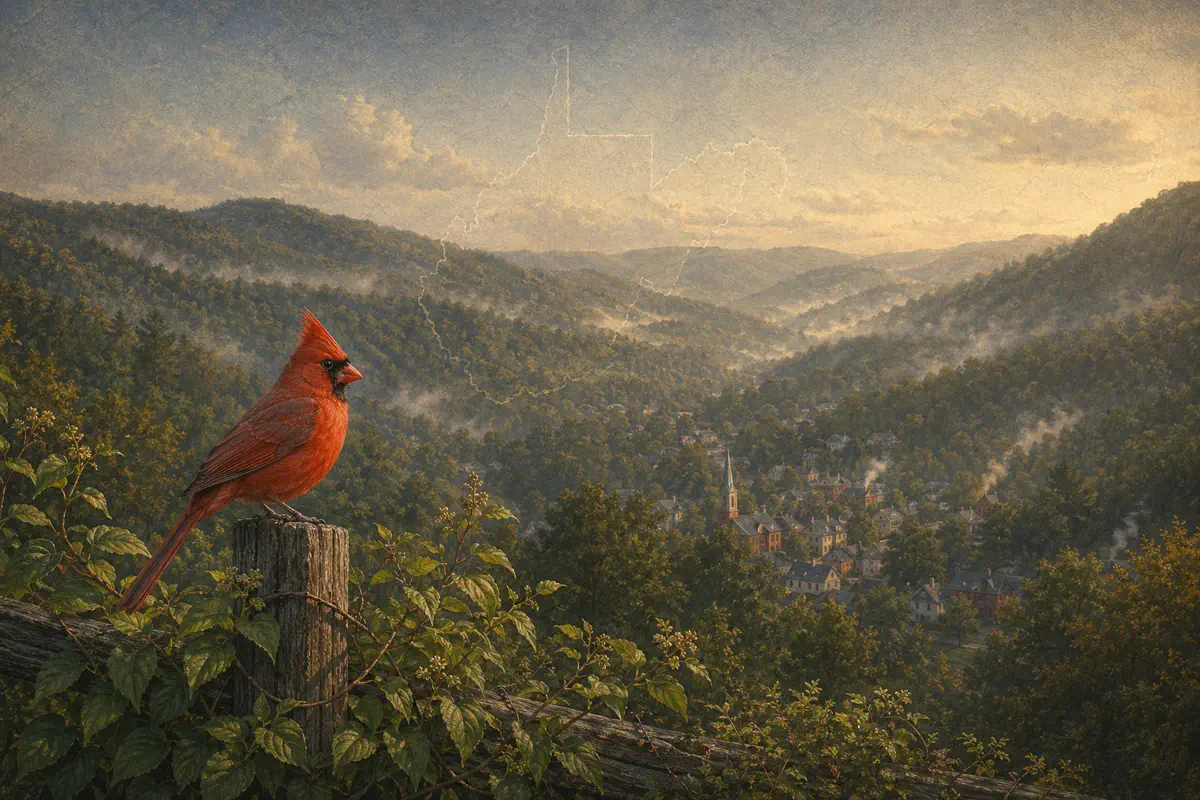
Those field conditions make West Virginia less like Illinois's cardinal route, where flatter towns, gardens, and woodland patches carry more of the state-symbol work.
04Conservation
Conservation of the Northern Cardinal
The Northern Cardinal is an LC species globally. The better local lesson is habitat texture, because cardinals need low cover for nesting, escape, and winter shelter.
Keeping brushy edges helps this symbol stay ordinary in a good way. It also keeps West Virginia's page distinct from Ohio's cardinal page, where the same bird reads more through suburban hedges, farms, and Lake Erie edges.
Least Concern. Northern Cardinal remains the official state bird of West Virginia.
Where should you go next?
Continue with nearby state birds, the wider location layer for West Virginia, or the full species profile for the Northern Cardinal.


Questions and answers
What is the West Virginia state bird?
The West Virginia state bird is the Northern Cardinal, officially designated in 1949.
Why is the Northern Cardinal the West Virginia state bird?
West Virginia chose the Northern Cardinal because it is familiar, colorful, present all year, and closely tied to wooded towns and mountain-edge habitat.
Where can I see a Northern Cardinal in West Virginia?
Look around New River Gorge, Canaan Valley, Blackwater Falls, neighborhood feeders, brushy creek edges, and sunny shrub lines.
Continue exploring
The strongest next reads stay with the state collection, the location layer, or the bird itself.