Ohio State Bird

Quick Answer
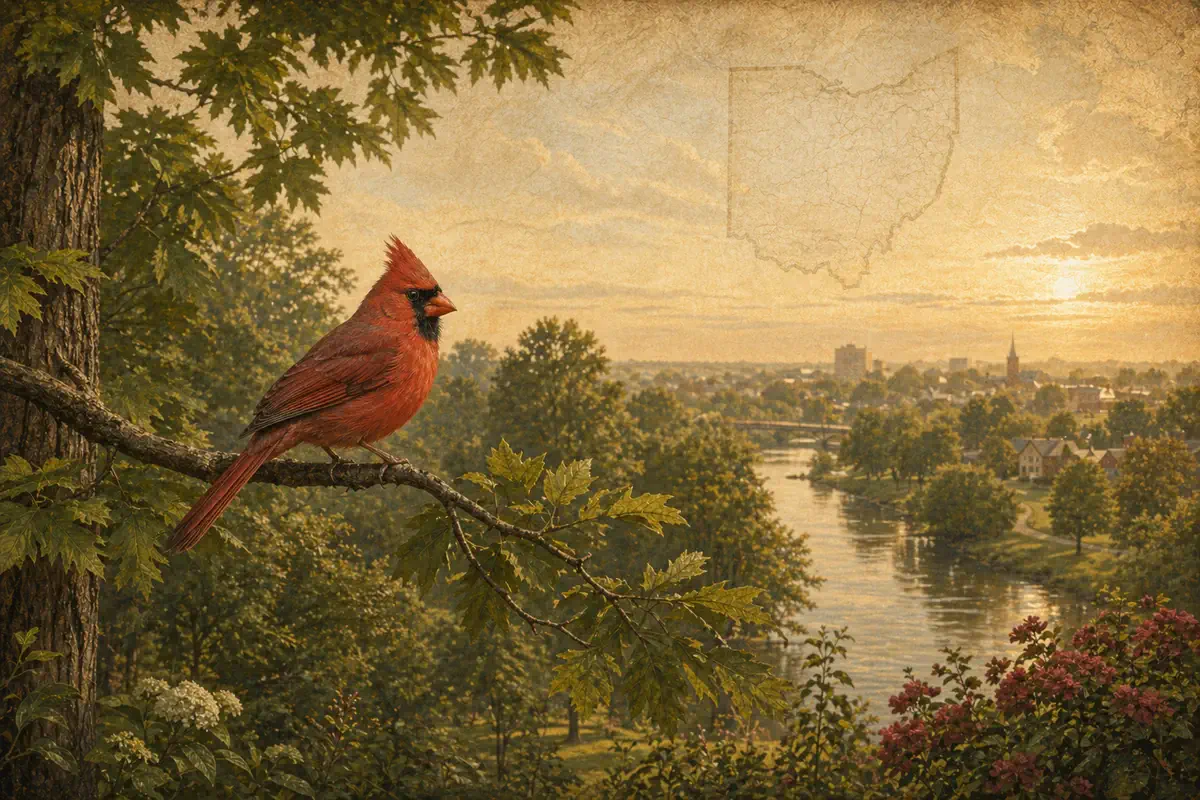
The state bird of Ohio is the Northern Cardinal (Cardinalis cardinalis), designated in 1933.
Quick Facts
- State
- Ohio
- Designated
- 1933
- Family
- Cardinals
- Length
- 22 cm
- IUCN
- Least Concern
The Ohio state bird is the Northern Cardinal, a year-round resident that makes the official answer feel practical rather than ceremonial. Its red plumage is easy to notice in winter hedges, river corridors, and neighborhood shrubs, which is why the bird works so well in the state birds collection.
Ohio's choice fits the places many residents actually bird, from Lake Erie migrant edges to wooded suburbs, farm windbreaks, and park brush. The cardinal is a state symbol people can identify without leaving their own county.
01State symbol
Why Ohio chose the Northern Cardinal
Ohio adopted the Northern Cardinal in 1933, after the bird had become a familiar sight across towns, farms, and woodland edges. The symbol did not depend on rarity, but on a bird that stayed visible after autumn migration had emptied many trees.
The color gave Ohio a simple public emblem. Male cardinals stay bright against snow, and females keep the same crest and thick bill shape in softer brown and red tones.
That everyday recognition separates Ohio from nearby cardinal states such as Indiana's cardinal choice. Ohio's page should answer why this bird fits a mixed landscape of Lake Erie marsh, Appalachian foothills, and backyard thickets, not just why cardinals are popular.
02The bird
About the Northern Cardinal
The Northern Cardinal is a crested songbird with a heavy seed-cracking bill, a long tail, and a habit of staying close to cover. In Ohio, the quickest field mark is often the peaked crest, thick bill, and upright posture on a shrub or feeder rail.
Males show the full red body. Females are tan to warm brown with red in the wings, tail, crest, and bill area, so they still read as cardinals once you stop looking only for bright red.
Ohio cardinals feed on seeds, insects, berries, and feeder foods. They favor brush piles, hedges, grape tangles, young woods, and streamside shrubs, which keeps them common in cities as well as rural counties.
03Where to look
Where to see the Northern Cardinal in Ohio
For an Ohio search, start with edge habitat rather than deep forest. Magee Marsh Wildlife Area can produce cardinals around wooded borders while birders are watching spring migrants, and Cuyahoga Valley National Park has the brushy trails and river edges they use year-round.
Hocking Hills adds a different setting, with cardinals working ravines, thickets, and cabin edges instead of flat lakeplain woods. In winter, listen for short calls near cover, then scan the first branch above a feeder, hedge, or tangled creek edge.
04Conservation
Conservation of the Northern Cardinal
The Northern Cardinal is listed as LC by IUCN, so Ohio readers do not need a crisis frame. The useful conservation point is local because cardinals do best where yards and parks keep layered shrubs, native fruiting plants, and safe window placement.
That same habitat lesson connects Ohio to other cardinal states, including Kentucky's state bird. The symbol stays familiar when people leave enough low cover for nesting and escape.
Least Concern. Northern Cardinal remains the official state bird of Ohio.
Where should you go next?
Continue with nearby state birds, the wider location layer for Ohio, or the full species profile for the Northern Cardinal.


Questions and answers
What is the Ohio state bird?
The Ohio state bird is the Northern Cardinal, officially designated in 1933.
Why is the Northern Cardinal the Ohio state bird?
Ohio chose the Northern Cardinal because it is visible year-round, easy to recognize, and common across towns, farms, parks, and wooded edges.
Where can I see a Northern Cardinal in Ohio?
Look near shrubby edges at Magee Marsh, Cuyahoga Valley National Park, Hocking Hills, neighborhood feeders, and brushy creek corridors.
Continue exploring
The strongest next reads stay with the state collection, the location layer, or the bird itself.