State profile
Why the Ring-necked Pheasant fits South Dakota
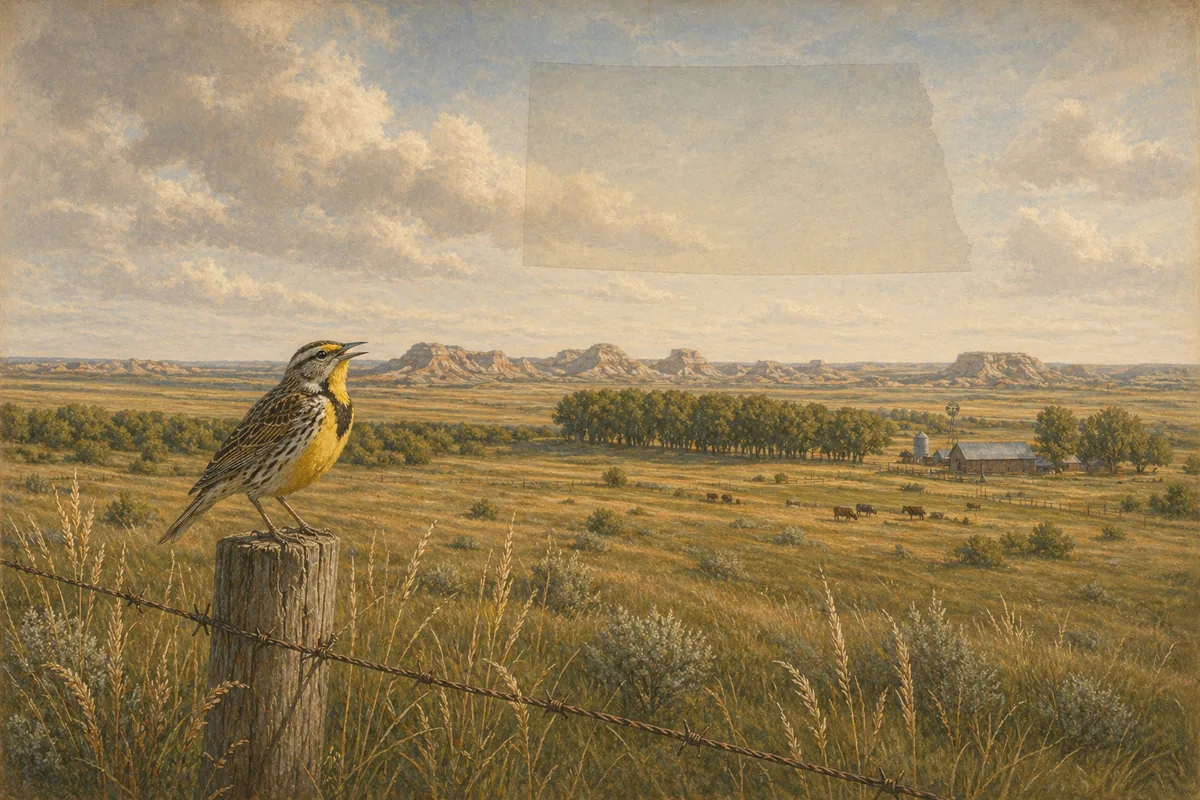
The Ring-necked Pheasant feels like a natural fit for South Dakota because it belongs to grain country, shelterbelts, prairie grass, and cattail-lined farm edges. Whether you notice it around Sand Lake National Wildlife Refuge or in an ordinary neighborhood yard, the species reflects the parts of South Dakota people actually see and hear, not a remote corner of the map.
About the Ring-necked Pheasant
Males are striking, with a green head, white neck ring, coppery body, and long pointed tail, while females are mottled buff-brown and much harder to spot. In South Dakota, it looks especially at home across grain country, shelterbelts, prairie grass, and cattail-lined farm edges.
Ring-necked Pheasants run through grass and stubble, flush explosively when pressured, and depend on a mix of nesting cover, grain fields, and winter shelter. It uses farm country, shelterbelts, grasslands, and weedy field edges well, which helps explain why the bird feels familiar well beyond protected areas.